

COI Elimination Act This bill limits U.S. contributions to the United Nations pertaining to the U.N. Independent International Commission of Inquiry on the Occupied Palestinian Territory, including East Jerusalem, and Israel. Current law imposes a cap on the annual U.S. contribution to the U.N. budget. The bill lowers that cap by 25% of the amount budgeted for the commission. The bill also states that it shall be U.S. policy to seek the abolition of the commission and combat systemic anti-Israel bias in international bodies.
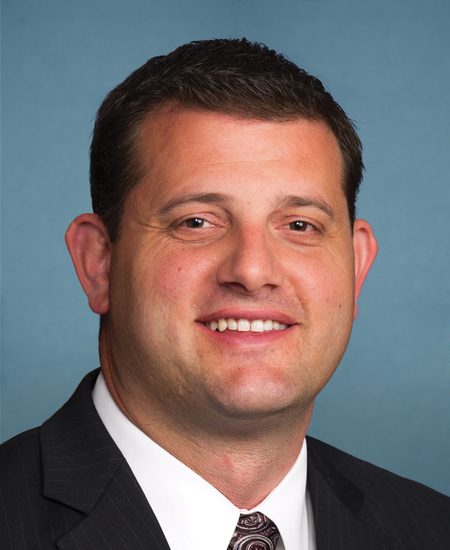
Rep. David G. Valadao
Sponsored bills
School Resource Officers Save Lives Act This bill reauthorizes through FY2023 grants available to states and Indian tribes to address the opioid crisis. It also establishes a demonstration grant program for school districts to train school resource officers, security personnel, and school nurses to administer Narcan kits (Narcan is an opioid antagonist that temporarily reverses and blocks the effects, including overdoses, of other opioids).
This resolution celebrates the 200th anniversary of diplomatic relations between the United States and Colombia. The resolution recognizes the vital strategic alliance between the United States and Colombia, built on a shared commitment to democracy. The resolution also celebrates the contributions made by Colombians and Colombian Americans to the United States.
Designates the facility of the United States Postal Service located at 14011 Clarkdale Avenue in Norwalk, California, as the "Esteban E. Torres Post Office Building."
Into the Light for Maternal Mental Health and Substance Use Disorders Act of 2022 or the Into the Light for MMH and SUD Act of 2022 This bill reauthorizes through FY2028 a program that addresses maternal depression and, among other changes, expands its scope to include mental health and substance use disorders. It also requires the Department of Health and Human Services to maintain a national hotline to provide mental health and substance use disorder resources to pregnant and postpartum women and their families.
Autonomy for Disabled Veterans Act This bill increases the maximum amount authorized under the Home Improvements and Structural Alterations (HISA) grant program to $10,000 for veterans with a service-connected disability and $5,000 for those with disabilities that are not service-connected. The HISA grant program provides medically necessary improvements and structural alterations to veterans' (or service members') primary residence for specified purposes (e.g., allowing for entrance to their home). The bill requires the Department of Veterans Affairs to increase the dollar amount of the grant in accordance with inflation as determined by the Consumer Price Index.
This bill designates the medical center of the Department of Veterans Affairs (VA) in San Diego, California, as the Jennifer Moreno Department of Veterans Affairs Medical Center. The bill also expresses the sense of Congress that the VA should designate a prominent physical space within the Jennifer Moreno Department of Veterans Affairs Medical Center to honor Kathleen Mae Bruyere.
This resolution condemns the terrorist attack on Congregation Beth Israel in Colleyville, Texas, on January 15, 2022. It also expresses support for the affected community, commends the actions of law enforcement and emergency responders, and reaffirms a commitment to combat hate, bigotry, anti-Semitism, and violence against Jewish Americans.
Powering America through Domestic Energy Act or the PADE Act This bill requires the President to prohibit the importation of crude oil and petroleum products from Russia. In addition, the bill requires the President to obtain congressional approval before (1) declaring a moratorium on the use of hydraulic fracturing, or (2) withdrawing federal land from oil and gas leasing under mineral leasing laws.
American Energy Independence from Russia Act This bill addresses U.S. energy security, the production of oil and gas, and the importation and exportation of oil and gas. Specifically, the President must submit an energy security plan that (1) evaluates U.S. crude oil, petroleum products, and natural gas imports and exports; (2) assesses the energy security risks of such imports; and (3) includes strategies to encourage increased domestic production of crude oil, petroleum products, and natural gas to offset Russian imports. The bill also approves the TransCanada Keystone Pipeline in Phillips County, Montana for the import of oil from Canada to the United States. In addition, the bill grants the Federal Energy Regulatory Commission the authority to approve or deny applications for facilities to export natural gas from the United States to foreign countries or import natural gas from foreign countries. The President and federal agencies must obtain congressional approval before (1) prohibiting or substantially delaying certain new energy mineral leases or permits on federal lands, or (2) withdrawing certain federal lands from mineral and geothermal leasing activities. The Department of the Interior must resume issuing oil and gas leases on federal lands and offshore submerged lands in the Outer Continental Shelf as specified under the bill. Finally, the bill limits the drawdown of petroleum in the Strategic Petroleum Reserve until the Department of Energy develops a plan to increase the percentage of federal lands leased for oil and gas production.