

Securing America's Mineral Supply Chains Act of 2022 This bill addresses various matters related to mineral resources and ensuring adequate supply chains for them, with a particular focus on minerals that are critical to the U.S. economy and national security and critical energy resources. For example, the bill modifies various requirements related to permitting and other aspects of mining on federal land, including specific modifications related to critical energy resources; restricts mineral withdrawals on federal land and prohibits moratoria on or reversals of certain mineral leases, claims, or permits without congressional approval; establishes programs and requires activities to advance technologies for critical mineral production, carbon mineralization, and recovery of critical minerals from mine waste; provides support for workforce development related to mining; permits the inclusion of certain fuel minerals (e.g., uranium) on a list of minerals that are critical to the U.S. economy and national security; and requires efforts to diversify supply chains and promote domestic sources for critical energy resources.
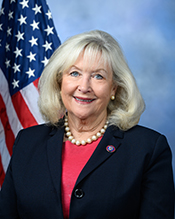
Sponsored bills
This act designates the outpatient clinic of the Department of Veterans Affairs in Ventura, California, as the Captain Rosemary Bryant Mariner Outpatient Clinic.
Endangered Species Transparency and Reasonableness Act of 2022 This bill revises requirements concerning determinations on whether a species is a threatened or endangered species under the Endangered Species Act of 1973 (ESA) and caps attorney's fees to prevailing parties in ESA citizen suits. The U.S. Fish and Wildlife Service (USFWS) and the National Marine Fisheries Service (NMFS) must publish online, subject to privacy or administrative limitations, the best scientific and commercial data available that are the basis for each determination. The bill states that the term best scientific and commercial data available includes all data submitted by a state, tribal, or county government. Thus, the USFWS and NMFS would no longer consider whether data from those sources are the best scientific and commercial data available. Instead, the data would be automatically deemed the best scientific and commercial data available regardless of the quality of the data. Before making a determination on whether a species is an endangered or threatened species, the USFWS and NMFS must provide affected states with all of the data that is the basis of the determination. The Department of the Interior must also publish and maintain an online searchable database that discloses federal expenditures related to litigation under the ESA.
Maddy summaryThis bill designates the Department of Veterans Affairs clinic in Mishawaka, Indiana, as the "Jackie Walorski VA Clinic" to honor former U.S. Representative Jackie Walorski, who served on the House Committee on Veterans' Affairs and advocated for veterans. The law requires all federal references - including laws, documents, and maps - to use the new name for the clinic, effective upon enactment. It does not change the clinic’s services, funding, or operations, as it is a purely commemorative naming resolution.
Working to Advance Tangible and Effective Reforms for California Act or the WATER for California Act This bill addresses the operation of the Central Valley Project (CVP), a federal water project in California owned and operated by the Bureau of Reclamation, and the California State Water Project (SWP), which is operated jointly with the CVP. Specifically, the bill requires that Reclamation operate the CVP and SWP pursuant to a specified alternative to a proposed action in a final environmental impact statement and 2019 agency published Biological Opinions (BiOps). The bill also requires Reclamation and the Department of Commerce to submit a justification to Congress that meets certain requirements prior to requesting or completing a reinitiation of consultation that will result in new BiOps. This bill also requires Reclamation to allocate water to existing agricultural water service contractors within the CVP's Sacramento River Watershed based on the water year type (e.g., dry, wet). These allocations must not affect the United States' ability or obligations to deliver water under other designated contracts. Further, the bill repeals certain eligibility requirements for water infrastructure construction funding under the Infrastructure Investment and Jobs Act to make the Shasta Dam and Reservoir Enlargement Project in California eligible for funding. The bill also requires that Reclamation funds made available but not used for this project in previous appropriations years be made available to the project. Finally, the bill reauthorizes Reclamation's support for the construction or expansion of water storage projects.
Educational Choice for Children Act This bill allows individuals and corporations a new tax credit after 2022 for charitable contributions to tax-exempt organizations that provide scholarships to elementary and secondary school students. Such students must be members of a household with incomes not greater 300% of the area median gross income and be eligible to enroll in a public elementary or secondary school. The bill excludes from the gross income of taxpayer dependents any scholarship amount for the elementary or secondary education expenses of eligible students. It also prohibits governmental control over scholarship granting organizations.
TCJA Permanency Act This bill makes permanent provisions affecting individual and business taxpayers that were enacted in 2017 by the Tax Cuts and Jobs Act and are scheduled to expire at the end of 2025. The bill makes permanent reductions in individual and capital gain tax rates. The bill increases the standard tax deduction for individual taxpayers. It also increases and modifies the child tax credit and raises the contribution base for the tax deduction for charitable contributions. The bill allows additional contributions to ABLE accounts (tax-exempt accounts designed to enable individuals with disabilities to save and pay for disability-related expenses). It exempts from taxation combat zone benefits of members of the Armed Forces serving in the Sinai Peninsula of Egypt and limits the deduction for moving expenses to active duty members of the Armed Forces. Additionally, the bill expands the types of elementary and secondary school expenses eligible for payment from qualified tuition programs (529 programs); lowers to $750,000 the amount of mortgage debt eligible for an interest expense tax deduction; reinstates after 2023 the exclusion of income from the gross income of student loan borrowers for loan debt discharged due to death or total and permanent disability; makes permanent the limitation on the tax deduction for state and local taxes and denies a deduction for foreign real property taxes; makes permanent the tax deduction of the income of certain pass-through business entities; repeals the tax deduction for personal tax exemptions and the exclusion of employer-provided bicycle commuter fringe benefits; terminates certain miscellaneous itemized tax deductions; doubles the estate and gift tax exemption amount; and makes permanent the increase of the alternative minimum tax exemption amount for individual taxpayers.
This resolution condemns Azerbaijan's September 2022 military attack on Armenia and Nagorno-Karabakh and calls for an end to all U.S. assistance to Azerbaijan.
Save Our Sequoias Act This bill provides for the conservation of giant sequoia trees ( Sequoiadendron giganteum ) in California, including by providing statutory authority for the Giant Sequoia Lands Coalition; directing the coalition to submit a Giant Sequoia Health and Resiliency Assessment; declaring an emergency on certain public lands and allowing officials to carry out protection plans during the emergency to respond to the threat of wildfires, insects, and drought; directing the Department of the Interior to develop and implement a Giant Sequoia Reforestation and Rehabilitation Strategy; and establishing a variety of programs and funds to support the conservation of giant sequoias.
National Plan to End Parkinson's Act This bill requires the Department of Health and Human Services (HHS) to carry out a project to prevent and cure Parkinson's disease (a progressive brain disorder that causes unintended or uncontrollable movements) and related conditions. Among other components of the project, HHS must (1) implement and periodically update a national plan to coordinate and guide efforts to prevent and cure the disease; (2) improve diagnosis, treatment, and care of those with the disease; and (3) address health and other disparities related to the disease. HHS must also conduct annual assessments on the preparation for and response to the increased burden of Parkinson's disease. In addition, the bill establishes a council, comprised of federal and nonfederal stakeholders, to advise HHS on and make recommendations concerning the prevention and cure of Parkinson's disease. The bill's provisions terminate at the end of calendar year 2035.