

This resolution condemns the great replacement theory, which it describes as a white supremacist conspiracy theory that has been used to falsely justify racially motivated, violent acts of terrorism domestically and internationally.
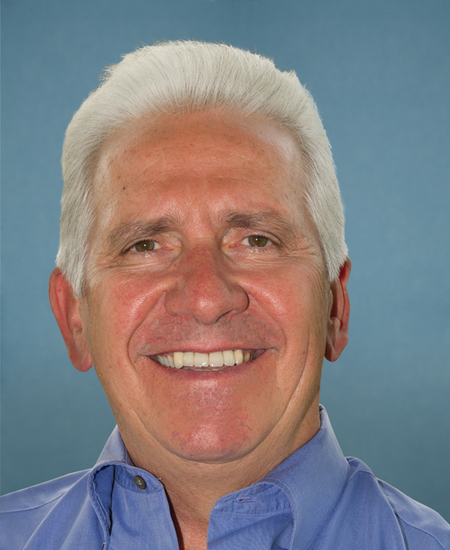
Rep. Jim Costa
Sponsored bills
Maddy summaryHRES 81 is a non-binding resolution passed by the U.S. House of Representatives urging the President to support creating an international Special Tribunal to prosecute Russia’s leaders for the crime of aggression against Ukraine. It specifically references Russia’s 2022 full-scale invasion as a violation of UN Charter principles and General Assembly Resolution 3314, which defines aggression as unlawful military force against a sovereign state. The resolution calls for the President to take all available measures to advance this tribunal, emphasizing Ukraine’s sovereignty and the need to hold Russian officials accountable for war crimes. It does not create the tribunal itself but seeks U.S. diplomatic support for its establishment.
Enhancing COPS Hiring Program Grants for Local Law Enforcement Act This bill allows funds under the Community Oriented Policing Services grant program to be used to provide bonuses for the recruitment and retention of law enforcement officers or career law enforcement officers.
National Law Enforcement Officers Remembrance, Support and Community Outreach Act This bill directs the Department of Justice (DOJ) to establish a National Law Enforcement Officers Remembrance, Support, and Community Outreach Program. The bill further directs DOJ to award a grant under the program to the National Law Enforcement Officers Memorial Fund for the expenses associated with community outreach, public education, and officer safety and wellness programs operated by the of the National Law Enforcement Officers Memorial Fund and National Law Enforcement Museum.
Maddy summaryHRES 363 is a resolution expressing support for recognizing National Police Week, an annual observance established by law to honor law enforcement officers who have died in the line of duty. The resolution acknowledges 556 officers killed in the line of duty during 2022 and calls for ensuring law enforcement officers have necessary equipment, training, and resources to protect both themselves and the public. It encourages the American public to observe National Police Week by honoring law enforcement personnel and recognizing their essential mission in serving communities across the United States. This resolution does not create new law but formally expresses congressional support for an existing observance.
Maddy summaryHRES 372 is a non-binding House resolution expressing support for designating May 2023 as "Mental Health Awareness Month." It does not create new laws or allocate funds but formally urges the nation to recognize mental health as a priority. The resolution supports reducing stigma around mental illness, expanding access to mental health services, and emphasizing that mental well-being is as important as physical health. It highlights the need for greater awareness and resources, particularly for youth, veterans, and communities of color facing mental health disparities, but does not mandate any specific policy changes.
Maddy summaryThis bill creates a new federal grant program to help nursing schools address faculty and clinical preceptor shortages. Schools of nursing with documented shortages can apply for funds to recruit and retain faculty/preceptors through hiring, improved pay, partnerships with healthcare facilities, or diversity-focused initiatives. Priority is given to schools that can't accept all qualified applicants due to shortages, serve underserved areas, or prioritize diverse faculty. Grantees must report annually on outcomes like faculty hired, student enrollment changes, and demographic data. The program aims to expand nursing education capacity by supporting schools directly affected by staffing gaps.
Maddy summaryHR 3238, the Affordable Housing Credit Improvement Act of 2023, updates the Low-Income Housing Tax Credit (LIHTC) program to increase the availability of affordable housing across the United States. The bill makes several key changes including increasing state funding formulas, modifying tenant eligibility rules to better serve vulnerable populations (such as domestic violence victims and students), and expanding credit eligibility for projects in rural and Native American communities. Specific provisions raise the credit for properties serving extremely low-income households, clarify rules around tenant income increases, and require housing providers to protect victims of domestic violence. The bill also updates terminology from "low-income" to "affordable" throughout the tax code and enhances program transparency through data sharing requirements. These changes aim to make the LIHTC program more effective at creating and preserving affordable housing units for low-income households nationwide.
Maddy summaryThe CASE LOAD Act of 2023 adds judicial positions to the U.S. District Court for the Eastern District of California to address an unsustainable caseload. It directs the President to appoint two additional judges by January 2025, one by January 2027, and two more by January 2029, increasing the total judgeship count from six to 11. This directly affects the court serving approximately 8.4 million residents across 34 counties in California, where pending cases per judge exceeded 1,300 as of June 2022. The bill amends the table of authorized judgeships in Title 28 of the U.S. Code to reflect these increases.
Maddy summaryThe Invest to Protect Act of 2023 establishes a federal grant program for local law enforcement agencies with fewer than 200 officers (including counties, municipalities, and tribal governments) to fund training and support services. Grants cover de-escalation training, mental health resources, evidence-based safety training (such as handling domestic violence or mental health crises), and recruitment/retention incentives like signing bonuses, retention bonuses (up to 20% of salary), and stipends for graduate education in mental health or social work. The bill requires a streamlined grant application process (under two hours), public disclosure of bonus amounts, and annual audits to prevent misuse of funds.