

Maddy summaryHRES 832 is a symbolic resolution recognizing Día de los Muertos (Day of the Dead) as an annual cultural observance in the U.S. and globally. It acknowledges the holiday's origins in Mesoamerican traditions, its significance in honoring deceased loved ones through altars (*ofrendas*), and its role in celebrating Latino cultural heritage. The resolution specifically highlights the contributions of Mexican and Mexican American communities to U.S. society and culture, without creating new laws or obligations. It is a ceremonial gesture by Congress, not a policy with concrete effects on individuals or communities.
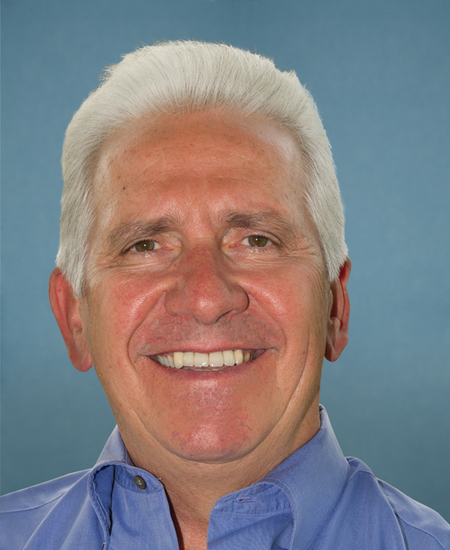
Rep. Jim Costa
Sponsored bills
Maddy summaryHRES 831 is a symbolic congressional resolution supporting October as "National Domestic Violence Awareness Month." It does not create new laws or allocate funding, but formally expresses the House of Representatives' support for the goals of raising awareness about domestic violence. The resolution urges Congress to continue highlighting domestic violence's impact and backing programs that prevent and address it. It directly affects public awareness efforts and serves as a non-binding statement of congressional support for victims and advocacy organizations.
Maddy summaryHRES 599 is a non-binding resolution urging the European Union to fully designate Hizballah (Hezbollah) as a terrorist organization, rather than just its military wing as the EU did in 2013. It recommends the EU implement sanctions, freeze assets, issue arrest warrants, and prohibit fundraising for Hizballah, aligning with actions taken by the U.S. and other nations. The resolution cites Hizballah’s history of attacks, its criminal activities in Europe (including drug trafficking and money laundering), and its ties to Iran as justification. It directly addresses EU decision-makers, calling for coordinated action to disrupt Hizballah’s operations across the continent. The resolution follows prior House efforts, including H.Res. 359 (2017) and H.Res. 558 (2022), which made similar requests.
Maddy summaryHRES 559 is a non-binding House resolution declaring U.S. policy that a nuclear-armed Iran is unacceptable. It states the U.S. must prevent Iran from obtaining nuclear weapons under any circumstances, use all means necessary to stop this, and support allies like Israel in doing so. The resolution does not create new laws or programs but formally expresses congressional position on Iran's nuclear program. It directly affects U.S. foreign policy direction and diplomatic messaging, not specific individuals or groups.
Maddy summaryHCONRES 72 is a non-binding concurrent resolution recognizing the wage gap between Latina women and White, non-Hispanic men, where Latina women earn 57 cents for every dollar earned by White, non-Hispanic men working full-time. It highlights that this disparity results in Latina women losing over $1.2 million in potential earnings over a 40-year career and places them at risk of poverty. The resolution reaffirms congressional support for equal pay but does not create new laws or policy changes. It serves as a symbolic statement to raise awareness about systemic inequities affecting Latina women workers.
Maddy summaryHRES 801 is a symbolic resolution recognizing the cultural significance of the Hmong New Year. It does not create new laws or policies but formally acknowledges the traditions of Hmong Americans celebrating this holiday. The resolution expresses respect for Hmong Americans observing the New Year and wishes them a happy celebration. It directly affects Hmong American communities by affirming their cultural practices through official congressional recognition. This is a ceremonial gesture with no binding obligations or policy changes.
Maddy summaryHRES 785 is a non-binding resolution introduced by the U.S. House of Representatives that formally recognizes the contributions of Hispanic lawyers and judges while highlighting their underrepresentation in the legal profession and judiciary. It cites specific statistics, noting Hispanic lawyers make up 5.8% of U.S. lawyers and Hispanic judges represent just 7% of federal judicial appointments. The resolution expresses support for increasing Hispanic representation in the legal field to better reflect the Hispanic population, which comprises 18.7% of the U.S. population. As a symbolic measure, it does not enact new laws or policies but serves as a statement of the House's acknowledgment of diversity efforts in the legal sector.
Maddy summaryHRES 783 is a symbolic House resolution supporting the designation of October 16, 2023, and October 16, 2024, as "World Food Day" in the United States. It does not create new laws, funding, or policies - it merely expresses congressional support for recognizing an existing global observance established by the UN's Food and Agriculture Organization (FAO). The resolution cites global hunger statistics and encourages Americans to observe the day with activities, but it has no binding effect on government action or policy. As a procedural resolution, it affects no specific groups or programs and serves only to affirm existing international recognition of World Food Day.
Maddy summaryHRES 771 is a non-binding resolution expressing the U.S. House of Representatives' support for Israel following Hamas' October 7, 2023, attack. It condemns Hamas' actions, affirms Israel's right to self-defense, and calls for the immediate release of hostages. The resolution also urges enforcement of existing laws restricting aid to terrorists and sanctions against Iran for supporting Hamas. It does not create new policies or allocate funds, as it is a symbolic statement of congressional support.
Maddy summaryHRES 768 is a symbolic House Resolution expressing congressional support for Israel following Hamas' October 7, 2023 attacks. It condemns Hamas' actions, reaffirms Israel's right to self-defense, and calls for the immediate release of hostages. The resolution references the U.S. commitment to Israel's security through existing military aid programs, including the 2016 U.S.-Israel Memorandum of Understanding, and emphasizes enforcement of laws like the Taylor Force Act to prevent U.S. aid from reaching terrorist groups. As a symbolic resolution, it does not create new policy but serves as a statement of congressional support for Israel.