

Maddy summaryHR 7577, the CHEERS Act, creates a new tax deduction for restaurants, bars, and entertainment venues by expanding eligibility under the energy efficiency tax code (Section 179D). It defines "qualified energy-efficient draft property" as stainless steel or aluminum containers and tap equipment used for alcohol distribution in these businesses, treating them as eligible for the existing energy efficiency tax deduction. This change applies to equipment placed in service after the bill's enactment date, directly benefiting hospitality businesses that own or lease such equipment. The provision modifies existing tax code language without creating new tax rates or altering other regulations.
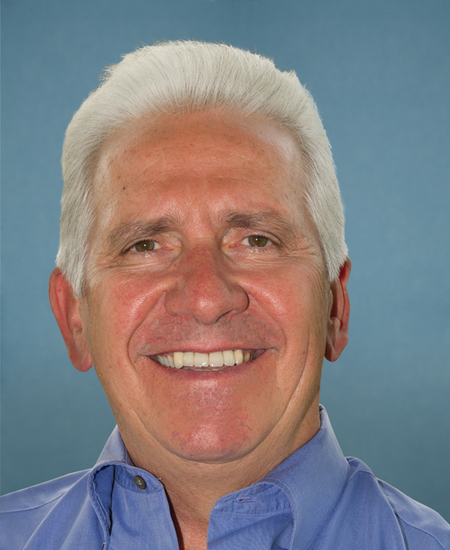
Rep. Jim Costa
Sponsored bills
Maddy summaryHRES 1053 is a non-binding House resolution reaffirming the U.S.-Canada partnership, not a legislative bill with new policy provisions. It states that the U.S. House of Representatives recognizes the strategic importance of the relationship, citing existing economic ties (e.g., $1.3 trillion in bilateral trade in 2022 supporting 7.5 million U.S. jobs) and security cooperation (including NORAD, border security programs, and shared climate efforts). The resolution emphasizes mutual dependence in areas like energy security, supply chains, and defense, but does not create new obligations or funding. It serves as a symbolic statement of support for the existing partnership, referencing established frameworks like USMCA and joint climate initiatives. As a resolution, it has no legal effect on policy or operations.
Maddy summaryThe MOVE Act (HR 7496) allows states to issue temporary permits for overweight vehicles carrying relief supplies during declared emergencies. It specifically enables states to bypass standard weight limits for vehicles delivering aid when either the President declares a disaster under the Stafford Act or a Governor declares emergency conditions impacting commerce or supply chains. Permits issued under the President's declaration expire within 120 days (extendable by the Governor), while those under a Governor's declaration expire 270 days after the declaration (with possible 90-day extensions). This policy directly affects states, emergency responders, and logistics providers transporting essential supplies during crises.
Maddy summaryHRES 1040 is a ceremonial House resolution recognizing February as Black History Month. It formally acknowledges the achievements of Black Americans throughout U.S. history and encourages continued celebration of this observance. The resolution highlights the cultural and artistic contributions of Black Americans, including historical figures and movements like the Harlem Renaissance and hip-hop. As a non-binding resolution, it does not create new programs or affect any specific group, but serves to affirm the importance of commemorating Black history.
Maddy summaryThis bill appropriates nearly $18 billion in emergency funding for international humanitarian assistance and security programs, primarily to address crises in Israel and Ukraine. It provides $5.655 billion for emergency food and shelter, $3.495 billion for refugee assistance, and $7.1 billion for military assistance with specific allocations for Israel ($3.5 billion), Ukraine ($1.6 billion), and the Indo-Pacific region ($2 billion). The bill includes strict oversight requirements, including third-party monitoring of aid to Gaza and detailed reporting to Congress on fund usage. It also establishes mechanisms for transferring funds between programs while requiring certification that assistance aligns with U.S. national security interests.
Maddy summaryHRES 1032 is a symbolic resolution designating the week of February 26-March 1, 2024, as "Public Schools Week" in the U.S. House of Representatives. It expresses congressional support for public education, highlighting its role in preparing students and communities. The resolution has no legal effect or funding provisions - it solely serves as a formal expression of backing for public schools. It directly affects no individuals or entities but aims to raise awareness about public education. This is a non-binding gesture, not a policy change.
Maddy summaryThis bill establishes a framework to deepen cooperation among the U.S., Australia, India, and Japan (the Quad). It requires the State Department to submit a strategy within 180 days detailing U.S. engagement with the Quad on shared challenges like climate, infrastructure, and security. The bill also creates a U.S. parliamentary working group (with 24 members split between House and Senate) to coordinate with Quad partners, funded at $1 million annually. This affects U.S. foreign policy implementation and congressional oversight of Quad relations.
Maddy summaryHR 4039 prohibits U.S. State Department and USAID funds from supporting programs involving goods made in Xinjiang, China - whether wholly or partially produced there. It blocks funding for contracts, policies, or activities using such goods unless the Secretary of State specifically authorizes it after proving no forced labor was used (with clear evidence) and providing 15 days' notice to congressional leaders. The law directly affects U.S. foreign assistance programs that might source materials from Xinjiang. It aligns with existing U.S. trade law definitions of forced labor and creates strict barriers to using Xinjiang-sourced goods in U.S. international programs.
Maddy summaryThe Uyghur Policy Act of 2023 establishes a U.S. Special Coordinator for Uyghur Issues within the State Department to coordinate policy and advocate for the protection of Uyghur cultural, religious, and linguistic identity in Xinjiang. It authorizes $250,000 annually for Uyghur human rights advocates to speak at public diplomacy events in Muslim-majority countries and mandates Uyghur language training for U.S. diplomats. The bill also directs the U.S. government to support United Nations monitoring of Xinjiang human rights issues and oppose efforts to block discussions of Xinjiang at the UN. These provisions focus on diplomatic advocacy and information-sharing, not direct sanctions or enforcement actions against China.
Maddy summaryThis symbolic resolution (HRES 1026) recognizes Black History Month and honors the 94 African-American recipients of the Congressional Medal of Honor for their military bravery, heroism, and valor. It does not create new laws or policies but formally acknowledges their contributions, referencing historical context like Sergeant William Harvey Carney’s 1863 actions and the 1993 study revealing racial discrimination in Medal of Honor awards during WWII. The resolution specifically calls for the House to recognize Black History Month and honor these 94 service members. It is a non-binding expression of support with no concrete policy changes.