

Maddy summaryHRES 1148 is a resolution passed by the U.S. House of Representatives that condemns the Iranian government for supporting terrorism, regional proxy conflicts, and internal suppression of dissent - including its crackdown on protests following Mahsa Amini's death in 2022. It specifically calls for maintaining sanctions against Iran, supporting the Iranian Resistance's Ten-Point Plan (which advocates for a democratic, secular, nonnuclear Iran), and protecting Iranian political refugees in Albania. The resolution also affirms the Iranian people's right to self-determination under international law and urges the U.S. to recognize their struggle for freedom. As a non-binding resolution, it does not create new laws but formally expresses congressional stance.
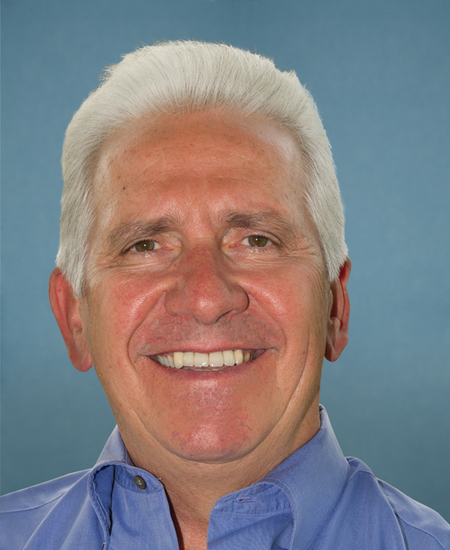
Rep. Jim Costa
Sponsored bills
Maddy summaryHRES 1127 is a symbolic House resolution commemorating the 45th anniversary of the Taiwan Relations Act (TRA) and reaffirming U.S. policy toward Taiwan. It does not create new law but formally reiterates the U.S. commitment to Taiwan under the TRA framework, including regular defense transfers to support Taiwan's self-defense and advocacy for Taiwan's meaningful participation in international organizations. The resolution highlights longstanding U.S.-Taiwan cooperation on trade, security, education, and global challenges like public health and cybersecurity. It specifically calls on the Secretary of State to advance Taiwan's international engagement and supports existing programs like the Taiwan Fellowship Program and the American Institute in Taiwan. As a procedural resolution, it expresses congressional support for current policy without altering legal obligations.
Maddy summaryThis bill establishes a federal grant program under the Safe Drinking Water Act to help water systems remove harmful nitrate and arsenic contaminants from drinking water. It provides $15 million annually for grants to eligible entities like community water systems, schools, nonprofits, and municipalities, prioritizing disadvantaged communities that haven't met safety standards or serve vulnerable populations like children. Grants cover treatment technology installation with first priority for low-income homeowners and landlords. The program requires grantees to identify contamination sources and reduction methods, limits administrative costs to 4% of funds, and mandates an equity review to ensure underserved populations benefit.
Maddy summaryHRES 1110 is a symbolic resolution passed by the U.S. House of Representatives in March 2024 to commemorate March 2024 as National Women’s History Month. It formally supports the month’s goals, recognizes women and organizations advancing women’s history education, and highlights the intersectional contributions of Black, Hispanic, Asian, Native American, Pacific Islander, LGBTQ+, and disabled women throughout U.S. history. The resolution has no legal effect or policy changes - it serves solely as a ceremonial acknowledgment of historical milestones and ongoing advocacy for gender equality. It directly affects all Americans by affirming the significance of women’s historical contributions through official congressional recognition.
Maddy summaryHR 7849, the Disaster Resiliency and Coverage Act of 2024, establishes a federal grant program to help homeowners in high-risk disaster areas make their homes more resilient. The program provides up to $10,000 per household (adjusted annually for inflation) for specific qualifying mitigation activities, such as reinforcing roofs, installing flood barriers, or creating fire-resistant landscaping. Homeowners must have an adjusted gross income under $250,000 ($500,000 for joint filers) and the work must meet FEMA-established standards. States and tribal governments administer the program, with funds intended to incentivize insurance companies to offer or increase coverage in vulnerable areas.
Safer American Family Enterprise Retail Act of 2024 or the SAFE Retail Act of 2024 This bill allows small business retailers a tax credit through 2029 for certain retail theft prevention expenditures. The amount of the credit is 50% of such expenditures as exceeds $250 but does not exceed $5,000. Such expenditures include the cost of conducting employee security training and background checks, limiting and preventing access to the personal property to be sold at retail by the business operator, installing security lighting, cameras, recording equipment, and intrusion detection sensors, and implementing a site security plan.
Maddy summaryHRES 1105 designates March 21, 2024, as "National Women in Agriculture Day" to recognize the contributions of women in the agricultural sector. It specifically highlights women as producers, educators, mentors, and leaders who drive economic impact (accounting for 36% of U.S. agricultural sales in 2022) and support workforce development. The resolution encourages all citizens to acknowledge these women’s roles in food production, agricultural innovation, and mentoring through programs like 4-H and FFA. As a symbolic resolution, it does not create new laws or funding but formally celebrates their ongoing contributions to U.S. agriculture.
Maddy summaryHR 7801, the Sultana Steamboat Disaster Commemorative Coin Act of 2024, authorizes the U.S. Mint to produce commemorative coins honoring the 1865 Sultana steamboat disaster - the worst maritime disaster in U.S. history, which killed nearly 1,200 people. The bill specifies three coin types ($5 gold, $1 silver, and half-dollar clad) to be minted between January 1, 2027, and December 31, 2027, with surcharges from sales directed to the Sultana Historical Preservation Society for museum development and artifact preservation. The coins will be sold at face value plus surcharges ($5-$35 per coin), and the funds must support constructing a museum, exhibits, and preserving disaster-related history. This bill does not create new laws but enables commemorative coin sales to fund a specific historical preservation effort.
Maddy summaryHR 7812, the National Parent and Youth Helpline Act, creates a federal grant program to establish a 24/7 national toll-free helpline for parents, caregivers, and youth facing personal challenges like emotional distress, substance abuse, or educational concerns. The grant, worth $20 million annually from 2025-2030, will fund one nonprofit to operate the helpline (via phone, text, and chat), host weekly evidence-based support groups, and maintain a resource website. It specifically prioritizes serving diverse groups, including LGBTQ+ individuals, and requires annual performance reports to the Secretary and a congressional report after three years. The bill directly affects millions of parents and youth by providing accessible, trauma-informed support to strengthen families and prevent issues like child maltreatment.
Maddy summaryHR 7504, the Rural Veterans Transportation to Care Act, expands a VA transportation grant program to specifically assist rural veterans and tribal organizations. The bill modifies eligibility by adding "rural or highly rural" to program criteria, allows tribal organizations to apply for grants, and sets a maximum grant amount of $60,000 (up to $80,000 for ADA-compliant vehicles). It defines "rural" using USDA's RUCA system and "tribal organization" per the Indian Self-Determination Act, ensuring grants directly support transportation access for veterans in remote areas and tribal communities.