

Maddy summaryThis bill reauthorizes the National Alzheimer's Project Act through 2035 (extending the previous deadline of 2025) and adds new requirements to promote healthy aging and reduce Alzheimer’s risk factors. It mandates the program to provide information on healthy behaviors that may lower cognitive decline risk and expands the advisory group to include representatives from agencies like the Department of Justice, FEMA, and Social Security Administration, plus experts with diverse clinical trial experience. The bill directly affects Alzheimer’s research, care programs, and the federal advisory group overseeing national efforts. Key changes include requiring annual evaluations instead of initial ones and adding a focus on reducing health disparities in Alzheimer’s initiatives.
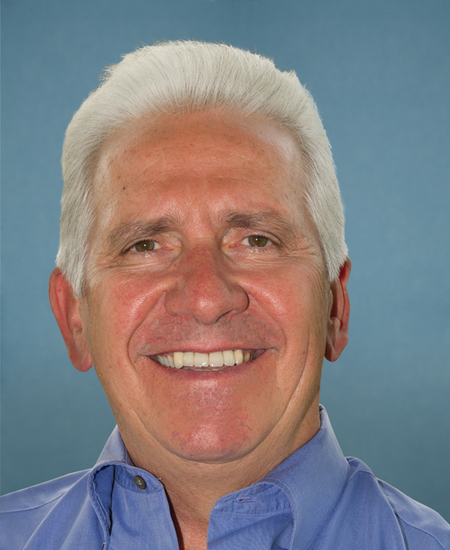
Rep. Jim Costa
Sponsored bills
Maddy summaryHRES 1255 is a non-binding House resolution introduced on May 23, 2024, that calls on all Americans to observe Memorial Day 2024 as a day of remembrance for military personnel who died in service. The resolution specifically honors "the men and women of the Armed Forces who have died in the pursuit of freedom and peace" and urges the public to demonstrate appreciation for their sacrifices. It does not create new laws or policies but serves as a symbolic expression of national gratitude, emphasizing respect for those who died while defending democratic values. The resolution was co-sponsored by multiple House members and aligns with the traditional observance of Memorial Day.
Maddy summaryHR 895, the Combating Organized Retail Crime Act of 2023, expands federal law to better prosecute organized retail theft by amending sections 2314 and 2315 of Title 18. It clarifies that crimes involving stolen goods valued at $5,000 or more over 12 months - including retail theft - can be prosecuted under existing federal statutes, and broadens definitions to include goods taken via "any facility of interstate or foreign commerce." The bill also creates a new Organized Retail Crime Coordination Center within Homeland Security, requiring it to coordinate federal, state, and local law enforcement efforts, share threat information with retailers, and produce annual public reports on trends. This directly affects law enforcement agencies, retailers, and criminal justice systems by standardizing prosecution thresholds and enhancing interagency collaboration.
Maddy summaryHRES 1250 is a ceremonial resolution (not a law) introduced in the U.S. House of Representatives on May 22, 2024, to commemorate the 60th anniversary of President Lyndon Baines Johnson’s Great Society initiative. It honors the historical legacy of Johnson’s domestic policy agenda, which led to landmark legislation like the Civil Rights Act of 1964, Medicare, and the Elementary and Secondary Education Act. The resolution has no binding effect or policy impact - it solely expresses recognition of past legislation and Johnson’s public service without creating new programs or affecting any individuals or entities.
Maddy summaryThis resolution (HRES 616) condemns the Taliban's ongoing human rights abuses in Afghanistan, specifically targeting women, girls, religious minorities (including Hazaras and Sikhs), and ethnic groups. It expresses support for Afghans who assisted U.S. missions and calls for the U.S. government to halt Taliban violence and address systemic repression. Key mechanisms include urging the State Department to assess potential crimes against humanity, developing strategies to support human rights defenders, and expediting refugee processing for Afghans with Special Immigrant Visas. The resolution does not impose new legal requirements but formalizes congressional stance and policy guidance. It directly affects U.S. foreign policy implementation toward Afghanistan.
Maddy summaryHR 5754 renames the U.S. courthouse at 350 W. 1st Street, Los Angeles, California, as the "Felicitas and Gonzalo Mendez United States Courthouse." The bill updates all federal references - such as legal documents, maps, and records - to use the new name. This is a ceremonial designation with no policy changes or direct impact on citizens or laws. The bill solely affects the courthouse's official name and related federal paperwork.
Maddy summaryHR 8471 directs U.S. agencies to support Brazil in combating criminal networks driving deforestation and environmental destruction in the Amazon. It requires the U.S. International Development Finance Corporation to identify sustainable investment opportunities in the region and submit a report on barriers to such investment within 180 days. The bill authorizes $10 million annually (2025-2028) for the State Department to fund U.S. technical assistance, including supporting Brazilian law enforcement efforts against illegal logging, mining, wildlife trafficking, and associated corruption. It also mandates annual reports tracking progress and a specific report on Chinese involvement in illicit resource extraction. The policy directly affects Brazilian authorities, Indigenous communities, and U.S. agencies coordinating with Brazil on environmental security.
Maddy summaryThe BUILD Act creates a federal grant program to fund economic development projects led by universities located in economically distressed communities. It targets institutions in areas where median household income is at least 25% below state or national averages, as defined by specific income thresholds. Universities receive planning grants (up to $100,000 annually for 2 years) to develop projects, followed by implementation grants (minimum $25 million, maximum $50 million over 5 years) for approved initiatives like renovating community-accessible buildings, establishing small business support programs, building broadband infrastructure, or creating health clinics. These projects must directly benefit the surrounding distressed community and are restricted to eligible institutions meeting the bill's criteria.
Maddy summaryHRES 1063 is a non-binding resolution passed by the U.S. House of Representatives to reaffirm America's commitment to NATO ahead of its 75th anniversary. It formally recognizes NATO's role in collective security, emphasizes Article 5's importance for mutual defense, and supports Finland and Sweden's membership. The resolution also calls on NATO allies to meet the 2% defense spending target, but does not create new laws or affect specific individuals or groups.
Maddy summaryThe Public Service Freedom to Negotiate Act of 2024 establishes federal minimum standards for collective bargaining rights for public employees and supervisory employees. The Federal Labor Relations Authority will determine if each state's laws "substantially provide" for these rights, and if not, federal standards will apply to that state. These standards include the right to self-organization, collective bargaining, recognition of labor organizations, and procedures for resolving disputes. The bill preserves existing collective bargaining agreements and excludes certain employee categories like emergency services workers from some provisions.