

Maddy summaryHRES 1385 designates the week of August 4-10, 2024, as "National Farmers Market Week" to recognize the economic and community role of farmers markets. The resolution highlights that farmers markets generated $1.7 billion in income for U.S. farmers in 2020, supported 8,771 markets nationwide by 2019, and connect urban and rural communities while promoting sustainable farming and nutrition access. It does not create new laws or funding but formally acknowledges these markets’ contributions to local economies, public health, and community engagement. The resolution aims to raise awareness of farmers markets’ importance, directly affecting farmers, vendors, and consumers who rely on these venues.
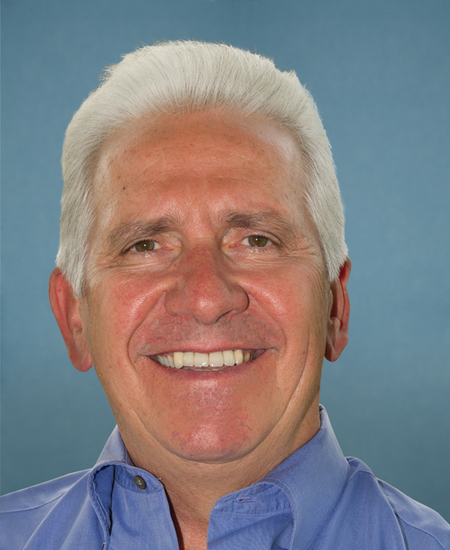
Rep. Jim Costa
Sponsored bills
Maddy summaryHRES 1382 is a non-binding resolution expressing the House of Representatives' view that Americans should resolve political disagreements without threats or violence, citing recent incidents like the 2011 shooting of Rep. Giffords and increased threats against election officials. It calls on political leaders of all parties to consistently and often condemn political violence, including after the recent assassination attempt on former President Trump. The resolution does not create new laws but formally states the House's position on this issue.
Maddy summaryThis bill requires the VA to send veterans letters explaining educational benefits under the Veteran Readiness and Employment (VR&E) program and provide a clear comparison of these benefits against the GI Bill (Chapter 33). It directly affects veterans transitioning from military service who are eligible for VR&E benefits. The key mechanism mandates that each letter include a side-by-side comparison of program benefits, with the same comparison also posted on a publicly accessible VA website. This aims to improve veterans' understanding of available education assistance options.
Maddy summaryThis bill requires the U.S. Postal Service (USPS) to meet specific on-time delivery performance standards for periodicals (newspapers and magazines) before the Postal Regulatory Commission can approve new rate increases for those services. It mandates annual public reports tracking USPS's on-time delivery performance for both in-county and out-of-county newspaper mail, with requirements for data collection if individual mail tracking isn't feasible. The bill also directs the Government Accountability Office (GAO) to study alternative pricing models for periodicals that don't cover their costs, with a report due within two years. These provisions directly affect USPS operations, newspaper publishers, and the postal rate-setting process, aiming to link service quality to financial decisions.
Maddy summaryHR 9060 extends tax credits for biodiesel and renewable diesel producers and users through 2025, replacing the previous 2024 expiration date. It amends the Internal Revenue Code to extend the biodiesel credit (Section 40A) and biodiesel mixture credit (Section 6426) for fuels sold or used after December 31, 2024. The bill also adds a provision preventing double benefits by requiring the credit amount to be zero for fuels already claiming another credit under Section 45Z(a). This directly affects biodiesel producers, refiners, and businesses using these fuels for tax purposes.
Maddy summaryHR 9038, the FAIR Fleets Act, requires the U.S. Postal Service to conduct ongoing assessments of its vehicle distribution and develop a strategic plan to increase fleet availability in underserved areas using fuel-efficient, modern vehicles. The bill mandates an annual report to Congress by December 31 each year, detailing fleet distribution by state, steps taken to improve service in underserved areas, and recommendations for further action. Underserved areas are specifically defined to include rural regions, postal regions with aging vehicles, counties with significant delivery delays, high-poverty urban neighborhoods, and tribal lands. The law aims to improve fleet modernization and equitable distribution across all U.S. regions.
Maddy summaryThe Revitalizing Downtowns and Main Streets Act creates a 20% tax credit for converting non-residential buildings into affordable housing. To qualify, buildings must be at least 20 years old and nonresidential, with conversion costs exceeding 50% of the building's adjusted basis or $100,000. The converted housing must be rent-restricted for 30 years for residents earning 80% or less of area median income (60% in certain designated areas), with a $12 billion national credit limit. Special provisions apply for economically distressed areas and rural historic preservation projects, primarily affecting developers who convert vacant commercial buildings in downtown or main street areas into affordable housing.
Maddy summaryHR 9011, the Ukraine Democracy Defense Lend-Lease Act of 2024, extends the U.S. government's authority to provide military equipment to Ukraine and Eastern European countries affected by Russia's invasion through fiscal year 2026 (previously ending in 2023). It requires the Secretary of Defense to submit a report within 90 days of using this authority, detailing the specific defense equipment provided and outlining a strategy for recovering and returning that equipment. The bill directly affects Ukraine's government and allied nations in Eastern Europe by enabling continued access to U.S. military aid. Key provisions include the extended funding period and mandatory transparency measures to track aid usage and future recovery.
Maddy summaryHR 7914, the Accountability for Terrorist Perpetrators of October 7th Act, imposes U.S. sanctions on the Popular Resistance Committees (PRC) and associated individuals or groups, including blocking property transactions and denying visas to members. The bill requires the President to enforce these sanctions 90 days after enactment, with exceptions for United Nations operations and national security activities, and allows temporary 180-day waivers for national security reasons. It also mandates a 90-day report to Congress on whether the PRC and the group "Lion's Den" meet criteria for designation as terrorist organizations under existing laws. Ongoing reports every two years will track new entities linked to the PRC.
Maddy summaryHRES 1355 is a non-binding resolution supporting the designation of July 10 as Journeyman Lineworkers Recognition Day. It honors lineworkers who maintain electrical infrastructure under hazardous conditions, including during disasters, and commemorates Henry Miller, the first president of the International Brotherhood of Electrical Workers, who died on July 10, 1896, while troubleshooting an electrical outage. The resolution encourages public recognition of these workers' contributions but does not create new laws or policies.