

Maddy summaryThe SERVE Act expands eligibility for Veterans Affairs benefits to former service members discharged due to sexual orientation or gender identity (including gender dysphoria). It directly affects veterans who received entry-level separations, honorable discharges, or other-than-honorable discharges for these reasons, making them eligible for VA hospital care, mental health counseling at Vet Centers, national cemetery interment, education benefits, and housing loans. The bill amends existing VA benefit statutes to include this group by adding specific language to each relevant provision. It also requires the VA to conduct outreach to inform affected veterans and submit a report tracking benefit usage by demographic categories within 15 months of enactment.
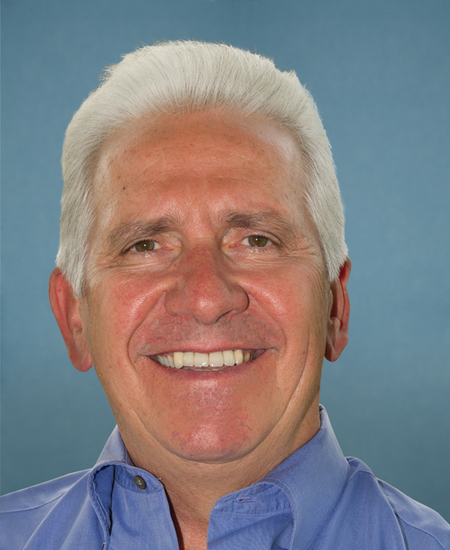
Rep. Jim Costa
Sponsored bills
Maddy summaryThis resolution (HRES 1472) symbolically recognizes the heritage, culture, and contributions of Latinas in the United States. It highlights their economic impact (over 2 million Latina-owned businesses), societal roles (48,000+ active-duty Latinas in the military, 18% of women-owned businesses), and ongoing challenges like the pay gap (Latinas earn 57 cents for every dollar earned by White, non-Hispanic men). The resolution notes that Latinas represent 1 in 5 U.S. women and will comprise 25% of the female population by 2060. As a non-binding resolution, it does not create new policies or allocate funds, but formally honors their contributions and acknowledges the need for continued progress.
Maddy summaryHR 9706, the CARE Act, requires the U.S. Comptroller General to produce a comprehensive report within one year of enactment assessing all federal homelessness programs. The report must include a cost-benefit analysis of each program (covering demographics served, services provided, funding, and outcomes like housing stability and healthcare access), identify effective programs and weaknesses, and recommend improvements to program oversight and data systems. This bill directly affects federal agencies administering homelessness assistance and Congress, which will receive the findings. The key mechanism is the mandatory federal assessment to improve accountability and effectiveness of existing homelessness services.
Maddy summaryHR 9707, the Transnational Repression Reporting Act of 2024, requires the U.S. Attorney General to produce annual public reports on foreign governments' efforts to harass, intimidate, or threaten U.S. persons or individuals in the U.S. (including diaspora communities) to silence criticism. The reports must detail specific cases (like those involving India, Saudi Arabia, Iran, and China), assess foreign government involvement, document U.S. responses (diplomatic, legal, or sanctions), and identify trends. These reports, submitted to Congress and made public, aim to increase transparency about transnational repression - where foreign governments target critics abroad - and hold offending nations accountable. The bill directly affects U.S. government agencies responsible for compiling the reports and foreign governments whose actions are documented.
Maddy summaryHRES 1464 is a symbolic House resolution recognizing the Latino community's engagement in outdoor recreation and conservation efforts. It expresses support for designating the third week of September as "Latino Conservation Week" to highlight community involvement in protecting natural resources. The resolution does not create new laws or allocate funds; it is purely a statement of recognition. It aims to acknowledge existing community activities like park cleanups and educational events focused on environmental stewardship.
Maddy summaryThe Artsakh Revenue Recovery Act of 2024 would establish a U.S. fund to compensate Armenians displaced from Artsakh (Nagorno-Karabakh) after Azerbaijan's military assault in September 2023. It requires the U.S. government to seize Azerbaijani sovereign assets held in the United States if Azerbaijan fails to compensate displaced Armenians for lost revenue from businesses, property, and employment. The bill creates a claims process through which displaced Armenians can submit claims for compensation for revenue lost since September 2023, with the fund paying claims if Azerbaijan does not compensate within 90 days. The Artsakh Revenue Recovery Fund would operate for up to one year after a peace agreement between Azerbaijan and Armenia is signed or until all claims are paid.
Maddy summaryThis bill modifies Medicaid and CHIP rules to let eligible out-of-state healthcare providers enroll without extra state screening. It applies to providers already in Medicare or their home state program, with low fraud risk, serving children under 21 with complex medical conditions. Providers would receive 5 years of enrollment under this streamlined process, eliminating state-level barriers. The change directly affects children seeking specialized care across state lines and the providers who serve them.
Maddy summaryHR 9635, the Seizure Awareness and Preparedness Act, creates a federal grant program to support schools in caring for students with epilepsy or seizure disorders. It provides funding for training school staff - including nurses, teachers, and bus drivers - on recognizing seizures, implementing customized emergency care plans, and managing medication. The bill requires schools to develop individualized health plans with input from families and medical providers, covering care during activities, sports, and school trips. It also protects school staff from liability for good-faith actions related to seizure care, while ensuring funds supplement, not replace, existing resources.
Maddy summaryHRES 1447 is a non-binding resolution expressing support for designating the week of September 22-28, 2024, as "Gold Star Families Remembrance Week." It directly honors families who lost loved ones while serving in the U.S. military (referred to as "Gold Star Families") and families of veterans. The resolution encourages Americans to observe the week by performing community service and celebrating the sacrifices of fallen service members, without creating new laws or obligations. It aligns with existing recognition of Gold Star Mother’s Day (the last Sunday in September) but expands the focus to all affected families.
Maddy summaryHRES 1437 is a ceremonial resolution designating the week beginning September 9, 2024, as "National Hispanic-Serving Institutions Week." It recognizes Hispanic-serving institutions (HSIs) - colleges and universities with at least 25% Hispanic enrollment - and their role in educating low-income students, advancing economic mobility, and serving 31.7% of all undergraduate students. The resolution calls for the public and organizations to observe this week with ceremonies and activities during Hispanic Heritage Month. It does not create new laws, allocate funding, or change existing policies - it is purely a symbolic gesture of recognition.