

Maddy summaryHR 753, the FIRE Act of 2025, directs the NOAA Administrator to establish a program improving wildfire forecasting and detection to reduce loss of life and property. The bill requires developing advanced satellite detection, fuel moisture assessments, and coupled fire-atmosphere modeling systems to better predict wildfire spread, smoke dispersion, and enable early detection. It authorizes $15 million for fiscal year 2026 to fund research testbeds for these capabilities, created through NOAA partnerships with industry and academia. This program directly affects communities at wildfire risk, firefighters, and emergency responders by enhancing early warning systems and risk communication.
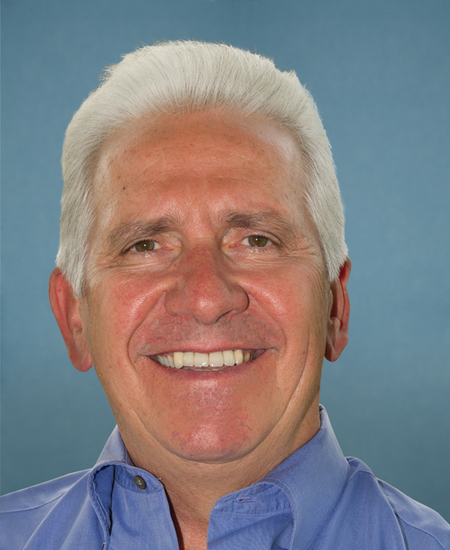
Rep. Jim Costa
Sponsored bills
Maddy summaryHRES 68 is a non-binding House resolution expressing strong disapproval of the President’s announcement to withdraw the U.S. from the Paris Agreement. It commends states, businesses, and citizens supporting the Agreement, urges the President to reverse the withdrawal decision, and calls for Congress to prioritize U.S. climate leadership. The resolution does not create new laws or affect specific groups but formally states the House’s position against withdrawing from the international climate accord. It was introduced by 115 co-sponsors and reflects broad congressional concern about reversing U.S. climate commitments.
Maddy summaryHR 623, the LICENSE Act of 2025, modifies federal commercial driver’s license (CDL) regulations to improve testing flexibility and standards. It requires the Transportation Secretary to revise two key regulations: (1) allowing third-party examiners to administer knowledge tests only if they hold valid certification, complete specific training, and have 1 unit of required instruction (per 49 CFR §384.228), and (2) enabling any state to administer skills tests to CDL applicants regardless of their state of residence or where they received training (per 49 CFR §383.79). These changes directly affect CDL applicants, states administering tests, and third-party examiners. The bill focuses on streamlining testing processes while establishing clearer examiner qualifications and removing geographic barriers for skills testing.
Maddy summaryThe WaterSMART Access for Tribes Act amends federal law to improve access to water infrastructure funding for Indian Tribes. It allows the Secretary of the Interior to reduce or waive a tribe's required cost share for water projects if the tribe faces financial hardship. This directly affects tribes receiving WaterSMART grants, making it easier for them to secure federal funding for essential water management improvements without bearing excessive upfront costs. The change modifies existing cost-sharing rules under the Omnibus Public Land Management Act of 2009.
Maddy summaryHR 566, the Cleaner Air Spaces Act of 2025, provides federal grants to air pollution control agencies to establish local programs targeting low-income households with vulnerable residents (such as those with health conditions or elderly members) in wildfire smoke-prone areas. The bill authorizes $30 million over three years to fund programs that must establish accessible clean air centers, distribute at least 1,000 free, certified air filtration units per program (with replacements), provide educational materials, and partner with community organizations. Agencies must track unit types and costs, survey participants on program effectiveness, and report results to Congress within three years. The program directly affects covered households by improving access to clean air during smoke events through tangible, funded support.
This bill increases the annual limit on the tax credit for qualified railroad track maintenance expenses (also referred to as the short line railroad tax credit) and expands eligibility for claiming the credit. Under current law, the tax credit is limited each tax year to $3,500 multiplied by the sum of the number of miles of railroad track owned or leased by the taxpayer (miles owned or leased) and the number of railroad track miles assigned to the taxpayer by a Class II or III railroad (miles assigned). This bill increases the annual limit to $6,100 multiplied by the sum of miles owned or leased and miles assigned. The $6,100 amount used in the calculation of the tax credit limit is adjusted for inflation for tax years beginning after 2025. The bill also expands eligibility for the tax credit to include gross expenses for maintaining railroad tracks owned or leased as of January 1, 2024. Under current law, the tax credit is limited to gross expenses for maintaining railroad tracks owned or leased as of January 1, 2015.
Maddy summaryThe Agricultural Environmental Stewardship Act of 2025 extends the deadline for a tax credit for qualified biogas property from December 31, 2024, to December 31, 2025. This change applies to biogas property construction beginning after December 31, 2024, as amended in the Internal Revenue Code. The bill directly affects agricultural businesses and producers building biogas systems that convert organic waste into energy, enabling them to claim the tax credit for a longer period. The key mechanism is a straightforward extension of an existing credit, without altering eligibility or creating new requirements.
Maddy summaryHR 475 would impose U.S. sanctions on Russian individuals or entities that have endangered the safety or operational control of Ukraine’s Zaporizhzhia Nuclear Power Plant since Russia’s 2022 invasion. Key provisions include freezing assets of targeted persons and banning their entry into the U.S. via visa restrictions. The bill includes critical exceptions for humanitarian aid (food, medicine, medical supplies) and efforts to restore Ukrainian control of the plant. These sanctions aim to address nuclear safety risks highlighted by the IAEA, without affecting legitimate humanitarian operations.
Maddy summaryHR 485, the Muhammad Ali Congressional Gold Medal Act, authorizes Congress to award a gold medal in recognition of Muhammad Ali's lifetime contributions to sports, civil rights, and humanitarian causes. The bill directs the Treasury Secretary to strike the medal and present it to Ali's widow, Lonnie Ali, following his death in 2016. It also permits the sale of bronze duplicates to cover costs, with proceeds going to the U.S. Mint. This is a commemorative measure with no policy impact, solely honoring Ali's legacy through a symbolic medal.
Maddy summaryHR 507, the Veterans Member Business Loan Act, amends the Federal Credit Union Act to explicitly include loans made to veterans as qualifying "member business loans" under credit unions. This change directly affects veterans seeking business financing through federal credit unions, allowing them to access these loans under the same framework as other small business borrowers. The key mechanism is adding a new definition category ("made to a veteran") to the existing eligibility criteria for business loans, using the standard military definition of "veteran" from Title 38, U.S. Code. The bill does not create new funding or programs but expands existing credit union lending options to include veterans. This definition change takes effect six months after the bill's enactment.