

Safe Schools Improvement Act of 2021 This bill requires states to direct their local educational agencies (LEAs) to establish policies that prevent and prohibit bullying and harassment of elementary and secondary school students. In particular, these policies must prohibit bullying and harassment based on race, color, national origin, sex, sexual orientation, gender identity, disability, or religion. Further, LEAs must provide (1) students, parents, and educational professionals with annual notice of the conduct prohibited in their disciplinary policies; (2) students and parents with grievance procedures that target such conduct; and (3) the public with annual data on the incidence and frequency of that conduct at the school and LEA level. The Department of Education must conduct and report on an independent biennial evaluation of programs and policies to combat bullying and harassment in elementary and secondary schools. The National Center for Education Statistics must collect state data to determine the incidence and frequency of the conduct prohibited by LEA disciplinary policies.
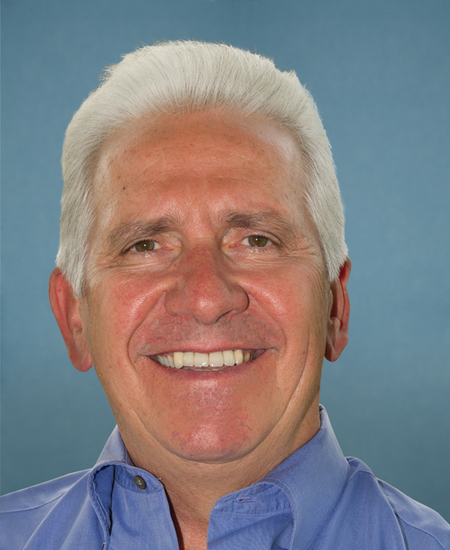
Rep. Jim Costa
Sponsored bills
National Prescribed Fire Act of 2021 This bill directs the Department of Agriculture (USDA) and the Department of the Interior to significantly increase the number and size of prescribed fires conducted on federal lands. Before the end of FY2023, Interior and USDA shall each have carried out a minimum of one prescribed fire on each unit of the National Forest System, unit of the National Wildlife Refuge System, unit of the National Park System, and Bureau of Land Management district (1) that includes an area that has a historical low-severity fire regime, has a historical fire-return interval of not more than 35 years, and is larger than 100 acres; and (2) less than half of which was burned by a wildland fire during the previous 10-year period. Interior shall establish a collaborative prescribed fire program to provide financial assistance to eligible entities to conduct prescribed fires in priority landscapes. Interior shall establish an incentive program to encourage the implementation of large, cross-boundary prescribed fires. Interior and USDA shall hire additional employees and provide training to increase the number of skilled and qualified prescribed fire practitioners in the departments and other organizations. To address the public health and safety risk of the expanded use of prescribed fire, USDA and Interior shall conduct research to improve or develop, among other things, cost-effective, and consistent mitigation strategies for communities impacted adversely by smoke from prescribed fire.
This bill directs the Forest Service to, no less than once every 5 years, complete a wildfire assessment that includes analysis of, among other things, with respect to the previous five years the direct costs of wildfire response, preparation, and recovery, including wildfire mitigation and wildlife suppression activities and human health; the indirect costs of wildfire response, preparation, and recovery, including diminished tax revenue and lost business revenue, including supply chain impacts; and whether the direct and indirect costs have been or will be paid by the federal government, state or territory governments, or county or local governments.
Wildfire Emergency Act of 2021 This bill provides for programs and activities in support of forest restoration, wildfire mitigation, and energy resilience. The Department of Agriculture (USDA) shall select landscape-scale forest restoration projects to implement on National Forest System land and on land adjoining National Forest System land. USDA shall establish a pilot program under which USDA may enter into conservation finance agreements with public or private persons to implement and monitor such projects. The Department of Energy shall establish a program to support critical infrastructure and microgrids, including by improving the energy resilience and power needs of critical facilities (e.g., hospitals) through the use of microgrids, renewable energy, energy efficiency, reduced electricity demand, and on-site storage. USDA and the Department of the Interior shall establish one or more centers in western states to train individuals in methods relevant to the mitigation of wildfire risk. USDA shall establish a competitive grant program to support workforce development in forestry and fire management.
Creation of Opportunities for Medical Manpower in Underserved Neighborhoods by Indemnifying Tuition and Incentivizing Exceptional Service Act or the COMMUNITIES Act This bill increases the amount of student loan repayment available to eligible health care providers who agree to complete a five-year period of obligated service in a health professional shortage area. Specifically, for each year of service, the Department of Health and Human Services shall pay one-fifth of the total amount owed on a participating provider's qualifying student loans. Current law caps the maximum amount of student loan repayment that a provider may receive in exchange for such service.
Federal Retirement Fairness Act This bill modifies the federal civilian service that is creditable service under the Federal Employees Retirement System (FERS). Specifically, it expands the nondeduction service that may be creditable under FERS. Nondeduction service is federal service where an employee's pay is not subject to retirement deductions (e.g., service under a temporary appointment). Currently, nondeduction service performed before January 1, 1989, is creditable under FERS so long as a deposit is made into the retirement fund to cover the period of nondeduction service. This bill allows nondeduction service performed on or after January 1, 1989, to be creditable under FERS so long as a deposit is made into the retirement fund.
Sgt. Ketchum Rural Veterans Mental Health Act of 2021 This bill requires the Department of Veterans Affairs (VA), during FY2022, to establish and maintain three new centers of the Rural Access Network for Growth Enhancement (RANGE) Program in areas with interest from personnel and a need for additional mental health care for rural veterans. The RANGE Program serves veterans in rural areas who are experiencing mental illness. The bill requires the Government Accountability Office to conduct a study and report on whether the VA has sufficient resources to serve rural veterans who need mental health care that is more intensive than traditional outpatient therapy.
This resolution urges the President to facilitate private medical supply donations and to deliver urgently needed medical supplies, including oxygen generator plants, to India and countries neighboring India that are facing the spread of COVID-19.
Clean Energy Future Through Innovation Act of 2021 This bill establishes a variety of incentives and programs to reduce carbon dioxide emissions from the power sector, including incentives and programs to (1) develop low- and zero-carbon power technologies (e.g., technologies to capture, use, and store carbon from coal and natural gas); (2) support certain renewable energy, energy-efficiency, energy storage, and clean electricity technologies; and (3) support nuclear energy.
Better Care Better Jobs Act This bill establishes programs and provides funds for state Medicaid programs to improve home- and community-based services (HCBS), such as home health care, personal care, case management, and rehabilitative services. Specifically, the bill provides funds for the Centers for Medicare & Medicaid Services to award planning grants, develop quality measures, and provide technical assistance to states regarding specified HCBS improvements, particularly with respect to access, utilization, and the associated workforce. The bill also increases the Federal Medical Assistance Percentage (i.e., federal matching rate) for HCBS in states that develop plans and meet specified benchmarks for improvements. The bill also makes permanent (1) the Money Follows the Person Rebalancing Demonstration Program (a grant program to help states increase the use of HCBS for long-term care and decrease the use of institutional care), and (2) certain provisions regarding Medicaid eligibility that protect against spousal impoverishment for recipients of HCBS.