

Transatlantic Telecommunications Security Act This bill directs the Department of State and other federal agencies to help certain countries improve the security of their telecommunications networks and addresses related issues. Assistance provided under this bill shall be available to projects in a country that falls below certain gross domestic product per capita thresholds and is (1) a NATO member state that shares a border with Russia, or (2) a European country that has not participated in or aided Russia's invasion of Ukraine. A project located in such a country shall be eligible for assistance if the project (1) improves telecommunications networks; (2) is inclusive, transparent, economically viable, sustainable, supplied only with secure equipment and services, and compliant with international standards and laws; and (3) does not use equipment or services from China or Russia or replaces such equipment or services. To support eligible projects, the State Department shall provide diplomatic and political support and shall also encourage international financial institutions to provide investment support. The U.S. Trade and Development Agency, the U.S. International Development Finance Corporation, and other specified federal agencies shall also provide project support, such as feasibility studies and finance-related support, as necessary. The State Department must also appoint, from among its existing personnel, an International Telecommunication Union Security Campaign Director. The director must, among other duties, lead efforts to promote candidates for elections at the International Telecommunication Union who will support and defend democratic values, internet freedom, and telecommunication security.
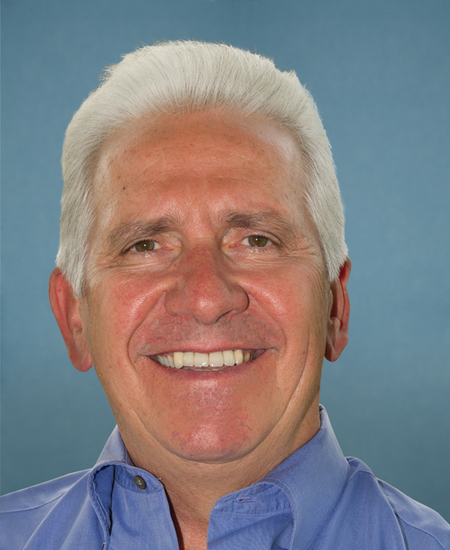
Rep. Jim Costa
Sponsored bills
United States Innovation and Competition Act of 2021 This bill addresses U.S. technology and communications, foreign relations and national security, domestic manufacturing, education, trade, and other matters. Among other provisions, the bill provides funding for FY2022-FY2026 to support U.S. semiconductor manufacturing, research and development, and supply chain security; provides funding for wireless supply chain innovation; establishes a Directorate for Technology and Innovation in the National Science Foundation; extends through 2025 the authority of the National Aeronautics and Space Administration (NASA) to lease its non-excess real property and related personal property; authorizes various programs and policies related to space exploration; authorizes various international affairs programs and activities, including foreign assistance for the Indo-Pacific region; requires federal infrastructure programs to provide for the use of materials produced in the United States; imposes sanctions on China for cybersecurity and human rights abuses; requires the Department of Health and Human Services to consider national security risks associated with sensitive genetic information; includes initiatives related to elementary and secondary education, including those to increase computer science education; contains provisions related to higher education, including those reauthorizing through FY2027 international education programs and addressing China's influence on institutions of higher education; modifies and expands the schedule for graduated merger filing fees; prohibits federal funding for the Wuhan Institute of Virology; requires the U.S. Trade Representative to take certain actions related to digital trade and censorship practices; and extends through 2027 the Generalized System of Preferences.
This resolution supports (1) the goals of Wildfire Preparedness Week; and (2) resources and educational initiatives that communicate how affected communities can take preventative measures such as instituting early warning systems and reducing unplanned human ignitions, as well as how to safely and efficiently evacuate people and their animals.
Maddy summaryHRES 1062 is a symbolic House resolution commemorating San Joaquin Valley College's 45th anniversary. It recognizes the college's 45 years of providing educational programs - starting with medical assisting in 1977 - and its current service to over 5,000 students across 17 California communities. The resolution highlights the college's role in training healthcare professionals (noting it awarded 1 in 4 respiratory therapist associate degrees in California in 2019) and its 69,000+ graduates contributing to California's workforce. The House formally celebrates this milestone and supports the college's mission of advancing student education and community development.
Armenian Genocide Education Act This bill requires the Library of Congress to maintain a public website and otherwise support educational initiatives to promote understanding about the Armenian Genocide.
Feed Hungry Veterans Act of 2022 This bill expands eligibility for the Supplemental Nutrition Assistance Program (SNAP) for certain disabled veterans, including those determined to be catastrophically disabled.
This resolution condemns the rape and assault of women by Russian forces in the occupied area of Bucha, Ukraine. The resolution condemns the deliberate disruption of the free flow of humanitarian aid that is harming innocent civilians, particularly women. The resolution also highlights the critical importance of ensuring women meaningfully participate in the planning and execution of humanitarian actions and the negotiation of peace agreements to meet their unique needs and to protect their human rights. Finally, the resolution calls on Vladimir Putin to condemn sexual and gender-based violence against women and girls in this conflict; hold all perpetrators who commit acts of sexual and gender-based violence accountable; cease all hostilities, protect human rights, and allow unencumbered humanitarian access; and remove all Russian Armed Forces, and other armed groups, from Ukraine.
Maddy summaryHRES 1049 is a resolution recognizing California rice lands as critical habitat for wildlife, particularly waterfowl along the Pacific Flyway. It highlights rice growers' conservation practices, such as winter flooding, which create essential surrogate wetlands supporting hundreds of species in a region that has lost over 90% of its historic wetlands. The resolution acknowledges these efforts as vital to maintaining biodiversity and ecosystem health in California's Central Valley.
This resolution recognizes the discrimination that Sikhs have faced and continue to face in the United States and elsewhere and condemns all acts of bias and hatred against the Sikh community. The resolution also expresses respect and gratitude for the contributions of all Sikh Americans.
Burma Unified through Rigorous Military Accountability Act of 2022 or the BURMA Act of 2022 This bill imposes sanctions pertaining to Burma (Myanmar) and addresses related issues. The President must impose property- and visa-blocking sanctions on certain foreign persons (i.e., an individual or entity), including those that (1) knowingly operate in Burma's defense sector, (2) are responsible for or complicit in undermining Burma's democratic processes, or (3) are senior leaders in Burma's military or government. The Department of the Treasury must prohibit or impose strict conditions on certain accounts used to facilitate transactions for such sanctioned persons. The President may impose sanctions on Myanma Oil and Gas Enterprise if such sanctions would support certain objectives, including reducing the Burmese military's ability to undermine democracy in Burma. Before removing certain foreign persons from a list of specially designated nationals and blocked persons (commonly known as the SDN list), the President must certify to Congress that the person in question has not knowingly engaged in certain activities, such as supporting terrorism. The bill authorizes Department of State and U.S. Agency for International Development activities in Burma and the surrounding region to support democracy activists, humanitarian assistance, and reconciliation efforts. The State Department may (1) continue to assist organizations supporting political prisoners in Burma, and (2) provide assistance to entities investigating crimes against humanity. The President must direct U.S. representatives to the United Nations to vote and advocate for certain actions related to Burma, such as cutting off assistance to Burma's government.