

Maddy summaryHRES 1055 is a symbolic resolution designating April 24-30, 2022, as "National Crime Victims' Rights Week" to honor victims of crime and highlight their needs. It specifically recognizes the work of over 12,000 victim service organizations nationwide and promotes the 2022 theme "Rights, access, equity for all victims." The resolution encourages the public to support crime survivors’ rights daily, not just during the designated week, and acknowledges efforts to address barriers like race, disability, or geography in accessing support. As a non-binding resolution, it does not create new laws or funding but aims to raise awareness and support for victim services.
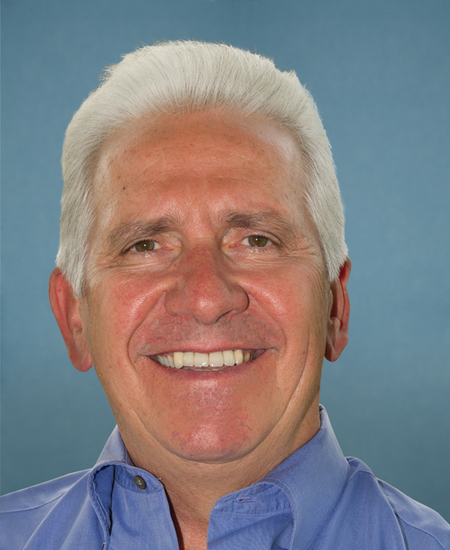
Rep. Jim Costa
Sponsored bills
This resolution expresses the sense of the House of Representatives that the proposed constitutional amendment known as the Equal Rights Amendment has been duly proposed by Congress and ratified by the states and is therefore valid as the Twenty-Eighth Amendment to the Constitution. (The proposed amendment prohibits the United States or any state from denying or abridging equal rights under the law on account of sex.)
Maddy summaryHRES 798 is a symbolic House resolution expressing the sense of Congress about the link between firearm violence and intimate partner violence, honoring victims like Gladys Ricart. It cites statistics showing firearms are used in 59% of intimate partner homicides, with women facing a 5x higher risk of being killed when an abusive partner has access to a gun. The resolution recommends specific policy actions, including strengthening background checks, restricting firearm access for those subject to domestic violence restraining orders, and supporting research on the disproportionate impact on Black, American Indian/Alaska Native, and Hispanic women. It does not create new law but urges Congress to advance related legislation like the Zero Tolerance for Domestic Abusers Act. The resolution directly addresses the intersection of firearms and intimate partner violence affecting millions of women, particularly in marginalized communities.
This resolution recognizes the annual celebration of Dia de los Muertos. The resolution urges the United States and the Department of Homeland Security to promote policies that uphold the human dignity of each migrant person and put an end to migrant deaths along the U.S.-Mexico border. Finally, this resolution calls on the United States and the Department of Health and Human Services to promote policies focused on COVID-19 protections and ensure that all communities have equal access to these to put an end to COVID-19 related deaths.
This resolution expresses the sense of the House of Representatives that (1) lesbian, gay, bisexual, transgender, queer, intersex, and asexual (LGBTQIA+) rights are human rights and protected by the U.S. Constitution; (2) LGBTQIA+ Pride Month should be celebrated; and (3) all Americans should be treated equally regardless of sexual orientation or gender identity.
This resolution addresses issues involving LGBTQI+ identifying people. Specifically, the resolution calls on the Department of State, the U.S. Agency for International Development, and other federal agencies to include the promotion of equal rights for LGBTQI+ identifying people in their work; condemns discrimination, persecution, and violence against LGBTQI+ identifying people; calls on governments across Europe and Eurasia to foster safe and equitable environments for all people; and urges the U.S. government to increase funding for LGBTQI+ human rights organizations in Europe and Eurasia.
Maddy summaryHRES 437 is a symbolic House resolution designating June 4, 2021, as "National Gun Violence Awareness Day" and June 2021 as "National Gun Violence Awareness Month." It does not create new laws or policies but calls on the public to wear orange, increase awareness of gun violence, and focus on community safety efforts during summer months. The resolution references statistics on gun deaths and honors Hadiya Pendleton, a 15-year-old victim of gun violence, to highlight the issue. It has no direct legal effect on individuals or communities but aims to promote public discussion.
Respect for Child Survivors Act This bill requires the Federal Bureau of Investigation (FBI) to use a multidisciplinary approach with any investigation of child sexual exploitation or abuse, the production of child sexual abuse material, or child trafficking. The FBI must also use a trained child adolescent forensic interviewer in these investigations if practicable and consistent with applicable federal law. In implementing a multidisciplinary approach, the bill requires the FBI to use and coordinate with multidisciplinary teams based at children's advocacy centers.
Governing Unaccredited Representatives Defrauding VA Benefits Act or the GUARD VA Benefits Act This bill imposes criminal penalties and/or fines on individuals for directly or indirectly soliciting, contracting for, charging, or receiving any unauthorized fee or compensation with respect to the preparation, presentation, or prosecution of any claim for Department of Veterans Affairs benefits. The attempted commission of such offenses is also punishable by fine or imprisonment.
Afghan Adjustment Act This bill expands eligibility for special immigrant visas to certain Afghan nationals (and accompanying spouse and children) and addresses related issues. The Department of Homeland Security may provide such visas to Afghan nationals who provided qualifying service as a member of the Afghan Air Force or other specified entities and meet eligibility requirements, such as passing a background check. Currently, special immigrant visas for Afghan nationals are generally only available to those who were employed by or on behalf of the U.S. government in Afghanistan. Such visas shall also be available to an Afghan national who is a qualifying relative of a veteran or member of the U.S. Armed Forces. The bill also modifies procedures for providing lawful permanent resident status to certain classes of Afghan nationals, such as by (1) providing a streamlined process with specified vetting requirements for certain individuals, including those who provided support to the U.S. government in Afghanistan; and (2) preserving the eligibility of certain battered spouses whose eligibility for such status stemmed from a marriage that has terminated. Furthermore, the Department of State (1) must respond to inquiries from Members of Congress about specific applications from Afghan nationals seeking special immigrant or refugee status; and (2) establish an office in Afghanistan to perform certain tasks, such as issuing visas, if no U.S. embassies are operational in Afghanistan. The President must establish a task force to develop and implement a strategy to assist Afghan nationals who qualify for admission to the United States.