

Maddy summaryHR 2370, the Access to AEDs Act, authorizes $25 million in federal funding (2024-2028) to help public elementary and secondary schools improve access to automated external defibrillators (AEDs) and CPR training. The bill directs the Secretary of Health and Human Services to award grants to school districts and partners for developing AED programs, training staff and students, purchasing and maintaining AEDs, and creating cardiac emergency response plans. It specifically targets schools to address sudden cardiac arrest (SCA), which is a leading cause of death among student athletes and youth, with 90% of SCA victims dying without immediate CPR and defibrillation. The law requires grantees to report on their activities and establishes a clearinghouse to collect data on school AED access and costs.
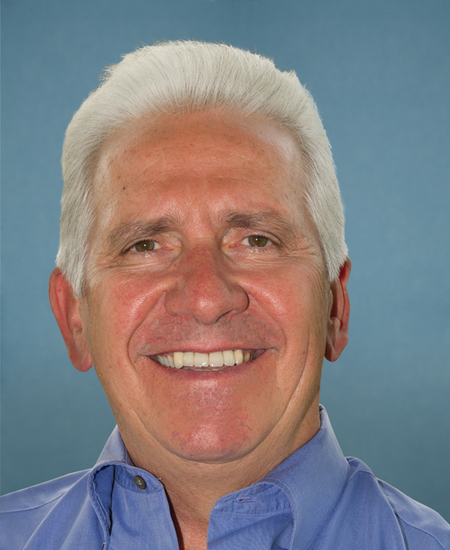
Rep. Jim Costa
Sponsored bills
This resolution affirms that it is U.S. policy to see Ukraine prevail against the Russian invasion and restored to its internationally recognized 1991 borders. The resolution also states that the peace brought by Ukraine's victory must be secured by integrating Ukraine into NATO and other Euroatlantic institutions.
Maddy summaryHR 2823, the Filipino Veterans Family Reunification Act of 2023, exempts certain family members of eligible Filipino veterans from U.S. immigrant visa caps. It allows children or spouses of veterans to obtain visas without being counted against annual limits, directly affecting families seeking to reunite with veterans who served in the U.S. military during WWII or under specific naturalization provisions. The bill amends immigration law to include veterans naturalized under the 1990 Immigration Act (Section 405) or the 1940 Act (as amended in 1942). This creates a direct pathway for reunification by removing a key barrier to family immigration for these veterans' relatives.
Maddy summaryHR 2845, the Enhancing K-12 Cybersecurity Act, creates a centralized School Cybersecurity Information Exchange website managed by CISA to provide K-12 schools, school districts, and state education agencies with tailored cybersecurity resources, best practices, and funding opportunities. It establishes a voluntary registry for schools to report cyber incidents (like ransomware attacks) and requires CISA to publish annual, anonymized reports on incident trends. The bill also funds a K-12 Cybersecurity Technology Improvement Program to deploy protective tools, offer training, and prevent threats, with $10 million authorized annually for 2024-2025. This directly supports schools in strengthening digital security for students and staff, focusing on practical, accessible solutions rather than legislative changes.
Maddy summaryHR 2386, the Community Wood Facilities Assistance Act of 2023, amends two existing federal grant programs to support forest products manufacturing. It increases annual funding from $25 million to $50 million for fiscal years 2024-2028 and shifts focus from energy projects to construction, use, or retrofitting of facilities that process forest products. The bill raises the maximum grant amount from $3.5 million to $5 million per project and adjusts technical requirements, such as increasing thermal energy thresholds and adding market competitiveness as a consideration. This directly affects forest products manufacturers, sawmills, and rural communities seeking to expand or modernize wood-processing facilities.
Maddy summaryThe Military Family Nutrition Act of 2023 amends the Food and Nutrition Act to exclude a military member's basic housing allowance (BAH) from income calculations when determining eligibility for nutrition assistance programs like SNAP. This change directly affects military families who receive BAH as part of their housing benefit but currently have that allowance counted as income, potentially disqualifying them from food assistance. The key provision adds a specific exclusion for BAH paid to or on behalf of uniformed service members under Title 37, U.S. Code. As a result, military families will have their housing costs subtracted from their income for program eligibility, making it easier for them to qualify for nutrition support.
Maddy summaryThe Healthy H2O Act establishes a federal grant program to help rural households and facilities improve drinking water quality by covering costs for point-of-use or point-of-entry water treatment systems, filter replacements, and related services. It directly assists eligible end users in rural areas - including homeowners, renters, child-care facilities, and small residential property owners - who have tested water containing health contaminants like lead, arsenic, or PFAS, while prioritizing private well users and limiting assistance to households with income below 150% of the median nonmetropolitan household income. Grants can fund certified treatment systems, installation by qualified professionals, maintenance, and water quality testing, administered by the Department of Agriculture with $10 million annually from 2024-2028. The program requires annual reports to Congress on progress, barriers to safe water access, and trends in treatment technology use to inform future improvements.
This resolution recognizes the independence of the Republic of Artaskh, also known as Nagorno-Karabakh (the region is internationally recognized to be part of Azerbaijan). The resolution also urges the United States to support international recognition of an independent Artaskh and to cease foreign and military assistance to Azerbaijan, condemns Azerbaijan's blockade and aggression, and supports Armenia's sovereignty and territorial integrity.
This resolution recognizes the 70th anniversary of the signing of the Mutual Defense Treaty between the United States and South Korea. Affirming the importance of the U.S.-South Korean alliance as the linchpin to safeguarding peace, security, and prosperity on the Korean peninsula, the resolution welcomes President Yoon Suk Yeol to the United States. It also supports ongoing defense and security ties, calls for continued promotion of human rights, and encourages close cooperation between the United States, South Korea, and Japan.
Maddy summaryHR 2808, the Arnold Daniel Palmer Commemorative Coin Act, authorizes the U.S. Mint to produce three commemorative coins in 2029 honoring golfer Arnold Palmer: $5 gold coins (50,000 max), $1 silver coins (400,000 max), and half-dollar clad coins (750,000 max). The bill requires coin designs to feature Palmer's image and includes surcharges ($35 for gold, $10 for silver, $5 for half-dollar) that fund the Arnold & Winnie Palmer Foundation. All surcharge revenue must support the Foundation's work in youth health, character development through golf, and nature wellness programs. The coins are legal tender but will only be issued in 2029, with all funds covering minting costs before surcharges are directed to the Foundation.