

Maddy summaryHR 1502 authorizes the creation of a Congressional Gold Medal to honor the volunteers and communities (primarily from Nebraska, Colorado, and Kansas) who supported the North Platte Canteen during World War II. The bill directs the Treasury Secretary to design and strike the medal, which will be presented to the individuals who contributed to the canteen’s operations and then permanently displayed at the Lincoln County Historical Museum in North Platte, Nebraska. It also permits the sale of bronze duplicates to cover production costs, with proceeds going to the U.S. Mint. This is a commemorative measure recognizing historical service, not a policy change affecting current laws or programs.
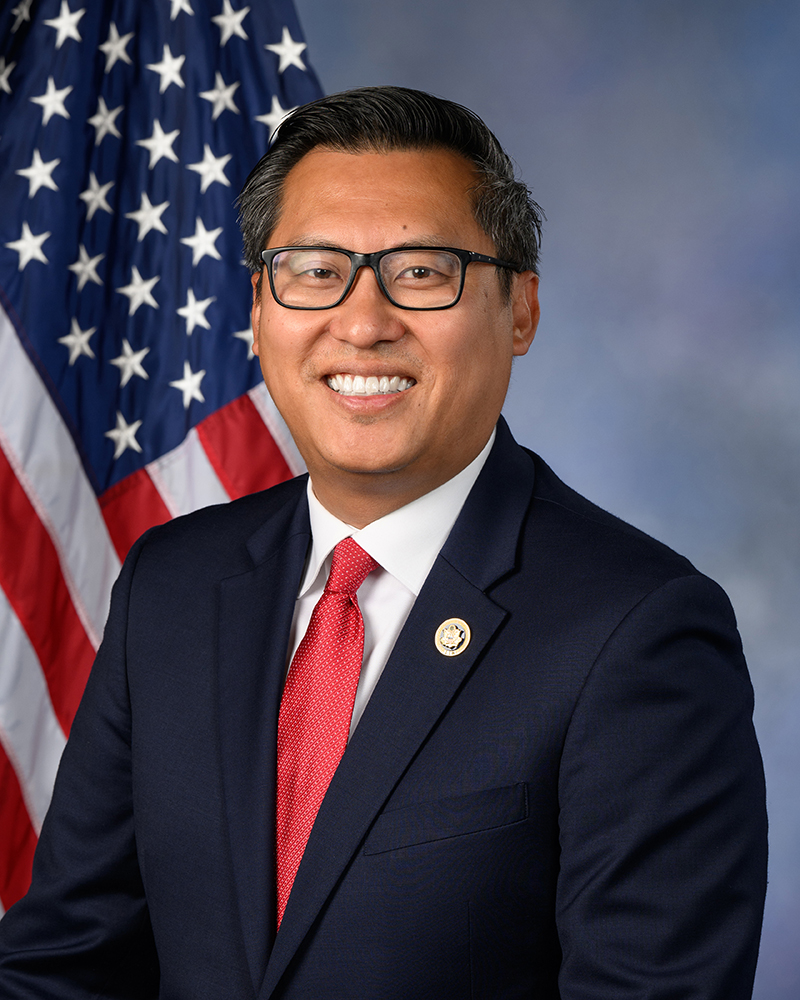
Rep. Vince Fong
Sponsored bills
Maddy summaryHR 1492 amends the Social Security Act to extend the negotiation period for standard drug manufacturers under the federal drug pricing program. Specifically, it changes the timeframe from 7 years to 11 years for small-molecule drugs (like traditional pills) to negotiate prices with the government, aligning it with the existing 12-year period for complex biologic drugs (like insulin or monoclonal antibodies). This adjustment directly affects pharmaceutical companies that produce small-molecule drugs, giving them a longer window to negotiate pricing terms. The bill makes this change effective as if it had been part of the 2022 law that established the program.
Maddy summaryHR 1301, the Death Tax Repeal Act, would eliminate the federal estate tax and generation-skipping transfer tax for estates of individuals dying on or after its enactment date. It directly affects individuals inheriting significant assets, as it removes taxes on estates exceeding $10 million (adjusted for inflation) and repeals taxes on large transfers between generations. The bill modifies the gift tax by establishing a $10 million lifetime exemption with annual inflation adjustments, replacing previous tax brackets. It applies to estates, gifts, and transfers occurring on or after the bill's effective date.
Maddy summaryThis bill creates a 10% tax credit for businesses that modernize or replace freight railcars, directly affecting railcar owners and manufacturers. To qualify, railcars must meet an 8% improvement standard in capacity or fuel efficiency, be built or modernized after enactment, and replace two scrapped railcars. The credit is limited to 1,000 qualified railcars per business annually, with reporting requirements for the Treasury to track claimed credits, scrapped railcars, and new railcar production. The credit applies to railcars placed in service after December 2024, ending three years after enactment.
Maddy summaryHR 1131 exempts certain family farms and small businesses from being counted as assets when calculating financial need for federal student aid under the Higher Education Act. Specifically, it amends the law to exclude the net value of a family farm where the family resides and small businesses (with ≤100 employees) owned by the family from need analysis calculations. This change directly affects students from qualifying family farm or small business households when applying for federal financial aid. The exemption applies to need analysis conducted for award years beginning after the bill's enactment date. The bill modifies Section 480(f)(2) of the Higher Education Act of 1965 to implement this policy change.
Maddy summaryThis resolution (HRES 120) expresses the U.S. House of Representatives' condemnation of Azerbaijan's treatment of Dr. Gubad Ibadoghlu, a detained academic and economist. It urges Azerbaijan to immediately release Dr. Ibadoghlu, who was arrested in 2023 without evidence, subjected to severe beatings, poor prison conditions, denied medical care and legal access, and later placed under house arrest with a travel ban. The resolution specifically calls for his "immediate and unconditional release" and directs the Secretary of State to prioritize his well-being and release in diplomatic engagements with Azerbaijan. It directly addresses the Azerbaijani government's actions toward Dr. Ibadoghlu and his family, who face ongoing harassment.
Maddy summaryHR 1046, the Marc Fischer Memorial Act, requires the Bureau of Prisons to implement digital mail scanning technology at all federal prisons to detect fentanyl and other synthetic drugs in inmate mail. It mandates a strategy within 90 days of an evaluation, including 100% scanning of all mail, digital copies of mail to inmates within 24 hours, and physical mail delivery within 30 days for non-contaminated items. The bill directly affects federal prison staff, inmates, and the Bureau of Prisons by aiming to reduce drug-related overdoses and alleviate staff workload tied to mail processing. Implementation must be completed within three years, with annual reports tracking detected drugs and strategy efficiency. The legislation focuses on concrete technological and procedural changes to enhance safety, referencing a successful pilot program at two facilities.
Maddy summaryThis bill reauthorizes the Dr. Lorna Breen Health Care Provider Protection Act, extending mental health support programs for healthcare professionals through 2030 (previously ending in 2024). It requires funded programs to specifically address reducing administrative burdens on healthcare workers while continuing to promote access to mental health and substance use disorder services. The legislation directly affects healthcare providers across the U.S. who may access these federally supported resources. Key provisions include extending funding periods and mandating that grant recipients focus on easing workplace administrative tasks, alongside maintaining existing awareness initiatives. The bill does not create new programs but continues and refines existing mental health support for the healthcare workforce.
Maddy summaryHR 833 creates a federal tax credit for individuals and corporations that contribute to scholarship granting organizations (SGOs) providing scholarships for elementary and secondary education. The credit allows taxpayers to deduct up to 10% of their adjusted gross income or $5,000 (whichever is less) for contributions to SGOs serving students from households with income up to 300% of the area median income. The bill establishes a $10 billion annual cap on the tax credit program, requires SGOs to verify student eligibility and maintain separate accounts, and prohibits government control over SGOs or private schools. It ensures scholarships can be used at public, private, or religious schools without discrimination based on religious character. The tax credit would be available for contributions made after December 31, 2025, with annual volume cap increases based on usage.
Maddy summaryThis bill authorizes a posthumous Congressional Gold Medal for Fred Korematsu, a Japanese American civil rights advocate who challenged the World War II internment of Japanese Americans. It recognizes his legal fight against Executive Order 9066, which led to the unjust incarceration of over 120,000 people, and his lifelong advocacy against racial discrimination. The medal, designed by the Treasury Secretary, will be displayed at the Smithsonian Institution. The bill is purely commemorative and does not create new legal rights or funding requirements.