

This bill authorizes the Thomas Paine Memorial Association to establish a commemorative work on federal land in the District of Columbia in honor of the philosopher and patriot, Thomas Paine. Thomas Paine is best known for writing Common Sense , a pamphlet that helped to inspire the Revolutionary War. The establishment of the commemorative work shall be in accordance with the Commemorative Works Act. Federal funds may not be used to pay any expense to establish the commemorative work.
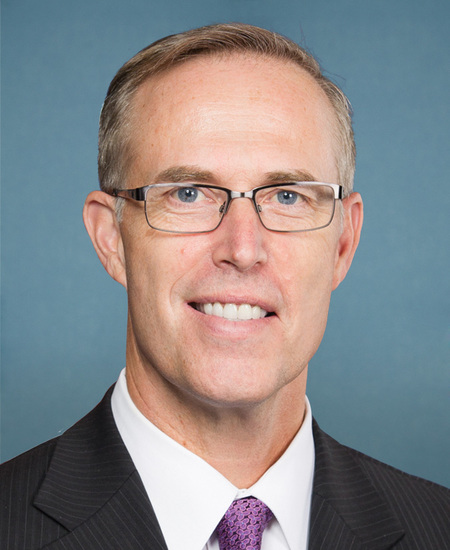
Rep. Jared Huffman
Sponsored bills
Katimiîn and Ameekyáaraam Sacred Lands Act This bill takes approximately 1,031 acres of specified lands in Siskiyou and Humboldt Counties, California, into trust for the benefit of the Karuk Tribe. Land taken into trust may be used for traditional and customary uses for the benefit of the tribe. Additionally, the land taken into trust must allow for continued access by the Forest Service for managing the component of the National Wild and Scenic Rivers System that flows through the land. The Department of Agriculture must enter into a memorandum of understanding with the tribe to establish mutual goals for the protection and enhancement of the river values of such component. Further, the bill prohibits gaming on the land taken into trust.
Sustaining America's Fisheries for the Future Act of 202 2 This bill sets forth and revises various provisions relating to fisheries conservation and management, including to increase the adaptive capacity of fishery management to the impacts of climate change, implement working waterfront plans, establish an innovation prize for data collection technology used in fisheries management, and establish a national standardized reporting program for bycatch.
American Music Fairness Act of 2022 This bill establishes that the copyright holder of a sound recording shall have the exclusive right to perform the sound recording through an audio transmission and addresses other related issues. (Currently, the public performance right only covers performances through a digital audio transmission in certain instances, which means that nonsubscription terrestrial radio stations generally do not have to secure a license to publicly perform a copyright-protected sound recording.) Under the bill, a nonsubscription broadcast transmission must have a license to publicly perform such sound recordings. The Copyright Royalty Board must periodically determine the royalty rates for such a license. When determining the rates, the board must base its decision on certain information presented by the parties, including the radio stations' effect on other streams of revenue related to the sound recordings. Terrestrial broadcast stations (and the owners of such stations) that fall below certain revenue thresholds may pay certain flat fees, instead of the board-established rate, for a license to publicly perform copyright-protected sound recordings.
Ocean-Based Climate Solutions Act of 2022 This bill establishes a variety of requirements to reduce carbon emissions and protect oceans, coastal habitats, marine mammals, and fish populations from climate change and other threats.
Illegal Fishing and Forced Labor Prevention Act This bill sets forth and revises federal law concerning activities to combat human trafficking and illegal, unreported, or unregulated fishing in the seafood industry. The National Oceanic and Atmospheric Administration (NOAA) shall expand the Seafood Import Monitoring Program to apply to all seafood and seafood products imported into the United States. The Departments of Commerce, Homeland Security, Labor, and Health and Human Services must jointly execute a memorandum of understanding to codify and improve interagency cooperation on seafood safety, preventing illegal, unreported, or unregulated fishing and human trafficking, including forced labor, and seafood fraud prevention, enforcement, and inspections. NOAA shall engage with each flag, coastal, port, and market nation that exports seafood to the United States to collect information sufficient to evaluate the effectiveness of such nation's management of fisheries and control systems to prevent illegal, unreported, or unregulated fishing.
Environmental Justice For All Act This bill establishes several environmental justice requirements, advisory bodies, and programs and modifies the scope of environmental review under the National Environmental Policy Act of 1969. The bill sets forth provisions to address the disproportionate adverse human health or environmental effects of federal laws or programs on communities of color, low-income communities, or tribal and indigenous communities. It also prohibits disparate impacts on the basis of race, color, or national origin as discrimination. Aggrieved persons may seek legal remedy when faced with such discrimination. In addition, the bill directs agencies to follow certain requirements concerning environmental justice. For example, agencies must prepare community impact reports that assess the potential impacts of their actions on environmental justice communities under certain circumstances. It also raises coal, oil, and gas royalty rates to create a funding source to support fossil fuel-dependent communities and displaced workers as they transition away from fossil fuel industries. Additionally, the bill creates a variety of advisory bodies and positions, such as the White House Environmental Justice Interagency Council. Among other things, the council must issue an environmental justice strategy. It also establishes requirements and programs concerning chemicals or toxic ingredients in certain products. For example, the bill (1) requires certain products (e.g., cosmetics) to include a list of ingredients or warnings; and (2) provides grants for research on designing safer alternatives to chemicals in certain consumer, cleaning, toy, or baby products that have an inherent toxicity or that are associated with chronic adverse health effects. Finally, it creates a variety of funding programs, such as a grant program to enhance access to park and recreational opportunities in urban areas.
Methane Waste Prevention Act of 2021 This bill establishes requirements to reduce methane emissions from the oil and natural gas sector. Methane is emitted during the production and transport of coal, natural gas, and oil. Specifically, the Environmental Protection Agency (EPA) must issue regulations that require the sector to reduce methane emissions over time. By 2025, methane emissions must be at least 65% below 2012 emissions. By 2030, the emissions must be at least 90% below 2012 emissions. The Department of the Interior must also establish regulations to reduce and prevent the waste of natural gas on federal land and Indian lands, including waste from venting, flaring, and fugitive releases. The regulations must include consistent enforcement mechanisms for any oil or gas operations that are not in compliance.
This act designates the facility of the United States Postal Service located at 6401 El Cajon Boulevard in San Diego, California, as the Susan A. Davis Post Office.
This act designates the facility of the United States Postal Service located at 1400 N Kraemer Blvd. in Placentia, California, as the PFC Jang Ho Kim Post Office Building.