

Maddy summaryThe AFIDA Improvements Act of 2024 updates the Agricultural Foreign Investment Disclosure Act to require foreign individuals or entities owning at least 1% of U.S. agricultural land (directly or through multiple ownership tiers) to report their holdings. It creates new enforcement duties for the Farm Production and Conservation Business Center (FPAC-BC) to validate data, ensure compliance, and identify violators. The bill mandates the Secretary of Agriculture to share foreign ownership reports with the Committee on Foreign Investment in the United States (CFIUS) and update agency handbooks using recommendations from a 2024 Government Accountability Office report. These changes apply directly to foreign landowners and agricultural agencies like the Farm Service Agency, aiming to improve transparency around foreign ownership of U.S. farmland.
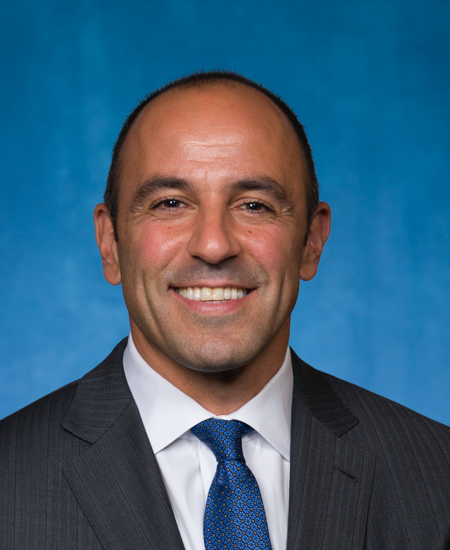
Rep. Jimmy Panetta
Sponsored bills
Maddy summaryHR 7108, the Expanding Access to Mental Health Services in Schools Act of 2024, authorizes federal grants to help high-need public schools hire and retain mental health staff. It targets schools that meet specific criteria: being in the top 15% of need (based on student poverty or other metrics) and failing to meet minimum staffing ratios for counselors, psychologists, or social workers. Grants fund recruitment (through salary stipends or loan repayment), retention (via professional development or incentives), and evidence-based mental health services, with grantees required to contribute 25% matching funds and report annually on provider numbers, demographics, and student-to-provider ratios. The program runs through 2029 and requires all services to comply with privacy laws like FERPA.
Maddy summaryHR 7068, the STAND Against Emerging Opioids Act, adds tianeptine and its analogues, salts, isomers, and salts of isomers to Schedule III of the Controlled Substances Act. This makes tianeptine a federally controlled substance with potential for abuse, directly affecting individuals who use or distribute it. The key provision specifies the exact chemical forms included to prevent evasion of the scheduling. The change takes effect 90 days after the bill is enacted. This is a policy change to regulate a substance with emerging misuse concerns.
Maddy summaryHR 5763 establishes the Organic Market Development Grant Program as a permanent initiative under the USDA. It provides grants to eligible entities - including organic farmers, cooperatives, nonprofits, tribal governments, and processors - to expand market access, improve infrastructure (like cold storage and processing), and support organic certification. The program allocates $75 million annually from the Commodity Credit Corporation and authorizes an additional $25 million, with grants capped at $3 million per project (or $100,000 for equipment-only projects) and requiring a 50% non-Federal matching share for most projects. The goal is to strengthen the domestic organic supply chain, reduce barriers for underserved producers, and fund market development and technical assistance activities.
Maddy summaryHR 7056, the Access to Family Building Act, establishes federal rights for individuals to access assisted reproductive technology (ART) like IVF without unreasonable restrictions, directly affecting patients seeking fertility treatments and health care providers offering ART services. The bill prohibits states from imposing limitations on ART that are more burdensome than those for comparable medical procedures, fail to advance safety, or unduly restrict access, while allowing health and safety regulations that are necessary and least restrictive. It creates federal enforcement mechanisms, including lawsuits by the Attorney General or affected individuals to challenge violating state laws, and preempts conflicting state regulations. The bill explicitly preserves state authority over health/safety regulations and does not alter existing state insurance coverage laws for ART.
Maddy summaryThe LAKES Act (HR 6906) allows local governments and nonprofit organizations to collect and retain user fees for managing lakes and recreation facilities under Army Corps of Engineers projects. It requires that at least 80% of fees collected at a specific site be used for that site's maintenance, while permitting entities to keep up to 100% of fees for related operations. The bill modifies existing laws to ensure these fees supplement, not replace, regular federal funding for recreation facilities. It directly affects local public entities and nonprofits managing Corps-managed water resources. The key change is enabling these groups to retain and use user fees they collect, improving local funding for facility upkeep.
Maddy summaryThe Fiscal State of the Nation Act requires Congress to hold an annual joint meeting within 45 days of the Treasury Department submitting its audited financial statement. At this meeting, the Comptroller General (GAO) must present a nonpartisan, fact-based analysis of the federal government's current finances and long-term fiscal outlook, including deficits and sustainability projections. This analysis must then be formally included in the annual budget resolution. The meeting is open to the public, ensuring transparency in how Congress reviews the government's financial health.
Maddy summaryThis bill requires the President's annual budget submission and congressional budget resolutions to include the ratio of public debt to estimated gross domestic product (GDP). It amends existing laws (31 U.S.C. §1105(a) and the Congressional Budget and Impoundment Control Act of 1974) to mandate this specific metric be reported. The change would standardize the inclusion of this ratio in federal budget documents, making it a formal part of fiscal planning. It is a procedural update to reporting requirements, not a policy change affecting debt levels or spending.
Maddy summaryHR 6081 amends the short title of the Lake Tahoe Restoration Act (Public Law 106-506) to honor Senator Dianne Feinstein, renaming it the "Dianne Feinstein Lake Tahoe Restoration Act." This change applies to all federal references in laws, maps, regulations, documents, or records that previously cited the original title. The bill does not alter the Act's policies or funding but updates its official name and all related references. It directly affects federal agencies and documents that reference the legislation. This is a purely procedural renaming with no substantive policy changes.
Maddy summaryHR 5973, the Continuous Improvement and Accountability in Organic Standards Act (CIAO Act), requires the USDA to regularly review and update organic standards. It mandates that the Secretary publish a public request for input every 5 years (starting 180 days after enactment) on which regulations should be prioritized for revision. Based on this input and recommendations from the National Organic Standards Board, the USDA must propose specific changes, seek public comment, and finalize updates within 5 years. This process directly affects organic farmers, processors, and the USDA, ensuring organic standards evolve using the latest environmental, market, and scientific data.