

Maddy summaryThe Revitalizing Downtowns and Main Streets Act creates a 20% tax credit for converting non-residential buildings into affordable housing. To qualify, buildings must be at least 20 years old and nonresidential, with conversion costs exceeding 50% of the building's adjusted basis or $100,000. The converted housing must be rent-restricted for 30 years for residents earning 80% or less of area median income (60% in certain designated areas), with a $12 billion national credit limit. Special provisions apply for economically distressed areas and rural historic preservation projects, primarily affecting developers who convert vacant commercial buildings in downtown or main street areas into affordable housing.
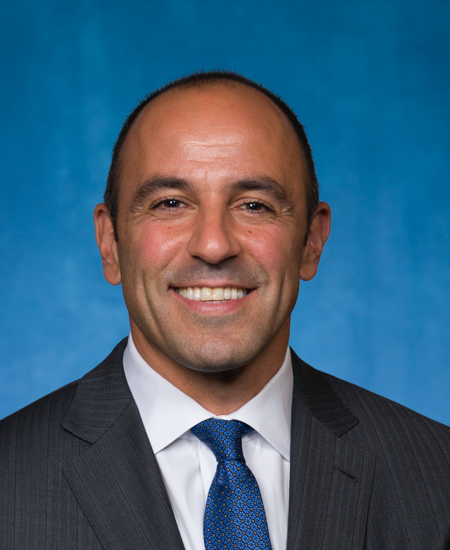
Rep. Jimmy Panetta
Sponsored bills
Maddy summaryHRES 1355 is a non-binding resolution supporting the designation of July 10 as Journeyman Lineworkers Recognition Day. It honors lineworkers who maintain electrical infrastructure under hazardous conditions, including during disasters, and commemorates Henry Miller, the first president of the International Brotherhood of Electrical Workers, who died on July 10, 1896, while troubleshooting an electrical outage. The resolution encourages public recognition of these workers' contributions but does not create new laws or policies.
Maddy summaryThis bill (HR 2365, Public Law 118-66) directs the U.S. Department of Health and Human Services (HHS) to establish the National Parkinson’s Project. It requires HHS to create and update a coordinated national plan for preventing, diagnosing, treating, and researching Parkinson’s disease and related disorders (including multiple system atrophy and progressive supranuclear palsy), while coordinating federal research and care efforts across agencies like the NIH, CDC, and VA. The law mandates annual progress assessments, an advisory council with patient advocates and diverse experts, and annual reports to Congress on federal Parkinson’s programs and recommendations for improvement. It affects federal agencies managing Parkinson’s-related programs and aims to improve care coordination and research efficiency for patients and caregivers, with the law sunsetting in 2035.
Maddy summaryHR 8891 amends the Federal Water Pollution Control Act to establish a formal San Francisco Bay Restoration Program. It allows federal funding through grants, cooperative agreements, or contracts for projects on an annual priority list, requiring at least 25% non-federal funding for grants (capping federal share at 75%) while permitting full federal coverage for other agreements. The bill directly affects federal, state, local, and nonprofit organizations, including the Estuary Partnership, working on Bay restoration projects. Key provisions define funding mechanisms and cost-sharing requirements to support specific restoration activities and studies.
Maddy summaryThis bill would allow families to deduct the cost of private umbilical cord blood or tissue banking as a medical expense on their federal income taxes. It directly affects families who pay for these services through accredited banks meeting specific health regulations. The key change amends tax law to add private cord blood/tissue banking services to the list of deductible medical care expenses, effective for tax years starting in 2024. This makes the cost of storing a newborn's cord blood or tissue for potential future family use tax-deductible, similar to other medical services.
Maddy summaryThis bill simplifies tax administration by changing key IRS filing rules. It establishes that electronic submissions (like tax returns or payments) are considered delivered on the date sent, not when the IRS receives them, starting in 2025. It also extends deadlines for S-corporation tax elections, allowing late filings if the IRS finds "reasonable cause," and moves individual estimated tax payment deadlines from June/September to July/October for tax years beginning after 2024. These changes directly affect individual taxpayers and small businesses managing their tax filings.
Maddy summaryThis bill requires the Secretary of Commerce to standardize and publish geospatial data about public ocean and waterway access rules on a public website within 4 years. It mandates detailed information on where fishing is restricted, waterway closures, speed limits, allowed vessel types (like motorboats or kayaks), and fishing method rules. The data will include geographic boundaries of protected areas, seasonal closures, and navigation details like depth charts. This directly affects recreational users (boaters, anglers) and commercial operators who need clear, up-to-date access information for Federal waterways and fishing areas. The bill does not change existing fishing regulations but makes compliance information more accessible.
Maddy summaryHR 6841 creates a new Coastal and Estuarine Resilience and Restoration Program under the Coastal Zone Management Act, authorizing the Secretary of Commerce to protect and restore coastal and estuarine areas. The program prioritizes lands with ecological, recreational, or community value that face development threats or climate impacts, with special focus on low-income communities and climate mitigation. It requires non-governmental organizations applying for grants to demonstrate public access or ecological protection, and includes $47 million annually (2024-2028) for these efforts. This directly affects coastal states, local communities, and conservation groups managing vulnerable coastal lands.
Maddy summaryThe Pell Grant Preservation and Expansion Act of 2024 would double Federal Pell Grants, increasing the maximum award to $10,000 for the 2025-2026 academic year with annual inflation adjustments, and make Pell Grants a fully mandatory program rather than requiring annual appropriations. It would expand eligibility for students with negative student aid indexes (those with the lowest expected family contributions), provide Pell Grant eligibility for "Dreamer" students protected under DACA, and restore eligibility for students who previously lost it due to academic progress issues. The bill would also increase the total semesters of Pell Grant eligibility from 12 to 18. These changes would directly affect millions of undergraduate students, particularly students of color who currently rely on Pell Grants, with 3 in 5 African American students and half of Latino students depending on these grants. The bill would take effect for the 2025-2026 academic year.
Maddy summaryHRES 1295 is a symbolic resolution expressing the House's support for recognizing Sunday, June 16, 2024, as Father's Day. It does not create new laws or policies but formally acknowledges the role of fathers in families and society. The resolution urges support for existing policy goals like universal paid family leave, affordable childcare, and child tax credits - though it does not mandate any changes. It directly affects all fathers and families in the U.S. by affirming their importance, but has no binding legal effect. This is a procedural resolution, not a legislative bill with concrete policy changes.