

Maddy summaryThis bill increases the monthly housing stipend for veteran parents using the Post-9/11 GI Bill to pursue education entirely through distance learning. It directly affects veteran parents with dependent children who take classes online full-time (more than half-time) instead of attending campus. The key provision amends the GI Bill to provide these parents the same housing stipend amount they would receive if physically attending most classes on campus in their local area. The change applies to the first academic year starting after the bill becomes law.
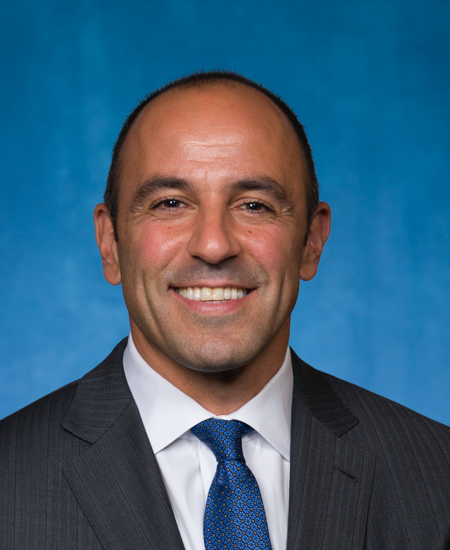
Rep. Jimmy Panetta
Sponsored bills
Maddy summaryThe LODGE Act (HR 1314) allows the National Park Service to partner with state/local governments, tribes, or private entities to develop housing near national parks. It creates "housing partnership agreements" for two groups: National Park Service field employees (and other eligible federal employees) and members of the public. Key provisions include setting rent limits for employees based on federal guidelines, prioritizing employees for housing, prohibiting subleasing, requiring competitive bidding for agreements (with limited exceptions), and using rental proceeds to fund housing maintenance. The bill aims to address housing shortages for park staff and visitors near park units while ensuring projects align with park conservation goals.
Maddy summaryHR 9934, the Veterans Earned Transportation Act (Vets ETA), amends existing law to clarify and streamline transportation benefits for veterans. It removes a specific limitation in Section 111A of Title 38, U.S. Code, which previously restricted transportation authorization to "vocational rehabilitation or counseling" services. The change broadens access by allowing the Secretary of Veterans Affairs to provide transportation "in connection with" these services without the prior restrictive wording. This technical amendment directly affects veterans receiving VA vocational rehabilitation or counseling, ensuring clearer administrative authority for transportation support.
Maddy summaryHR 9987 establishes a nonpartisan 8-member commission to study the feasibility of creating a National Museum of Italian American History and Culture in Washington, DC. The commission, appointed by congressional leaders, will analyze costs, location options, potential relationships with the Smithsonian Institution, and develop a fundraising plan to operate the museum without federal funding. It must submit detailed reports to Congress within 18 months, covering collection needs, impact on existing museums, governance, and long-term financial sustainability. This bill directly affects Italian American communities and cultural institutions by initiating a formal evaluation of a potential museum, but does not authorize construction or funding. The commission’s work will inform future legislative decisions if the museum is deemed feasible.
Maddy summaryHR 9983, the Save Our Ships Act, establishes a new $5 million annual grant program under the Department of the Interior to preserve historic military vessels. The program provides competitive grants to museums, memorials, and other public sites displaying decommissioned military ships (like those operated by the Navy, Coast Guard, or Maritime Commission) for physical repairs, environmental hazard mitigation, and education programs about maritime careers. Eligible recipients include state/local governments and nonprofit organizations managing these sites, with funds specifically targeting the upkeep of vessels and workforce development in shipbuilding. This bill directly supports the long-term preservation of these vessels for public education and historical access.
Maddy summaryHRES 1537 is a non-binding House resolution condemning Hamas' October 7, 2023, attacks on Israel, which killed over 1,200 people and took 251 hostages, including 7 Americans still held captive. It calls on Hamas to immediately surrender, cease attacks, and release all hostages unconditionally, while reaffirming Israel's right to self-defense. The resolution also urges international organizations to condemn Hamas' actions and address the global surge in antisemitism following the attacks. As a symbolic statement, it does not create new laws or alter policy but expresses congressional position. The bill specifically references the ongoing captivity of seven U.S. citizens: Edan Alexander, Itay Chen, Sagui Dekel-Chen, Gadi Haggai, Judith Weinstein Haggai, Omer Neutra, and Keith Siegel.
Maddy summaryThe LINK Act of 2024 creates a military exchange program between the U.S. and Middle Eastern partner nations to support regional integration. It requires the Secretary of Defense to establish a program where U.S. and allied military officers (from E-7 to O-9 pay grades) with expertise in areas like cyber defense, counterterrorism, and military law exchange knowledge through quarterly in-person meetings. The program must cover topics including defense planning, budgeting, and women's participation in peace and security, with annual reports to Congress for six years detailing activities and effectiveness. This directly affects U.S. military personnel, partner nations' militaries, and their defense cooperation efforts.
Maddy summaryThe LINK Act establishes a military officer exchange program between U.S. forces and Middle Eastern partner nations (including those aligned with the Abraham Accords) to deepen regional security cooperation. It requires quarterly in-person meetings where U.S. military personnel (at pay grades E-7 to O-9) and partner officers exchange expertise on topics like defense planning, cyber resilience, counterterrorism, and military-civilian coordination. The program mandates annual reports to Congress detailing participating countries, topics covered, and assessments of effectiveness. This directly affects U.S. military personnel and allied forces in the Middle East by creating structured opportunities for joint learning and operational alignment.
Maddy summaryHR 9602, the Forest Legacy Management Flexibility Act, allows states to authorize qualified conservation organizations to acquire, hold, and manage conservation easements under the Forest Legacy Program. This directly affects states administering the program and conservation groups meeting specific criteria, such as IRS-defined conservation status and Land Trust Accreditation Commission accreditation. Key provisions let states approve these organizations to manage easements, require them to meet program standards, and mandate that easements revert to the state or another approved organization if the organization fails to meet responsibilities or modifies easements improperly. The bill updates the Cooperative Forestry Assistance Act to clarify these processes and accountability measures.
Maddy summaryHR 7032, the Congressional Budget Office Data Sharing Act, amends the 1974 Congressional Budget Act to give the Congressional Budget Office (CBO) clearer authority to quickly obtain data from executive branch agencies. The bill removes barriers to CBO requests by allowing data sharing "with or without written agreement," while requiring the CBO to maintain required confidentiality levels. It also prevents future laws from limiting this authority unless specifically referenced. The law directly affects the CBO and federal agencies that provide budget-related data, aiming to improve the CBO's ability to analyze government spending.