

Maddy summaryThis bill (HR 1432, the VETT Act) amends the tax code to allow members of the Armed Forces to deduct charitable contributions made to certain military service organizations. Specifically, it adds qualifying federally chartered military service organizations (under IRS section 501(c)(19)) as deductible charities for active duty and retired service members. The change applies to tax returns filed for taxable years beginning after the bill's enactment date (December 12, 2024). It directly affects military personnel who make donations to these designated organizations, expanding their eligible charitable deductions.
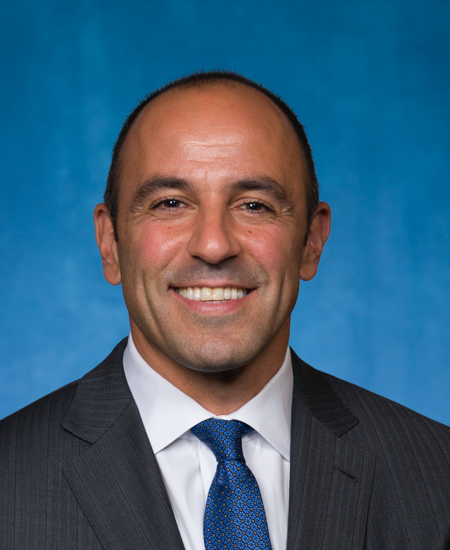
Rep. Jimmy Panetta
Sponsored bills
Maddy summaryHR 7438 directs the U.S. Treasury to mint commemorative coins for the 2026 FIFA World Cup, including 100,000 $5 gold coins, 500,000 $1 silver coins, and 750,000 half-dollar coins. The coins will be sold to the public at face value plus surcharges ($35, $10, and $5 per coin, respectively), with all surcharge revenue paid to FWC2026 US, Inc. for U.S. soccer programs. These funds must support soccer initiatives, particularly in underserved communities and youth development, as specified in the bill. The coins are legal tender but will only be issued during 2026, with no net cost to the U.S. government.
Maddy summaryHR 10348 creates an exception allowing up to $50 million annually from a discretionary airport fund to support terminal development projects at nonhub airports or small hub airports. These projects must be necessary to bring the airports into compliance with federal safety design standards. The exemption applies only to airports already eligible for discretionary funding under existing law, such as those meeting criteria in Section 47108(e)(3). This change removes a prior limitation on using these funds for safety-related terminal work.
Maddy summaryThe FEMA Loan Interest Payment Relief Act requires FEMA to reimburse local governments and electric cooperatives for interest paid on qualifying disaster recovery loans. A qualifying loan must be used for FEMA-covered activities with at least 90% of proceeds dedicated to those purposes. Reimbursement covers the lesser of actual interest paid or what would have been paid at the prime interest rate, as defined by the Federal Reserve. This relief applies to interest accrued in the seven years preceding the bill's enactment.
Maddy summaryHR 7525, the Special District Grant Accessibility Act, requires the Office of Management and Budget (OMB) to issue guidance within 180 days clarifying how federal agencies recognize "special districts" as eligible recipients of federal grants. Special districts - state-created local entities like water districts or fire protection authorities that perform specific government functions - would directly benefit by gaining clearer pathways to access federal funding. Agencies must implement this guidance within one year and report on compliance to Congress within two years. The bill focuses on standardizing agency procedures, not creating new programs or altering grant eligibility criteria.
Maddy summaryHRES 1610 is a ceremonial resolution that commemorates the 40th anniversary of both the LA84 Foundation and the 1984 Summer Olympic Games in Los Angeles. It honors the foundation, established from the Games' $233 million surplus, which has since invested in youth sports programs serving 4 million young people across southern California. The resolution recognizes the 1984 Games' historical significance as the first privately financed Olympics, featuring milestones like the women's marathon debut and global broadcasting innovations. It has no policy impact or new funding - it solely celebrates these anniversaries through symbolic recognition.
Maddy summaryHR 6751 authorizes the U.S. Mint to produce commemorative coins honoring Roberto Clemente, a Hall of Fame baseball player and humanitarian, including 50,000 $5 gold coins, 400,000 $1 silver coins, and 750,000 half-dollar coins. The coins must feature Clemente's image and inscriptions like "Roberto Clemente" and "2027," with all sales including a surcharge ($5-$35 per coin) paid to the Roberto Clemente Foundation. The foundation, which supports youth sports, education, and disaster relief programs, will use these funds for its mission, while the U.S. Treasury must recover all production costs. The coins will be sold exclusively in 2027, with no net cost to the government.
Maddy summary# Summary of "Inspire to Serve Act of 2024" This comprehensive legislation focuses on strengthening the Federal workforce and national service systems through several key initiatives: ## Federal Workforce Development - **Federal Fellowship and Scholarship Center**: Establishes a centralized platform to administer and promote fellowship/scholarship programs for attracting talent to Federal service. - **Public Service Corps**: Creates a scholarship program where students receive financial support in exchange for a 4-year civil service commitment after graduation. - **Public Service Academy Grants**: Provides grants to up to 50 institutions of higher education to develop leadership programs preparing students for public service careers. - **Pathways Program**: Establishes an Internship Program and Recent Graduates Program to provide noncompetitive hiring opportunities for students and recent graduates. ## Critical Skills and Workforce Planning - **Critical Skills List**: Requires the Department of Defense to maintain an annual list of critical skills needed (including cyber, medical, language, and STEM skills). - **Individual Ready Reserve for Critical Skills**: Creates a reserve component for personnel with critical skills who can be activated without consent. - **Cyber Talent Management**: Expands the Cyber Talent Management System to address cybersecurity workforce needs. ## Compensation and Recruitment - **Federal Interns**: Requires agencies to pay interns at least minimum wage (with exceptions for academic credit). - **Enhanced Hiring Targets**: Sets aggregate hiring targets of 30,000 by 2029 and 50,000 by 2034 for recent graduates and post-secondary students. - **Noncompetitive Appointments**: Creates pathways for noncompetitive appointments for those completing fellowships, scholarships, or internships. ## National Mobilization Modernization - **Selective Service System**: Modernizes the draft system to ensure it can mobilize personnel during national emergencies. - **National Mobilization**: Designates a lead official for national mobilization and establishes an Executive Agent for National Mobilization within the Department of Defense. - **Mobilization Exercises**: Requires regular exercises incorporating the Selective Service System into national mobilization planning. The legislation aims to build a more effective Federal workforce by creating clear pathways for students and recent graduates to enter government service, addressing critical skills gaps, and modernizing national mobilization systems to better meet current and future national security challenges.
Maddy summaryThis bill modifies tax law to exclude certain health professional education payments from taxable income. It makes loan repayments under specific federal programs (like Public Health Service Act sections 338B(g), 846(a), and 738(a)) and qualifying state programs for underserved areas tax-free. It also expands tax exclusions for scholarships from programs including the Public Health Service Act's section 846 and the Native Hawaiian Health Care Improvement Act. The bill directly affects health professionals receiving these payments or scholarships, increasing their net compensation by removing tax liability on these funds. This is a concrete tax policy change with no advocacy or speculation about outcomes.
Maddy summaryHR 10273 directs the Secretary of Defense to study the health effects of indoor mold in military housing, specifically focusing on risks to service members, their families, and children living in covered housing (including unaccompanied and family housing). The study must examine harmful mold types, detection methods, health impacts like respiratory illnesses, and the effect on military readiness. Based on the study, the Department of Defense must develop model standards for preventing, detecting, and remediating mold, including new construction requirements to control moisture and ventilation. The bill also requires training military health professionals on mold-related illnesses and mandates public review of proposed standards.