

Maddy summaryThis bill creates a 10% tax credit for businesses that modernize or replace freight railcars, directly affecting railcar owners and manufacturers. To qualify, railcars must meet an 8% improvement standard in capacity or fuel efficiency, be built or modernized after enactment, and replace two scrapped railcars. The credit is limited to 1,000 qualified railcars per business annually, with reporting requirements for the Treasury to track claimed credits, scrapped railcars, and new railcar production. The credit applies to railcars placed in service after December 2024, ending three years after enactment.
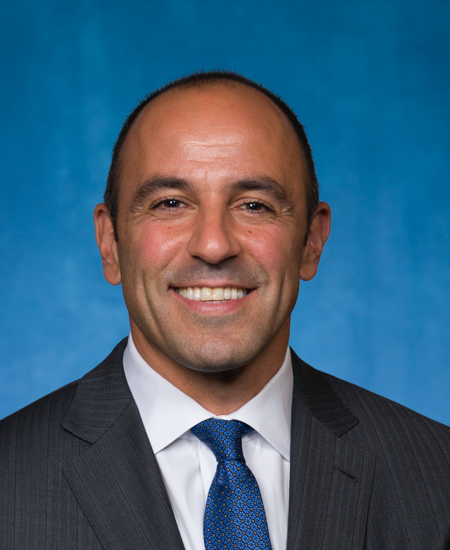
Rep. Jimmy Panetta
Sponsored bills
Maddy summaryHR 1196 prohibits using federal funds to eliminate the U.S. Agency for International Development (USAID) as an independent agency, as defined by law. It requires the Secretary of State to certify annual compliance with this restriction to the House Foreign Affairs and Senate Foreign Relations committees. The bill directly affects USAID's operational status and U.S. foreign aid programs by preventing congressional or executive actions that would dismantle or merge the agency, maintaining its role in U.S. international development efforts.
Maddy summaryThis bill expands tax-advantaged health accounts to cover specific oral care products. It adds toothbrushes (manual or electric), water flossers, and over-the-counter antiplaque/anticaries drugs (like certain mouthwashes or gels) to the list of qualified medical expenses for Health Savings Accounts (HSAs), Archer MSAs, and health flexible spending accounts (FSAs). The change allows people to use pre-tax dollars from these accounts to pay for these common oral healthcare products, directly affecting individuals managing their dental care costs through such accounts. The bill amends existing tax code provisions to include these items under "qualified medical expenses" without creating new government programs.
Maddy summaryHR 1212 requires the Department of Homeland Security (DHS) to annually assess terrorism threats from terrorist groups using foreign messaging apps like Telegram, WeChat, and Weibo. The assessments must analyze how these apps facilitate radicalization, funding, and recruitment, while ensuring compliance with privacy and civil liberties laws. DHS must share findings with Congress and state/local fusion centers, and post unclassified reports publicly. This is a procedural bill focused on monitoring and reporting threats, not on banning apps or changing policies.
Maddy summaryThis bill restricts access to Treasury payment systems (including the Bureau of the Fiscal Service) to only Treasury employees with a "fully successful" performance rating and at least one year of civil service, or contractors/outsiders with security clearances, required privacy/cybersecurity training, ethics agreements, and no conflicts of interest. It treats non-government users accessing these systems as government employees for ethics rules and defines specific actions (like stopping payments) as "personal and substantial participation" in government matters. The Treasury Inspector General must investigate any unauthorized access within 30 days and report to Congress, detailing the breach, security risks, and any halted payments. The bill directly affects Treasury staff, contractors, and any external entities accessing federal payment systems.
Maddy summaryHR 1177, the "Improve and Enhance the Work Opportunity Tax Credit Act," increases tax credits for employers hiring from targeted groups. It raises the credit rate from 40% to 50% for qualified first-year wages up to $6,000, plus 50% for wages between $6,000 and $12,000. The bill also creates higher credit limits for veterans (up to $24,000/$48,000), removes an age cap for Supplemental Nutrition Assistance Program (SNAP) recipients, and adjusts rules for summer youth workers and long-term family assistance recipients. These changes apply to employees hired after December 31, 2024, directly benefiting employers who hire from these eligible groups.
Maddy summaryHR 1158, the Freedom First Lend Lease Act, authorizes the U.S. President to lend or lease defense equipment to Ukraine and Eastern European countries impacted by Russia's invasion, for fiscal years 2026 and 2027. It specifically removes certain legal restrictions (like sections of the Foreign Assistance Act and Arms Export Control Act) that would normally apply to such assistance for Ukraine. The bill requires the President to establish expedited delivery procedures for defense articles within 60 days of enactment and mandates that any loan or lease must comply with standard return, reimbursement, and repayment requirements. This policy change directly affects U.S. foreign military assistance to these nations, streamlining support for defense capabilities and civilian protection.
Maddy summaryThis bill increases the additional standard deduction for seniors aged 65 or older from $600 to $5,000 for tax years beginning after December 31, 2025. It also requires annual inflation adjustments to the $5,000 amount starting in 2026, using the cost-of-living adjustment formula. The change directly affects seniors filing taxes who qualify for the standard deduction, lowering their taxable income. The provision applies to all eligible seniors regardless of income level or filing status.
Maddy summaryHR 1131 exempts certain family farms and small businesses from being counted as assets when calculating financial need for federal student aid under the Higher Education Act. Specifically, it amends the law to exclude the net value of a family farm where the family resides and small businesses (with ≤100 employees) owned by the family from need analysis calculations. This change directly affects students from qualifying family farm or small business households when applying for federal financial aid. The exemption applies to need analysis conducted for award years beginning after the bill's enactment date. The bill modifies Section 480(f)(2) of the Higher Education Act of 1965 to implement this policy change.
Maddy summaryThis bill expands 529 college savings account flexibility by allowing funds to cover costs for industry-recognized postsecondary credentials, not just traditional degrees. It defines "qualified expenses" to include tuition/fees for recognized credential programs (like certifications or apprenticeships), required testing fees, and continuing education needed to maintain credentials. To qualify, programs must meet specific criteria, such as appearing on state lists under the Workforce Innovation and Opportunity Act or being listed in VA or Defense directories. The change applies to 529 distributions made after the law's enactment, giving families more options to use these accounts for job-focused training.