

Maddy summaryHR 3315, the "No Hezbollah In Our Hemisphere Act," directs the U.S. Secretary of State to assess whether any Latin American country qualifies as a "terrorist sanctuary" for Hezbollah within 180 days of the bill's enactment. If a country is deemed a sanctuary due to tolerating Hezbollah's activities, the bill authorizes revoking visas and barring entry for its government officials who fail to take action against Hezbollah. The sanctions would apply to officials from designated "sanctuary" countries unless they take verifiable steps to stop Hezbollah operations or the country no longer meets the definition. The bill includes a 5-year sunset clause and allows limited waivers for national security reasons. It does not require countries to designate Hezbollah as a terrorist organization but pressures them to adopt Argentina's approach.
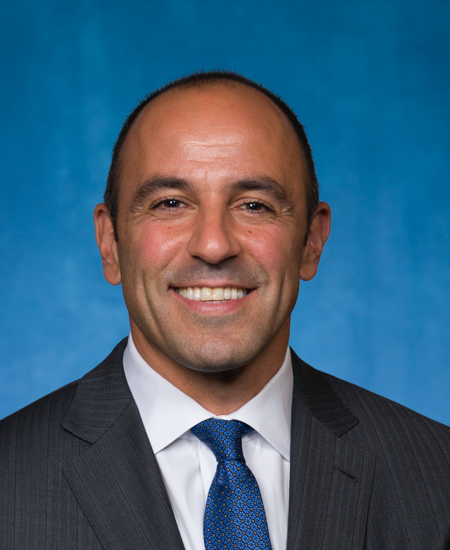
Rep. Jimmy Panetta
Sponsored bills
Maddy summaryHR 3243, the Therapeutic Fraud Prevention Act of 2025, bans the provision of paid conversion therapy aimed at changing a person's sexual orientation or gender identity, and prohibits advertising such therapy as effective, safe, or without risk. It directly affects LGBTQ+ individuals and their families who might be targeted by these practices, as professionals have determined conversion therapy is ineffective and harmful. The law treats violations as deceptive acts under consumer protection laws, empowering the Federal Trade Commission and state attorneys general to enforce it through civil actions. It explicitly excludes legitimate gender transition support and non-discriminatory counseling from the ban.
Maddy summaryThe Law Enforcement Officers Equity Act expands federal retirement benefits to include specific non-traditional law enforcement roles, such as IRS tax collection officers, U.S. Postal Inspection Service employees, Department of Veterans Affairs police, and certain U.S. Customs and Border Protection seized property specialists. It directly affects current and future federal workers in these positions who were previously excluded from law enforcement retirement benefits under the Federal Employees Retirement System and Civil Service Retirement System. The bill allows current employees (incumbents) to elect to count prior service toward retirement by paying a deposit covering the difference in retirement contributions, with government contributions made over 10 years. It also temporarily exempts law enforcement officers from mandatory separation for three years after enactment.
Maddy summaryHR 3264 requires the U.S. Treasury to determine within 180 days if Hong Kong should be designated as a "jurisdiction of primary money laundering concern" under U.S. law. It also mandates a 360-day report from the State Department (with Treasury and Commerce) assessing Hong Kong's role in facilitating exports and financial transactions that violate U.S. sanctions on Russia, Iran, and other adversaries. The report must evaluate how Hong Kong enables illegal transfers of goods/technology, assess impacts of Hong Kong's National Security Law on anti-money laundering efforts, and detail U.S.-Hong Kong cooperation on enforcement. This bill directly affects U.S. financial institutions operating in Hong Kong and aims to strengthen oversight of Hong Kong's compliance with U.S. sanctions and export controls.
Maddy summaryHR 3241, the Defense Workforce Integration Act of 2025, creates pathways for military personnel medically disqualified from service to transition into civilian defense jobs. It requires the Defense Department to establish a process within one year for entry-level service members (like those in basic training or ROTC) who can't serve due to medical reasons to qualify for civilian roles in the Department of Defense. The bill also mandates a new program to connect medically disqualified individuals with employment opportunities in the defense industrial base, cybersecurity, research, and other national security support roles. Additionally, it directs the Navy to provide career information about Military Sealift Command and shipbuilder training to personnel during transition assistance. The Secretary of Defense must report on implementation to Congress within one year.
Maddy summaryHR 3211 establishes a new federal loan program to help crop and livestock producers purchase precision agriculture equipment, which uses technology like GPS, sensors, and data software to manage inputs (such as fertilizer, water, and feed) more efficiently. The program offers loans up to $500,000 with a 12-year term, requiring borrowers to provide security (like a lien on the equipment) and demonstrating creditworthiness and repayment ability. The USDA must report annually on loan recipients - including farm size, demographics, equipment categories used, and estimated environmental benefits - to Congress and the public. This directly affects farmers seeking to adopt efficiency-focused technology, with no eligibility restrictions based on farm size or type.
Maddy summaryThis bill clarifies liability for payroll tax errors when third-party payroll services (like professional employer organizations) rely on employer certifications. It allows these services to depend on employer-provided information unless they knew or should have known of an error. If an error is discovered, the employer bears full liability unless the third party had "constructive knowledge" of the error, in which case liability is shared based on the portion of the error the third party knew about. The bill also prevents the IRS from delaying payroll tax credits or auditing employers solely because a third party relied on an erroneous certification from that employer. It directly affects third-party payroll services and the businesses that use their services for tax filings.
Maddy summaryHR 3184, the PFAS Alternatives Act, funds research to develop turnout gear (firefighter safety clothing) without harmful PFAS chemicals, directly affecting firefighters who wear this gear. It authorizes $25 million annually (2025-2029) for grants to eligible organizations to research and test PFAS-free gear, requiring partnerships with firefighting groups to translate findings into practice. The bill also allocates $2 million yearly (2027-2031) for training programs on safe gear use and decontamination. Its goal is to reduce firefighters' exposure to chemicals linked to occupational illnesses during operations.
Maddy summaryThe ACES Act (HR 530) mandates a study by the National Academies to examine cancer rates and deaths among veterans who served as aircrew members (e.g., pilots, navigators) in fixed-wing military aircraft. The study will identify potential exposure risks (like chemicals) linked to 12 specific cancers (including brain, lung, prostate, and melanoma) and use VA, DoD, and CDC data to analyze prevalence and mortality. It does not change benefits or laws but requires a final report to the VA and congressional committees. The study directly affects veterans with the defined aircrew service history.
Maddy summaryThe MEGOBARI Act (HR 36) is a U.S. legislative proposal that aims to strengthen Georgia's democratic development and Euro-Atlantic integration. It directs the U.S. Secretary of State to suspend the U.S.-Georgia Strategic Partnership Commission until Georgia meets specific democratic standards, including respecting citizens' democratic wishes and advancing EU/NATO membership. The bill establishes potential sanctions against Georgian officials who block Euro-Atlantic integration or undermine Georgia's sovereignty, requiring the President to determine if officials have engaged in significant corruption or actions against Georgia's territorial integrity. Additionally, it mandates reports on Russian intelligence assets in Georgia and a 5-year U.S. strategy for bilateral relations, with the Act set to sunset after 5 years from enactment.