

Maddy summaryHR 5097 establishes a new grant program under the Agricultural Marketing Act of 1946 to help specialty crop producers in the U.S. adopt mechanized and automated equipment. The bill directs the Secretary of Agriculture to award grants covering equipment like drones, sorting machines, precision irrigation systems, and robotic tools, plus required training for their use. Recipients must contribute at least 50% of the costs through non-Federal matching funds. This program directly affects commercial specialty crop growers by providing financial support to modernize operations and improve efficiency.
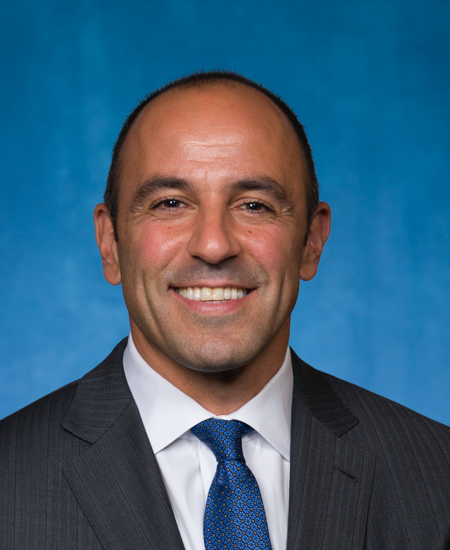
Rep. Jimmy Panetta
Sponsored bills
Maddy summaryHR 5018, the Naomi Schwartz and Susan Rose Safe Parking Act of 2025, adds "safe parking" as an eligible activity under the federal Emergency Solutions Grant Program. It directly affects homeless individuals living in vehicles, including motor homes, by making funding available for programs that provide them with safe overnight parking and supportive services to transition to stable housing. The bill defines "safe parking" as activities offering a secure place to park vehicles overnight while connecting residents to re-housing support. This change allows communities to use federal grants to establish and operate such parking programs, which were previously ineligible under the program's rules.
Maddy summaryThe SUN Act (HR 4998) requires the President to submit a detailed report to Congress within 15 days whenever National Guard members are deployed domestically for non-disaster purposes under specific laws. The report must include the legal basis for the deployment, evidence of reduced violence, input from local law enforcement, total costs, and a certification that the deployment won’t interfere with disaster response capabilities. It applies to all domestic uses of the National Guard except for responses to natural disasters under the Stafford Act. The bill aims to enhance congressional oversight of military deployments on U.S. soil.
Maddy summaryThis bill (HJRES 115) terminates a presidential emergency declaration made on August 11, 2025, which claimed a "crime emergency" in Washington, D.C. It directly affects the District of Columbia by ending federal restrictions that prevented D.C. from using $1 billion in locally-raised funds for public safety, law enforcement, fire services, and schools. The resolution cites that the emergency declaration was legally flawed - section 740 of the DC Home Rule Act does not permit federalizing the Metropolitan Police Department - and notes that D.C. violent crime has reached a 30-year low. The bill formally ends the emergency under the DC Home Rule Act, restoring D.C.'s authority over its own budget and public safety resources.
Maddy summaryHR 4945, the GO Ag Act, creates a $5 million grant program to fund new agricultural education programs in secondary schools. It provides competitive grants (max $100,000 per school) for schools to develop new programs focused on agriculture, including curriculum, equipment, and work-based learning. To qualify, schools must show programs are new, align with regional employer needs, and include sustainable funding beyond the grant. Grantees must track student progress (including special populations) and submit annual reports on program effectiveness through 2028.
Maddy summaryThe Central Coast Heritage Protection Act designates approximately 235,000 acres of federal land in California as wilderness areas, scenic areas, or a special management area. It incorporates specific lands into existing wilderness systems, designates river segments as Wild and Scenic Rivers, and establishes management guidelines including provisions for fire management, grazing, and recreation. The bill withdraws these lands from mining, mineral leasing, and other activities under public land laws. It also requires studies on trail connectivity, vehicle trails, and nonmotorized recreation opportunities within the designated areas. The bill directly affects land management by the Bureau of Land Management and Forest Service in California's Central Coast region.
Maddy summaryThis bill adjusts health insurance subsidies by modifying the premium tax credit structure under the Internal Revenue Code. It replaces previous income thresholds with a sliding-scale formula, increasing subsidies for households earning between 150% and 400% of the federal poverty level - reducing their required premium payments as income rises within these tiers. The changes apply to tax years beginning after December 31, 2025, directly affecting middle-income individuals and families purchasing coverage through health insurance marketplaces. It also repeals specific provisions from a prior reconciliation law related to health care.
Maddy summaryThis resolution (HRES 616) is a symbolic, non-binding expression of support for designating July 2025 as "American Grown Flower and Foliage Month." It recognizes the domestic flower and foliage industry’s economic impact - supporting hundreds of growers, thousands of small businesses, and tens of thousands of jobs - while highlighting that only 20% of flowers sold in the U.S. are domestically grown. The resolution urges consumers to choose domestically grown floral products to support U.S. farmers and the agricultural economy, but it does not create new laws, regulations, or funding. As a procedural resolution, it has no direct effect on policy or industry operations.
Maddy summaryThis bill removes a barrier preventing most low-income students from accessing SNAP benefits. It amends the Food and Nutrition Act to explicitly allow students enrolled at least half-time in recognized higher education programs to qualify for SNAP, reversing a prior exclusion. The key change eliminates the previous requirement that students meet specific exceptions (now deleted) and adds a new eligibility category under Section 3(m)(5). This directly affects low-income undergraduate and graduate students at colleges and training programs who were previously ineligible. The changes take effect January 2, 2026.
Maddy summaryThe Immigrant Witness and Victim Protection Act of 2025 helps immigrant survivors of domestic violence, sexual assault, human trafficking, and other crimes who qualify for protections under the Violence Against Women Act (VAWA) and Trafficking Victims Protection Act (TVPA). It eliminates annual limits on U visas and special immigrant juvenile visas, grants work authorization within 180 days of filing an application, and prohibits deportation or detention while cases are pending. The bill requires victims to be released from detention unless the government proves they pose a specific threat or may skip court, with clear evidence needed to override this presumption. This directly affects immigrant victims seeking legal relief in the U.S. as they navigate their cases without fear of immediate removal.