

Maddy summaryThe SAFE Banking Act of 2023 would protect banks and financial institutions that provide services to state-legal marijuana businesses and hemp-related businesses by preventing federal regulators from taking adverse actions against them solely for serving these businesses. It clarifies that income from state-legal marijuana businesses can be considered for mortgage applications, and requires regulators to update guidance on suspicious activity reports related to these businesses. The bill does not require financial institutions to serve these businesses, but ensures they won't face penalties for doing so. It extends similar protections to hemp-related businesses, which have faced banking challenges despite being federally legal under the 2018 Farm Bill.
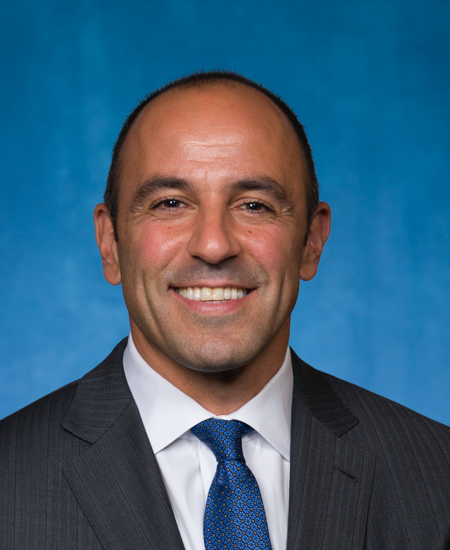
Rep. Jimmy Panetta
Sponsored bills
Catastrophic Risk Transfer Act of 2023 or the CART Act of 2023 This bill establishes a system for the taxation of catastrophic risk transfer companies and their security holders to ensure sufficient capital to cover catastrophic insurance losses. The bill defines catastrophic risk as a risk of loss that has a low likelihood of occurring but that would be large in amount. The bill defines catastrophic risk transfer company as any domestic corporation created and regulated under state law with the purpose of entering into one or more insurance or reinsurance agreements covering catastrophic risk.
Maddy summaryHR 3009, the Military Suicide Prevention in the 21st Century Act, requires the Secretary of Defense to launch a two-year pilot program pre-loading the Virtual Hope Box app (a military behavioral health tool) and pre-programming the National Suicide Hotline and Veterans Crisis Line numbers into smartphones and other smart devices issued to service members. This directly affects active-duty military personnel who receive such devices from the Department of Defense. The pilot program mandates training on these resources during existing suicide awareness education and requires a final report with expansion recommendations. The bill focuses on making critical mental health tools immediately accessible on service-issued devices during crises.
Maddy summaryHR 3024, the Life Saving Leave Act, amends the Family and Medical Leave Act to provide eligible employees with up to 40 hours of additional unpaid leave per year for bone marrow or blood stem cell donation activities. This leave covers predonation, donation, and postdonation medical care, and can be taken intermittently. Employees may substitute accrued paid leave (like vacation or sick days) for this time, but employers cannot require it. The bill requires employees to give employers at least 30 days' notice (or as soon as practicable if urgent) and to schedule the leave to minimize disruption.
Maddy summaryHRES 334 is a symbolic resolution recognizing "Community College Month" to celebrate over 1,000 community colleges across the United States. It highlights how these institutions support accessible higher education, workforce training, and economic prosperity - serving 10.2 million students annually while charging affordable tuition (averaging $3,860 for in-district students). The resolution does not create new laws or requirements but formally acknowledges community colleges' role in strengthening local communities and the national economy. This acknowledgment applies broadly to all community colleges and their students, without imposing any obligations.
Maddy summaryThe PREPARE Act establishes a new pre-disaster mitigation loan program for small businesses through the Small Business Administration (SBA). It authorizes $25 million annually from 2024 to 2028 to provide loans of up to $500,000 per business, enabling small businesses to fund projects that protect their property and operations from disaster damage (e.g., flood barriers or structural reinforcements). The SBA must conduct targeted outreach to businesses in economically distressed areas, offer technical assistance, and require borrowers to maintain insurance during loan terms. Annual reports will track program outcomes, including project types, cost savings avoided, and regional impacts, to evaluate effectiveness.
Maddy summaryThe Combating Child Labor Act strengthens penalties for employers violating child labor laws under the Fair Labor Standards Act. It increases criminal fines to $500,000 or up to 10 years in prison for willful violations causing death or serious injury to children under 18, and raises civil penalties for such violations up to $700,000 per incident. The bill also requires the Department of Labor to publish an annual report detailing child labor violations, including employer names, types of violations, and trends by industry or region. This report will help track enforcement efforts and identify high-risk areas, directly affecting employers who violate child labor rules and the Department of Labor’s oversight role.
Maddy summaryThe Ukraine Human Rights Policy Act of 2023 requires the President to report to Congress within 60 days on whether a person meets criteria for sanctions related to human rights abuses in Ukraine and whether sanctions are imposed. It mandates the Secretary of State to include specific details in an annual report about human rights abuses by Russian forces in Ukraine and against forcibly relocated Ukrainians, including conditions in detention camps and the use of sexual violence as a weapon of war. The report must cover assessments of abuse methods, forced adoptions of Ukrainian children, efforts to renounce faith, and U.S. diplomatic efforts to address violations through sanctions. This bill establishes reporting requirements and congressional oversight for existing sanctions processes without creating new sanctions.
Performing Artist Tax Parity Act of 2023 This bill modifies the above-the-line tax deduction for the expenses of performing artists (including commissions paid to managers or agents) to provide for a phaseout of such deduction for taxpayers whose adjusted gross income exceeds $100,000 ($200,000 for joint return filers). The $100,000 phaseout threshold is adjusted for inflation annually for taxable years beginning after 2023.
Raise the Age Act of 2023 This bill establishes new restrictions on the sale or transfer of certain semiautomatic firearms to individuals under 21 years of age. Specifically, this bill makes it unlawful for a licensed gun dealer, importer, manufacturer, or collector to sell or deliver a semiautomatic center-fire rifle or semiautomatic center-fire shotgun that has (or has the capacity to accept) an ammunition feeding device with a capacity of more than five rounds to an individual who the licensee knows or has reasonable cause to believe is under age 21. The prohibition does not apply if the individual under age 21 is a full-time law enforcement officer or active-duty member of the Armed Forces. The bill also requires the Federal Bureau of Investigation to report on the operation of its public access line, including a description of information sharing protocols and recommendations for improving such protocols.