

AANAPISI Opportunity Act This bill requires the Department of Agriculture (USDA) to establish a scholarship grant program for covered Asian American and Native American Pacific Islander-serving institutions (AANAPISIs) to provide scholarships in agriculture-related fields. Covered institutions include community colleges, colleges, or universities that (1) have a student body consisting of at least 10% Asian American or Native American Pacific Islander students; and (2) offer associate, bachelors, or other accredited degree programs in agriculture-related fields. USDA may only award the grants to AANAPISIs that have established a competitive scholarship awards process for individuals who intend to pursue a career in agriculture, including in the agricultural disciplines of business, engineering, technology, food science, forestry, home economics, nutrition, soil conservation, non-medical biological sciences, and computer science. This bill also allows USDA to provide competitive grants for up to five years for integrated agricultural research, education, and extension projects at covered AANAPISIs to address U.S. agriculture priorities. The project grants include a 50% matching funds requirement that USDA may waive if certain requirements are met.
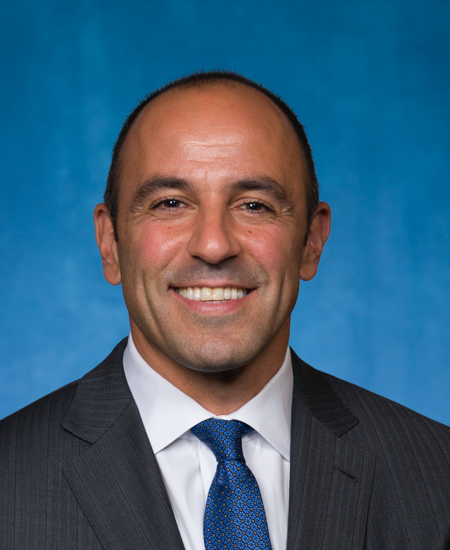
Rep. Jimmy Panetta
Sponsored bills
Maddy summaryThe Strengthening Organic Agricultural Research (SOAR) Act of 2023 increases annual funding for organic agricultural research and extension programs, directly supporting organic farmers, researchers, and institutions. It authorizes $60 million in 2024, rising to $100 million annually after 2028, for the Organic Research and Extension Initiative, and creates a new $10-20 million annual program to study transitioning from conventional to organic farming. This new program requires grants to prioritize partnerships with organic producers and specific educational institutions (1890/1994 colleges, Hispanic-serving institutions) while focusing on barriers, ecosystem benefits, and improved transition methods. Finally, the bill mandates a USDA economic impact analysis of organic agriculture, examining effects on rural economies, labor, environment, and community dynamics, to be completed within three years of enactment.
Maddy summaryHRES 385 is a symbolic House resolution designating May 10, 2023, as "National Asian American, Native Hawaiian, and Pacific Islander Mental Health Day." It supports raising awareness about mental health disparities in the AANHPI community, where data shows lower treatment rates and higher suicide rates among youth. The resolution encourages federal, state, and local health agencies to improve mental health services for AANHPI communities but does not create new programs or funding. As a procedural resolution, it has no binding effect and serves only to recognize and highlight these issues.
Maddy summaryHRES 381 is a non-binding House resolution supporting National Fentanyl Awareness Day in 2023. It aims to increase public awareness about the dangers of counterfeit fentanyl pills - fake pills that mimic prescription medications and are linked to over 70,000 overdose deaths in 2021, including 80% of deaths among youth aged 14-23. The resolution encourages existing law enforcement efforts to combat counterfeit pills and acknowledges that only 48% of youth are aware fentanyl is used in these fake pills. It does not create new laws or programs but formally recognizes the need for greater awareness, particularly for young people vulnerable to these deadly substances.
Maddy summaryThe PAST Act of 2023 amends the Horse Protection Act to ban specific devices used to cause pain (soring) in horses at shows, particularly affecting Tennessee Walking Horses, Racking Horses, and Spotted Saddle Horses. It defines prohibited "action devices" (like boots or chains causing friction) and requires licensed, conflict-free inspectors at events to enforce rules. The bill increases penalties for violations to up to $5,000 fines or 3 years in jail, and mandates longer disqualifications for repeat offenses (180 days → 1 year → 3 years). Horse show organizers, exhibitors, and participants must comply with these new inspection and penalty requirements.
Maddy summaryHRES 390 is a resolution recognizing May as Asian American, Native Hawaiian, and Pacific Islander (AANHPI) Heritage Month. It formally honors the historical contributions of AANHPI communities to the United States, highlighting their diverse cultural impact and achievements across U.S. history. The resolution emphasizes celebrating these contributions while acknowledging ongoing challenges, such as anti-Asian hate crimes, and references key milestones like the 125th anniversary of *United States v. Wong Kim Ark*. As a symbolic recognition resolution, it does not create new policies or affect specific groups through legislation.
Reservist Pay Equity Act of 202 3 This bill increases the rate of the differential wage payment tax credit from 20% to 50% and requires that the maximum dollar amount of such credit be adjusted for inflation after 2023. The credit is allowed to employers for their employees who are active duty members of the uniformed services.
Maddy summaryHR 3240 grants a federal charter to the Veterans Association of Real Estate Professionals (VAREP), a California-based nonprofit already recognized as a veterans service organization under IRS tax law. The bill establishes specific rules for VAREP, requiring it to maintain its tax-exempt status, submit annual reports to Congress, and follow restrictions like not issuing stock, making political contributions, or claiming government authority. VAREP must continue its existing mission of supporting veterans through financial literacy programs, housing assistance (including foreclosure prevention), workforce development, and suicide awareness initiatives. This charter does not create new government benefits but formally recognizes and regulates this specific organization's federal status.
Maddy summaryHR 3238, the Affordable Housing Credit Improvement Act of 2023, updates the Low-Income Housing Tax Credit (LIHTC) program to increase the availability of affordable housing across the United States. The bill makes several key changes including increasing state funding formulas, modifying tenant eligibility rules to better serve vulnerable populations (such as domestic violence victims and students), and expanding credit eligibility for projects in rural and Native American communities. Specific provisions raise the credit for properties serving extremely low-income households, clarify rules around tenant income increases, and require housing providers to protect victims of domestic violence. The bill also updates terminology from "low-income" to "affordable" throughout the tax code and enhances program transparency through data sharing requirements. These changes aim to make the LIHTC program more effective at creating and preserving affordable housing units for low-income households nationwide.
Maddy summaryThe Invest to Protect Act of 2023 establishes a federal grant program for local law enforcement agencies with fewer than 200 officers (including counties, municipalities, and tribal governments) to fund training and support services. Grants cover de-escalation training, mental health resources, evidence-based safety training (such as handling domestic violence or mental health crises), and recruitment/retention incentives like signing bonuses, retention bonuses (up to 20% of salary), and stipends for graduate education in mental health or social work. The bill requires a streamlined grant application process (under two hours), public disclosure of bonus amounts, and annual audits to prevent misuse of funds.