

Enhancing Questions to Understand Intentions for Pregnancy Act of 2023 or the EQUIP Act of 2023 This bill requires the Centers for Disease Control and Prevention to provide eligible health organizations with demonstration program grants to implement routine screenings about people's pregnancy intentions in order to provide better contraceptive and prepregnancy care.
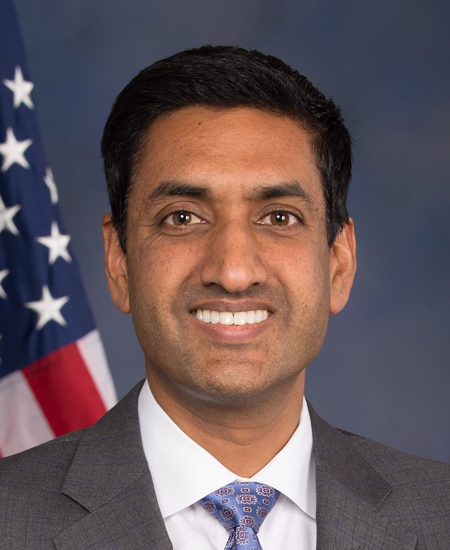
Rep. Ro Khanna
Sponsored bills
Maddy summaryHR 3713 creates federal grants to fund comprehensive school-based mental health programs for students in grades K-12, including those in Bureau of Indian Education schools. It requires partnerships between schools and community mental health providers to deliver trauma-informed, culturally appropriate services addressing suicide risk, grief, violence, and trauma exposure. The bill authorizes $300 million annually (2024-2027) for these programs, mandating privacy protections under HIPAA and FERPA, and requires annual reporting on program effectiveness.
Maddy summaryThe Cady Housh and Gemesha Thomas Student Suicide Prevention Act of 2023 requires states to establish a policy mandating annual suicide prevention training for school staff and high school students (grades 9-12). The training must be evidence-based, cover recognizing suicide warning signs, appropriate responses, and referrals to mental health services, while including cultural competency. It allocates $48 million in federal funds, with at least 15% dedicated to supporting this training program, and requires states to collaborate with mental health experts. The bill directly affects school staff and high school students in states that adopt the policy and receive federal funding.
Maddy summaryThis bill creates a new grant program under the Public Health Service Act to provide emergency funding for health care facilities during declared emergencies (like pandemics or natural disasters). It authorizes grants to public or private nonprofit health care facilities and home health agencies to pay hazardous duty compensation to eligible health care workers - such as nurses, medical technicians, and facility cleaners - performing essential on-site work. Grants can cover up to $13 per hour in hazard pay (capped at $25,000 annually per worker) or fund safety measures like personal protective equipment and alternative transit. The program requires the Secretary of Health and Human Services to determine if work or commutes are hazardous during emergencies.
Maddy summaryHR 3684, the Douglas Mike Day Psychedelic Therapy to Save Lives Act of 2023, authorizes the Department of Defense to fund research on using psychedelic substances for treating specific conditions in active-duty military personnel. The bill creates a grant program to support phase II clinical trials (using substances like MDMA, psilocybin, or ibogaine) or training for treating PTSD, traumatic brain injury, or chronic traumatic encephalopathy, with participants including active-duty service members. It removes barriers for military personnel to join these trials, regardless of federal scheduling of the substances or military justice rules. The bill appropriates $15 million annually from 2024 to 2028 for this research and requires regular reports to Congress on grant recipients and trial findings.
Reward Work Act This bill prohibits issuers from purchasing their own securities on a national exchange. The bill also requires one-third of an issuer's board of directors to be elected by employees in order for the issuer to be allowed to register securities.
Maddy summaryHJRES 39 is a joint resolution disapproving a specific rule issued by the Department of Commerce. The rule (87 Fed. Reg. 56868) outlined procedures for suspending import duties and estimated duties under Presidential Proclamation 10414, which related to certain imported goods. This resolution blocks the rule from taking effect, meaning the Department of Commerce’s procedures for suspending duties under that proclamation will not be enforced. The action directly affects importers and customs operations that would have relied on the suspended duty procedures. As a disapproval resolution, it does not create new policy but formally rejects an existing agency rule.
This bill directs the Federal Aviation Administration (FAA) to require that medications and medical equipment for the emergency treatment of a known or suspected opioid overdose be included in an aircraft emergency medical kit; the FAA must, to the maximum extent possible, follow the guidance of the Aerospace Medical Association. In a 2019 guidance document to the FAA, the Aerospace Medical Association recommended including an opioid antagonist (e.g., naloxone or Narcan) in an aircraft emergency medical kit.
This resolution supports (1) the goals of Wildfire Preparedness Week; and (2) resources and educational initiatives that communicate how affected communities can take preventative measures such as instituting early warning systems and reducing unplanned human ignitions, as well as how to safely and efficiently evacuate people and their animals.
Maddy summaryThis bill renames a U.S. Postal Service facility at 300 Long Beach Boulevard in Long Beach, California, as the "Alan S. Lowenthal Post Office Building." It directly affects the postal facility and all federal documents, maps, or records referencing it. The key provision updates every official reference to the building to use the new name, ensuring consistency in government records. The bill does not change postal services, funding, or policy - only the building's official designation.