

Maddy summaryThis bill requires military commanders to approve leave for active-duty service members and their dependents seeking abortion care without needing to disclose the specific procedure. It mandates reimbursement for travel costs to clinics providing abortion services when local access is unavailable and protects the privacy of those using this leave. The bill explicitly prohibits any negative consequences for service members who request or take such leave. It directly affects military personnel and their families by ensuring timely, private, and accessible abortion care without command interference.
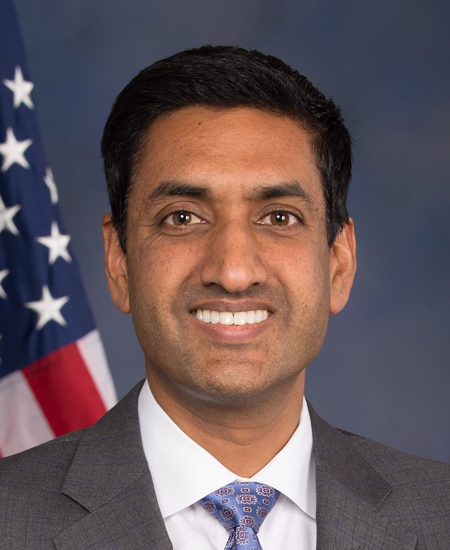
Rep. Ro Khanna
Sponsored bills
Maddy summaryHR 6121, the Filipino Veterans Fairness Act of 2023, expands U.S. veterans benefits for individuals who served in the Philippine Army, Philippine Scouts, or recognized guerrilla forces during World War II. It directly affects Filipino veterans who previously faced challenges proving service due to limited documentation. The bill allows the Secretary of Veterans Affairs to consider alternative records beyond the National Personnel Records Center rosters when determining eligibility, requires annual reports to Congress on applications and approvals, and clarifies that the Filipino Veterans Equity Compensation Fund does not apply to these veterans. These changes aim to streamline access to benefits for this specific group of veterans.
Maddy summaryThe SHIP Act imposes sanctions on foreign entities that knowingly handle Iranian petroleum, targeting those involved in port operations, transportation, refining, or ship-to-ship transfers of Iranian oil. Starting 90 days after enactment, the President must block assets, deny visas, and impose penalties on individuals or companies engaging in these activities, including family members or owners of sanctioned entities. It requires annual reports tracking Iran's oil exports, revenues, and key players like shipping companies and ports. The sanctions terminate if the President certifies Iran has stopped supporting terrorism and dismantled weapons programs.
Maddy summaryHRES 844 is a symbolic resolution recognizing the religious and historical significance of Diwali, the festival of lights. It specifically acknowledges how Diwali is celebrated by Hindus, Sikhs, and Jains in the U.S., including its meaning for Sikhs (commemorating Guru Hargobind's release) and Jains (marking Lord Mahavira's Nirvana). The resolution expresses respect for Indian-American communities and highlights Diwali's role as a celebration of light over darkness and good over evil. It also affirms religious diversity in India and the U.S. and supports U.S.-India relations. As a non-binding resolution, it does not create legal obligations or affect any policies.
Robin Danielson Menstrual Product and Intimate Care Product Safety Act of 2023 This bill requires the National Institutes of Health to conduct or support research on the extent to which components (including contaminants and substances used as fragrances, colorants, dyes, and preservatives) in menstrual products and intimate care products pose health risks to people who use the products or to the children of people who use the products during or before pregnancy.
Maddy summaryThe REPAIR Act requires car manufacturers to provide vehicle owners and independent repair shops with free, unrestricted access to vehicle data and repair information. It bans manufacturers from using technological or legal barriers to block access to diagnostics, tools, or aftermarket parts, and prohibits mandating specific brands for repairs or restricting customers’ choice of repair facility. The law also prevents manufacturers from requiring waivers of these rights as a condition of purchase, lease, or warranty service. The Federal Trade Commission will enforce these provisions to ensure fair competition in vehicle repair.
Maddy summaryHR 5983, the Clean Water Act of 2023, redefines "protected water resources" under federal law to explicitly include all interstate and intrastate waters (such as intermittent and ephemeral streams), wetlands, and their tributaries. This directly affects federal agencies like the EPA, states managing water quality, and developers or landowners needing permits for activities near these waters. The bill eliminates the Supreme Court’s narrow "navigable waters" definition from Sackett v. EPA (2023), restoring protections for tens of millions of acres of wetlands and millions of miles of small streams. Key mechanisms require the EPA to annually review and adjust exclusions from protections based on scientific evidence, ensuring water bodies critical to drinking water, flood control, and ecosystems remain safeguarded.
Maddy summaryHRES 819 is a symbolic resolution recognizing the 5-year anniversary of the October 27, 2018, antisemitic attack at Pittsburgh’s Tree of Life Synagogue, which killed 11 people. It condemns antisemitism and references rising hate incidents, including the Anti-Defamation League’s 2022 report of record antisemitic activity (3,697 incidents). The resolution honors the victims, expresses solidarity with affected Jewish communities, and reaffirms the U.S. commitment to combatting hate and protecting religious freedom. As a procedural resolution (not a law), it has no binding effect but serves as a formal statement of congressional stance.
Maddy summaryThis bill would require employers with 5 or more employees to provide 56 hours of paid leave annually for employees experiencing pregnancy loss, failed fertility procedures (including IVF), failed adoption or surrogacy arrangements, or fertility-impacting diagnoses. Employees could also use this leave to care for a spouse or domestic partner facing these circumstances. Employers would need to provide clear notice of this policy and cannot discriminate against employees who use this leave. The bill applies to private sector employers, government employees, and others covered under the defined terms, with enforcement mechanisms to protect employees' rights.
Maddy summaryThe All Students Count Act of 2023 amends the Elementary and Secondary Education Act to require states to collect and report detailed educational data for specific Asian American and Native Hawaiian/Pacific Islander subgroups, including Chinese, Filipino, Cambodian, Hmong, Samoan, and Chamorro communities. It mandates that states disaggregate student performance data by these specific ethnic subgroups rather than reporting only broad categories. This change directly affects public school systems and state education agencies, which must now collect and report data for these detailed groups as part of federal accountability requirements. The bill aims to address historical data gaps that obscured educational disparities affecting diverse communities, such as lower high school graduation rates or college enrollment among specific subgroups.