

Maddy summaryThis bill creates a framework for states to develop their own universal health care systems by applying for waivers from certain federal health care requirements. States must demonstrate they can provide comprehensive coverage meeting or exceeding current federal standards (like Medicaid, Medicare, and CHIP) for at least 95% of residents within 5 years, with the federal government redirecting funds that would have gone to federal programs to support state systems. States must include specific protections like reproductive health care coverage and submit regular reports on coverage rates, affordability, and quality. The bill includes special provisions to protect Indian health care services and ensure they remain accessible under state plans. States that fail to meet coverage goals may face consequences, including potential termination of their waiver.
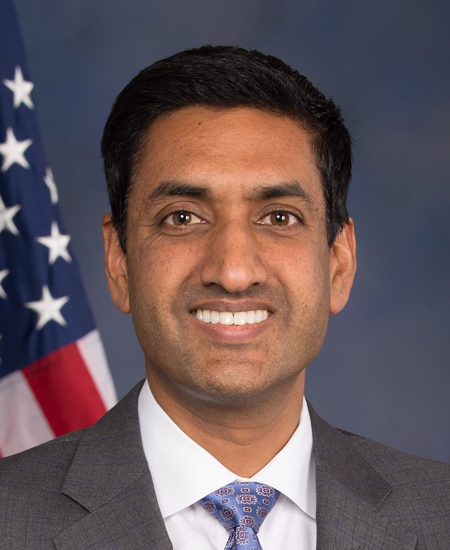
Rep. Ro Khanna
Sponsored bills
Maddy summaryHR 6063, the Empowering Striking Workers Act of 2023, modifies unemployment insurance rules to provide benefits for workers unable to work due to strikes or lockouts. It directs that unemployment compensation begins 14 days after a strike starts, or earlier if permanent replacements are hired, a lockout begins, or the dispute ends. The bill directly affects workers participating in labor disputes by making them eligible for benefits under these specific conditions, rather than requiring them to meet standard job search requirements. This change is implemented through amendments to the Internal Revenue Code and Social Security Act.
Maddy summaryThe MORE Act (HR 5601) would federally decriminalize cannabis by removing it from the Schedule I list of controlled substances under the Controlled Substances Act. It requires federal courts to expunge non-violent cannabis convictions and associated arrests, with a focus on addressing racial disparities in cannabis enforcement. The bill creates an Opportunity Trust Fund that would allocate 50% of funds to criminal justice programs, 20% to small business assistance for minority cannabis entrepreneurs, and 20% to community reinvestment grants for individuals impacted by the War on Drugs. It also prohibits federal agencies from denying benefits or security clearances based on cannabis use or past cannabis convictions, and establishes a Cannabis Justice Office to administer these programs.
Maddy summaryHR 5408, the SSI Savings Penalty Elimination Act, increases the resource limits for Supplemental Security Income (SSI) program eligibility. It raises the individual resource limit from $2,250 to $20,000 (and the couple limit from $1,500 to $10,000) for 2023, with future annual increases tied to inflation using the Consumer Price Index. This change directly affects low-income SSI recipients who currently lose benefits if their savings exceed the current thresholds. The key mechanism is raising these savings limits to reduce the "penalty" for saving modest amounts, while maintaining program integrity through automatic inflation adjustments.
Maddy summaryHR 5183, the Cancer Care Planning and Communications Act, requires Medicare to cover "cancer care planning and coordination services" for beneficiaries diagnosed with cancer. This policy directly affects Medicare patients with cancer, particularly older adults (over half of cancer diagnoses occur in Medicare beneficiaries), by mandating written care plans developed by physicians or providers. The key mechanism adds specific coverage for these plans under Medicare, requiring them to document treatment options, coordinate care across providers, and address symptoms like pain or fatigue - furnished in culturally appropriate formats. The bill specifies payment rates matching existing transitional care management services, effective for care starting after the law's enactment.
Maddy summaryThe WISE Act of 2023 aims to remove barriers for immigrant survivors of domestic violence, sexual assault, human trafficking, and other crimes who are eligible for protections under the Violence Against Women Act (VAWA) and Trafficking Victims Protection Act (TVPA). Key provisions include reforming U visa eligibility to include civil violations related to abuse, eliminating annual U visa caps, and automatically granting work authorization to applicants within 180 days of filing. The bill also prohibits detention of these survivors while their applications are pending and expands protections for battered spouses, children, and abused derivative aliens seeking immigration relief. This directly affects non-citizen victims of violence who are navigating complex immigration processes to remain safely in the United States.
Maddy summaryHR 5008, the HEAL for Immigrant Families Act of 2023, would remove immigration status as a barrier to health insurance coverage for immigrants in the United States. The bill would make all lawfully present immigrants, including those with Deferred Action for Childhood Arrivals (DACA) status, eligible for Medicaid, CHIP, and Affordable Care Act health insurance subsidies. It would eliminate state-level restrictions on Medicaid eligibility for immigrants and allow individuals with federally authorized presence to access premium tax credits and cost-sharing reductions. This legislation aims to address health coverage disparities that disproportionately affect immigrant communities, particularly Black, Indigenous, Latinx, and other communities of color.
Maddy summaryHR 4752 (the CHANGE Act of 2023) requires Medicare to include standardized cognitive impairment screening during annual wellness visits and initial preventive physical exams for beneficiaries starting in 2024. It mandates doctors use National Institute on Aging-approved tools to detect memory issues and document results in medical records. This directly affects Medicare patients aged 65+ and their healthcare providers, aiming to enable earlier Alzheimer’s diagnosis and care planning. The bill focuses on making routine screenings a standard part of Medicare-covered checkups, not on funding or new programs. It does not alter existing Medicare benefits but adds a specific screening requirement to two existing service categories.
Maddy summaryThe Social Security 2100 Act would significantly enhance Social Security benefits for millions of Americans by increasing monthly payments for retirees, disabled workers, widows/widowers, and children. Key provisions include raising the minimum benefit for long-term low earners, improving cost-of-living adjustments using a more accurate index, eliminating the 5-month waiting period for disability benefits, and extending child benefits to age 26. The bill also changes how Social Security taxes are calculated by applying them to income above $400,000 and establishes a unified Social Security Trust Fund to manage program finances. Most provisions would apply to benefits payable from 2025 through 2034, affecting all current and future Social Security beneficiaries.
Maddy summaryThis bill adds Medicare coverage for "home resiliency services" to help vulnerable beneficiaries prepare for disasters. It covers medically necessary items like heat pumps for temperature-sensitive patients, solar batteries for medical equipment users (e.g., home ventilators), and energy-efficient cold storage for heat-sensitive medicines. Medicare will pay 100% of the cost for these services if the Secretary determines an individual is medically vulnerable during climate or manmade disasters, based on factors like chronic conditions, medical equipment reliance, and regional climate risks. It directly affects Medicare beneficiaries with chronic health needs who face heightened risks during extreme weather or infrastructure failures.