

Maddy summaryHR 2882 prohibits the U.S. Secretary of the Interior from issuing oil or gas leases for exploration, development, or production in the Central California Planning Area. This bill directly affects federal leasing decisions in that specific coastal region, preventing new fossil fuel extraction activities. The key provision amends the Outer Continental Shelf Lands Act to permanently ban such leasing in the defined area. The bill creates a clear policy change by eliminating future oil and gas development opportunities on federal waters along California's central coast.
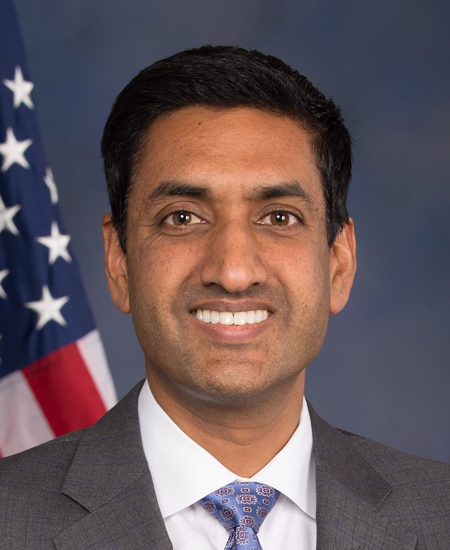
Rep. Ro Khanna
Sponsored bills
Maddy summaryHR 2862 prohibits the federal government from leasing offshore areas in Southern California for oil and gas exploration or production. It directly affects oil and gas companies seeking permits in the Southern California Planning Area, as defined in the federal 2024-2029 Outer Continental Shelf leasing program. The bill amends the Outer Continental Shelf Lands Act to block all future leases in this region, preventing new drilling projects in the specified offshore waters. This is a concrete policy change that halts federal leasing decisions in the area without altering existing leases or operations.
Working for Immigrant Safety and Empowerment Act or the WISE Act This bill expands eligibility for U nonimmigrant visas (victims of criminal activity) and prohibits immigration enforcement activities in specified areas. Generally, U visas are for victims of specified crimes (e.g., rape, trafficking, or domestic violence) who assist with the investigation or prosecution of the crime. The bill adds hate crimes, child abuse, and elder abuse as crimes that may qualify a victim for a U visa and removes criteria related to the victim's assistance with the investigation or prosecution of the crime. Furthermore, the Department of Homeland Security (DHS) must provide work authorization to U visa applicants, whereas currently DHS may grant work authorization but is not required to do so. The bill also eliminates the annual numerical cap on U visas. The bill establishes a rebuttable presumption that certain individuals, including U visa applicants and T visa (victims of human trafficking) applicants, shall not be detained while the application is pending. Additionally, the bill provides immigration-related protections, such as by extending the admission period and providing work authorization, to the spouse or child of a nonimmigrant visa holder who subjected that spouse or child to battery or extreme cruelty. Further, the bill prohibits, with some exceptions for exigent circumstances, U.S. Immigration and Customs Enforcement or U.S. Customs and Border Protection from conducting immigration enforcement actions within 1,000 feet of a school, health care facility, place of worship, or other location specified in the bill.
Maddy summaryHR 2837 establishes an Advisory Council under the Department of Health and Human Services to improve access to existing resources for victims of gun violence. The council, composed of federal agency heads and appointed victims/support professionals, will assess needs, identify effective programs, and compile a public resource hub with contact information for medical, financial, mental health, legal, and government support services. It requires a detailed report within 180 days of enactment and a follow-up report within two years, focusing on gaps in current assistance and coordination. The bill directly affects individuals defined as victims of gun violence (including those wounded, threatened, witnessing incidents, or related to victims) and aims to connect them to existing federal, state, and nonprofit resources without authorizing new funding. The council will sunset after five years.
Maddy summaryHR 2857, the "Drain the Swamp Act," makes Executive Order 13989 a permanent law requiring all executive branch employees to submit annual ethics commitments. This directly affects federal workers in the executive branch, including department heads and agency staff, by mandating formal ethics disclosures as a legal requirement. The key provision codifies an existing executive order - previously changeable by presidential decree - into binding law, ensuring these ethics rules persist across administrations. This change shifts the enforcement of ethics commitments from executive policy to statutory obligation without altering the content of the requirements.
Maddy summaryHR 2820, the California Clean Coast Act of 2025, prohibits new oil and gas leasing and related activities in federal waters off California's coast starting from its enactment date. This directly affects oil and gas companies seeking to develop new offshore resources in California’s outer Continental Shelf areas. The bill preserves existing leases issued before the law’s effective date but bans all future preleasing, leasing, and related activities in those waters. It represents a permanent federal policy change for California’s coastal offshore regions, with no impact on current leaseholders.
Maddy summaryHRES 187 is a resolution of inquiry requesting the President to provide the House of Representatives with complete, unedited documents within 14 days. It specifically asks for records related to federal employees placed on administrative leave, removed, terminated, or reassigned following actions by Elon Musk, the DOGE agency team, or the Trump administration. The resolution also seeks documents about workforce reductions affecting Diversity, Equity, and Inclusion (DEI) staff and communications regarding the removal of inspectors general. This procedural request aims to obtain transparency on executive branch actions, not to enact new policy.
Maddy summaryHRES 186 is a procedural resolution requesting the President to provide unredacted documents to the House of Representatives within 14 days. It specifically asks for any records related to Elon Musk’s government connections, including his role with the fictional "DOGE Service," potential conflicts of interest, and business ties involving his companies or board positions. The resolution does not create new law but seeks transparency about Musk’s government-related activities as requested by the House. This is a formal inquiry, not a legislative action affecting public policy.
Maddy summaryThe National Biotechnology Initiative Act of 2025 establishes a coordinated federal strategy for biotechnology across 14 participating departments and agencies, including Agriculture, Defense, and Health and Human Services. It creates a National Biotechnology Coordination Office and an Interagency Committee to oversee activities related to research, regulatory streamlining, workforce development, and international partnerships. The bill authorizes $22 million in fiscal year 2026, increasing to $35 million by 2027, and requires annual reports and a national strategy every five years. Key provisions include developing a centralized website for biotechnology information, standardizing regulatory pathways for biotechnology products, and improving workforce development programs. This legislation aims to reduce duplication, improve coordination across government departments, and enhance U.S. competitiveness in biotechnology.
Maddy summaryThe American Family Act (HR 2763) establishes a new refundable child tax credit that provides monthly payments to eligible families with children. It would pay $300 per month for each child under age 6 and $360 per month (120% of $300) for each child age 6 or older, with income limits of $150,000 for joint filers and $112,500 for other filers. The bill creates a "period of presumptive eligibility" to determine eligibility for monthly payments, allowing families to receive advance payments based on information from previous tax returns. This would directly affect millions of families with children who meet the income requirements, providing more consistent financial support throughout the year rather than an annual tax credit.