

This resolution impeaches President Donald John Trump for high crimes and misdemeanors. Specifically, the resolution sets forth an article of impeachment stating that President Trump incited an insurrection against the government of the United States. The article states that prior to the joint session of Congress held on January 6, 2021, to count the votes of the electoral college, President Trump repeatedly issued false statements asserting that the presidential election results were fraudulent and should not be accepted by the American people or certified by state or federal officials; shortly before the joint session commenced, President Trump reiterated false claims to a crowd near the White House and willfully made statements to the crowd that encouraged and foreseeably resulted in lawless action at the Capitol; members of the crowd, incited by President Trump, unlawfully breached and vandalized the Capitol and engaged in other violent, destructive, and seditious acts, including the killing of a law enforcement officer; President Trump's conduct on January 6, 2021, followed his prior efforts to subvert and obstruct the certification of the presidential election, which included a threatening phone call to the Secretary of State of Georgia on January 2, 2021; President Trump gravely endangered the security of the United States and its institutions of government, threatened the integrity of the democratic system, interfered with the peaceful transition of power, and imperiled a coequal branch of government; and by such conduct, President Trump warrants impeachment and trial, removal from office, and disqualification to hold U.S. office.
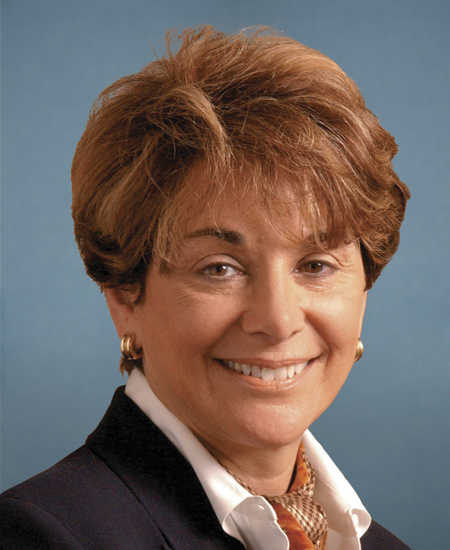
Rep. Anna G. Eshoo
Sponsored bills
This resolution recognizes the cultural and historical significance of the Lunar New Year. The resolution expresses, in observance of this Lunar New Year, the Year of the Ox, the deepest respect of the House of Representatives for Asian Americans and all individuals throughout the world who celebrate this significant occasion. The resolution wishes Asian Americans and all individuals who observe this holiday a happy and prosperous new year.
COVID-19 Language Access Act This bill requires each federal agency that receives federal assistance related to the COVID-19 (i.e., coronavirus disease 2019) pandemic to translate any English language written material prepared for the general public relating to the pandemic, including COVID-19 vaccine distribution and education, into specified languages not later than seven days after such material is made available in English. Such languages shall include, at a minimum, the following: Spanish, Arabic, Cambodian, Chinese, Haitian Creole, French, Hindi, Hmong, Italian, Japanese, Korean, Laotian, Russian, Tagalog, Urdu, Vietnamese, Greek, Polish, Thai, and Portuguese.
"Six Triple Eight" Congressional Gold Medal Act of 2021 This bill directs the Speaker of the House of Representatives and the President pro tempore of the Senate to arrange for the award of a Congressional Gold Medal in honor of the women of the 6888th Central Postal Directory Battalion (commonly known as the Six Triple Eight) in recognition of their pioneering military service, devotion to duty, and contributions to increase the morale of personnel stationed in the European theater of operations during World War II. The medal shall be given to the Smithsonian Institution and made available for display and research.
Horse Transportation Safety Act of 20 21 This bill prohibits a person from transporting a horse in interstate commerce in a motor vehicle (except a vehicle operated exclusively on rail or rails) containing two or more levels stacked on top of one another. The bill prescribes civil penalties for knowing violations of such prohibition.
American Family Act of 2021 This bill modifies the child tax credit to (1) make the credit fully refundable, (2) increase the amount of the credit and allow an additional credit for children who are under six years of age, (3) require the amount of the credit to be adjusted annually for inflation, and (4) require the Department of the Treasury to establish a program for making advance payments of the credit on a monthly basis.
National Broadband Plan for the Future Act of 2021 This bill requires the Federal Communications Commission (FCC) to update the national broadband plan, which establishes benchmarks to meet the goal of ensuring that all people of the United States have access to broadband capability. This update must include (1) an assessment of the progress in achieving the goals of the original national broadband plan; (2) an examination of the effects of the COVID-19 (i.e., coronavirus disease 2019) pandemic on how people learn, work, receive medical information and treatment, and participate in civic communications; and (3) an analysis of the change in reliance people will have on services enabled by broadband internet access service as a result of COVID-19. The FCC must report annually on its progress toward achieving the goals of the updated national broadband plan.
Gym Mitigation and Survival Act of 2021 or the GYMS Act of 2021 This bill establishes a grant program to provide economic support to eligible fitness facilities in response to the COVID-19 (i.e., coronavirus disease 2019) pandemic. Specifically, the bill authorizes the Small Business Administration to make initial and supplemental grants to privately owned fitness facilities that primarily provide health or fitness services and that do not offer golf, hunting, sailing, or riding facilities. The total amount of grant funds for a recipient may not exceed $25 million, and the recipient must use these funds for payroll costs, rent or mortgage obligations, and other ordinary and necessary business expenses.
Health Standards To Advance Transparency, Integrity, Science, Technology Infrastructure, and Confidential Statistics Act of 2021 or the Health STATISTICS Act of 2021 This bill requires efforts to standardize reporting of public health data, including for COVID-19 (i.e., coronavirus disease 2019) data. It also expands access to federal databases for health research. Specifically, the Centers for Disease Control and Prevention (CDC) must develop uniform standards for health departments and other entities that report public health data. The Department of Health and Human Services (HHS) may award grants to entities for adopting the uniform standards and otherwise improving their reporting capabilities. Furthermore, the CDC must, in consultation with the National Institutes of Health, establish specific standards within 30 days for reporting COVID-19 data. HHS must also disseminate this data subject to privacy and other requirements. Additionally, the Office of Management and Budget must issue guidance on federal health data collection that covers, for example, ensuring data quality and increasing access to health data for research. The National Center for Health Statistics (NCHS) must carry out a demonstration program to expand an existing program that links different federal data sets for statistical public health research, including research on food insecurity, housing instability, and other social determinants of health. In particular, the program must link to the National Death Index, a database of death records maintained by the NCHS. Finally, the bill requires the CDC to award grants to research entities and public health departments to increase their capacity for conducting statistical public health research.
Real Economic Support That Acknowledges Unique Restaurant Assistance Needed To Survive Act of 2021 or the RESTAURANTS Act of 2021 This bill temporarily establishes and provides funding for the Restaurant Revitalization Fund, from which the Department of the Treasury shall make grants to eligible food and beverage purveyors to cover specified costs such as payroll, operational expenses, and paid sick leave. For the grant program's initial period, Treasury must (1) prioritize awarding grants to marginalized and underrepresented communities, and (2) only award grants to eligible food and beverage purveyors with annual revenues of less than $1.5 million in 2019. For tax purposes, grant amounts are excluded from the recipient's gross income. An entity that received a loan under the Paycheck Protection Program established to support small businesses in response to COVID-19 (i.e., coronavirus disease 2019) may not apply for or use a restaurant revitalization grant for the same expenses for which the entity received the paycheck protection loan. Further, a grant applicant may request an additional amount to cover the cost of providing 10 days of paid sick leave to its employees. Treasury must report a list of grant recipients with the amount each recipient received, as well as demographics and other specified information.