Helping Homeless Veterans Act of 2021 This bill permanently extends the following Department of Veterans Affairs programs and services: homeless veterans reintegration programs, financial assistance for supportive services for very low-income veteran families in permanent housing, a grant program for homeless veterans with special needs, treatment and rehabilitation for seriously mentally ill and homeless veterans, housing assistance for homeless veterans, and the Advisory Committee on Homeless Veterans.
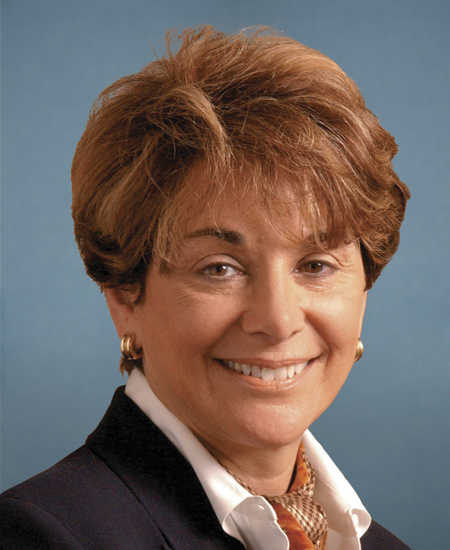
Rep. Anna G. Eshoo
Sponsored bills
Puerto Rico Self-Determination Act of 2021 This bill establishes a process for the people of Puerto Rico to vote on the political status (e.g., statehood) of the territory. Congress may ratify the decision through a joint resolution. The bill declares that the legislature of Puerto Rico has the authority to call a status convention regarding the political status of the territory. The bill provides for public financing of delegate elections to the status convention and establishes a Congressional Bilateral Negotiating Commission to provide advice and consultation to delegates of the status convention. The status convention must provide self-determination options for a referendum of the people of Puerto Rico. Ranked-choice voting is a permitted format for the referendum. Delegates shall carry out an educational campaign through traditional paid media related to the referendum. The bill provides for congressional consideration of a joint resolution to ratify the self-determination option selected through the referendum.
San Francisco Bay Restoration Act This bill provides support for the protection and restoration of the San Francisco Bay estuary and the recovery of certain species in the estuary. Specifically, it establishes a San Francisco Bay Program Office in the Environmental Protection Agency. The program must annually compile a list of funding priorities for projects or studies that advance the goals and objectives of the comprehensive conservation and management plan approved under the National Estuary Program for the San Francisco Bay estuary. The list must include projects or studies for water quality improvement; wetland, riverine, and estuary restoration and protection; nearshore and endangered species recovery; and adaptation to climate change. The program must review such plan at least once every five years and revise the plan as appropriate. The program may provide funding through grants or other means for studies or projects on the priority list.
Facial Recognition and Biometric Technology Moratorium Act of 2021 This bill imposes limits on the use of biometric surveillance systems, such as facial recognition systems, by federal and state government entities. A federal agency or official may not in an official capacity acquire, possess, or use in the United States any such system or information obtained by such a system unless Congress passes an act that specifically authorizes such a use. Such an act of Congress must contain certain provisions, such as provisions naming the specific authorized entity and auditing requirements relating to the system. Information obtained in violation of this bill shall not be admissible by the federal government in any proceeding or investigation, except in a proceeding alleging a violation of this bill. An individual aggrieved by a violation of these restrictions shall have the right to sue. Any state officer authorized to sue on behalf of the state's residents shall also have the right to sue on behalf of the state's aggrieved residents. A state or local government unit shall not receive certain federal law enforcement grants unless the government unit complies with a law or policy that is substantially similar to this bill's restrictions on acquiring and using biometric surveillance systems.
Flexible Financing for Rural America Act This bill allows rural utility service providers to submit to the Department of Agriculture (USDA) a request to adjust the interest rate or modify the terms of certain loans. The request shall include a report summarizing how the adjustment or modification will assist the borrower in providing critical utility services to a rural community. Specifically, on receipt of a request, USDA or the Department of the Treasury (in the case of a loan owned by the Federal Financing Bank) must adjust the interest rate on the loan to match certain interest rates for obligations of comparable maturity to the term remaining on the loan (or a higher rate requested by the borrower), and make modifications to the loan terms as necessary to address changes in the financial position of the borrower due to the COVID-19 public health emergency and to promote the financial sustainability of the borrower. In carrying out the adjustments or modifications, USDA or Treasury shall not impose or collect any fee from, or impose any penalty on, a borrower. The bill also provides funding to implement the adjustments and modifications and for the liquidation of residual intragovernmental amounts owed by the Federal Financing Bank in connection with certain loans.
American Dream and Promise Act of 2021 This bill provides certain aliens with a path to receive permanent resident status and contains other immigration-related provisions. The Department of Homeland Security (DHS) or the Department of Justice (DOJ) shall provide conditional permanent resident status for 10 years to a qualifying alien who entered the United States as a minor and (1) is deportable or inadmissible, (2) has deferred enforced departure (DED) status or temporary protected status (TPS), or (3) is the child of certain classes of nonimmigrants. The bill imposes various qualifying requirements, such as the alien being continuously physically present in the United States since January 1, 2021, passing a background check, and being enrolled in or having completed certain educational programs. DHS shall remove the conditions placed on permanent resident status granted under this bill if the alien applies and meets certain requirements, such as completing certain programs at an educational institution, serving in the military, or being employed. Furthermore, DHS and DOJ shall cancel the removal of certain aliens who had TPS, were eligible for TPS, or were eligible for DED status on certain dates. Such an alien shall receive permanent resident status upon meeting certain requirements and applying for such status within three years of this bill's enactment. For an alien seeking permanent resident status under this bill, DHS may (1) waive certain grounds of inadmissibility, or (2) provisionally deny the application if the alien poses a danger to public safety or has knowingly participated in certain offenses involving a criminal street gang. An alien shall have the right to administrative and judicial review of a denial or revocation of permanent resident status granted under this bill. An alien seeking judicial review of a provisional denial shall be appointed counsel upon request. An alien who appears to be prima facie eligible for relief under this bill shall receive a reasonable chance to apply for such relief and may not be removed until there is a final decision on that application for relief. DHS may not use information from applications filed under this bill or for Deferred Action for Childhood Arrivals status for immigration enforcement purposes. DHS shall establish a grant program for nonprofit organizations that assist individuals with certain immigration-related issues. This bill also repeals a restriction that bars a state from providing higher education benefits to undocumented aliens unless those benefits are available to all U.S. nationals without regard to residency in the state.

Philippine Human Rights Act This bill imposes limitations on providing assistance to the police or military of the Philippines. No federal funds may be used to provide such assistance until the Philippines government has taken certain actions, including (1) investigating and successfully prosecuting members of its military and police forces who have violated human rights, (2) withdrawing the military from domestic policing activities, and (3) establishing that it effectively protects the rights of journalists and civil society activists. The President shall also direct U.S. representatives at multilateral development banks to vote against providing loans to the police or military of the Philippines.
Pink Tax Repeal Act This bill prohibits product manufacturers or service providers from selling substantially similar products at different prices based on the gender of the intended purchaser. If, for example, the only difference between two products is the color, they are substantially similar. The bill provides authority for the Federal Trade Commission and state attorneys general to enforce these requirements.
Accounting STEM Pursuit Act of 2021 This bill authorizes states and local educational agencies (LEAs) to use grant funds provided through the Student Support and Academic Enrichment Program for accounting education. In particular, LEAs may use these grant funds to implement programs to teach accounting, including by increasing access to high-quality accounting courses through 12th grade for students who are members of underrepresented groups.
Supplemental Security Income Restoration Act of 2021 This bill modifies eligibility for, and other components of, the Supplemental Security Income (SSI) program, including by (1) increasing applicable income and resource limits used to determine SSI eligibility, (2) equalizing treatment of married couples when both spouses receive SSI as compared to two unmarried individuals, and (3) eliminating the penalty on SSI applicants or recipients who transfer resources to another individual for less than fair market value.