

Improving Cybersecurity of Small Businesses, Nonprofits, and Local Governments Act This bill requires reporting and other efforts to improve the cybersecurity of small entities. These include small businesses, governments (or certain governmental bodies) that represent populations of less than 50,000, and small nonprofits. Specifically, the Cybersecurity and Infrastructure Security Agency (CISA) must periodically report on and make recommendations about cybersecurity policies and controls for small entities. CISA, the Small Business Administration (SBA), and the Minority Business Development Agency must (1) promote the report, including by making it available through their respective websites; and (2) make voluntary training and technical assistance available to employees of small entities concerning cybersecurity recommendations identified in the report. In addition, the Department of Commerce must report to Congress about improving the cybersecurity of small entities. Further, the SBA must collect information from small businesses concerning cybersecurity matters and report to Congress about the cybersecurity of small businesses.
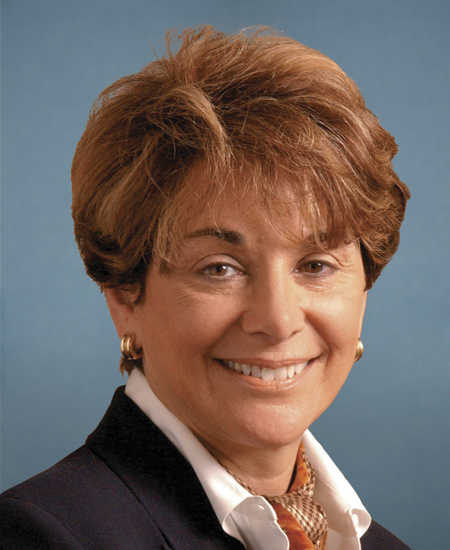
Rep. Anna G. Eshoo
Sponsored bills
This resolution recognizes the cultural and historical significance of the Lunar New Year. The resolution expresses, in observance of this Lunar New Year, the Year of the Tiger, the deepest respect of the House of Representatives for Asian Americans and all individuals throughout the world who celebrate this significant occasion. The resolution wishes Asian Americans and all individuals who observe this holiday a happy and prosperous new year.
Maddy summaryHR 6525, the Lunar New Year Day Act, would designate the Lunar New Year as an official federal holiday. The bill amends Section 6103(a) of Title 5 of the U.S. Code to add "Lunar New Year Day" to the list of holidays observed by federal employees. This holiday would be observed on the actual date of the Lunar New Year, which varies annually based on the lunar calendar. As a result, federal employees would receive a paid day off, and federal agencies would adjust operations to accommodate the new holiday.
Improved Transparency of Foreign Drug Manufacturing Act of 2022 This bill modifies requirements for certain foreign establishments that manufacture drugs (including active pharmaceutical ingredients) to register with the Food and Drug Administration (FDA). Under this bill, if an establishment outside of the United States manufactures (or otherwise processes or prepares) a drug to be imported (or offered for import) into the United States, the establishment must comply with the registration requirements even if the drug undergoes further manufacturing at another non-U.S. establishment prior to importation into the United States. A non-U.S. manufacturing establishment must also file with the FDA a list of drugs manufactured by the establishment. For each drug on the list, the establishment must (1) identify every other known establishment where additional manufacturing is performed, and (2) notify each foreign establishment involved of the listing of the drug and the obligation to register with the FDA. The bill also requires each registered non-U.S. manufacturing establishment to report every three months to the FDA a list of each drug it manufactures for commercial distribution, where currently this report is required once a year.
Refuge From Cruel Trapping Act of 2021 This bill prohibits, with specified exceptions, the use or possession of body-gripping traps in the National Wildlife Refuge System. The bill imposes on persons who possess or use such traps in the system (1) for a first offense, a civil fine of up to $500 for each body-gripping trap possessed or used; and (2) for subsequent offenses, a civil fine of up to $1,000 for each body-gripping trap possessed or used, imprisonment for up to 180 days, or both such a civil fine and imprisonment. The bill makes any body-gripping traps that are possessed or used in violation of this bill, and any wildlife captured by the use of such traps, including the pelts and raw fur, subject to civil forfeiture. Persons found to be in violation of such prohibition shall pay all associated court costs.
Albatross and Petrel Conservation Act This bill authorizes the United States Fish and Wildlife Service (USFWS) and the National Marine Fisheries Service (NMFS) to issue regulations to implement and enforce the Agreement on the Conservation of Albatrosses and Petrels, done at Cape Town, South Africa, on February 2, 2001. Specifically, the USFWS and the NMFS may take action to protect albatrosses and petrels and their habitats. The bill prohibits the taking of an albatross or petrel without a permit, authorization, or exemption. The FWS, in consultation with the NMFS, may authorize the taking of an albatross or petrel under exceptional circumstances or incidental to otherwise lawful activities. The bill gives the USFWS, the NMFS, and the Coast Guard authority to enforce this bill. Finally, the bill authorizes cooperation with other countries to achieve and maintain a favorable conservation status of albatrosses and petrels.
Leading Infrastructure For Tomorrow’s America Act or the LIFT America Act This bill establishes several programs and incentives to modernize the nation's communications, drinking water, energy, transportation, health care, and other related infrastructure. For example, the bill provides incentives to make broadband internet more accessible and affordable. It also establishes grants to implement next generation 9-1-1 services. In addition, it supports drinking water programs, including the drinking water state revolving fund program. Further, it provides grants to treat perfluoroalkyl or polyfluoroalkyl substances (commonly referred to as PFAS) in drinking water and to replace lead service lines. The bill establishes a variety of programs to support clean energy infrastructure and address climate change, including efforts to (1) modernize the electric grid and make it more resilient, efficient, and secure; (2) increase energy efficiency in buildings; and (3) support renewable energy infrastructure. Further, it provides incentives for vehicle infrastructure, such as incentives to develop infrastructure for electric vehicles and grants to reduce air pollution at ports by electrifying port infrastructure. Additionally, the bill establishes grants and programs for health care infrastructure, including by providing support for the Centers for Disease Control and Prevention, laboratories, and state, local, tribal, and territorial health departments. Finally, the bill reauthorizes grant programs to remediate brownfield sites (i.e., sites contaminated with hazardous substances) through FY2026.
Banning Surveillance Advertising Act of 2022 This bill restricts online advertising that targets an individual, internet-connected device, or group of individuals or devices based on personal information. Personal information includes information that is reasonably linkable to an individual or connected device such as internet browsing history or the content of communications. The bill generally prohibits (1) online advertisers from using personal information, including personal information that identifies an individual as a member of a specified protected class, to target advertising; and (2) advertising facilitators (i.e., entities that receive compensation for disseminating online advertisements) from using personal information to disseminate targeted advertising or knowingly enabling online advertisers to do so. The bill allows certain exceptions, including for advertisements disseminated based on (1) content with which an individual is engaging, such as search results, if the advertisement is displayed in close proximity to the individual's engagement with the content; or (2) a state, market area, or other geographic location associated with an individual. Furthermore, an advertising facilitator may use information provided by an advertiser or third party if that advertiser or third party also attests in writing that the information complies with the bill's requirements. The bill provides for enforcement of these provisions by the Federal Trade Commission, states, and individuals.
This resolution expresses support for the goals and ideals of Korean American Day and honors the 119th anniversary of the arrival of the first Korean immigrants to the United States.
Investing in Domestic Semiconductor Manufacturing Act This bill expands the incentives program that provides support to produce semiconductors, and related materials and equipment, in the United States.