

Maddy summaryThis bill designates the U.S. Postal Service facility at 130 South Patterson Avenue in Santa Barbara, California, as the "Brigadier General Frederick R. Lopez Post Office Building." It updates all official U.S. government references to the building to reflect this new name, with no policy changes or funding impacts.
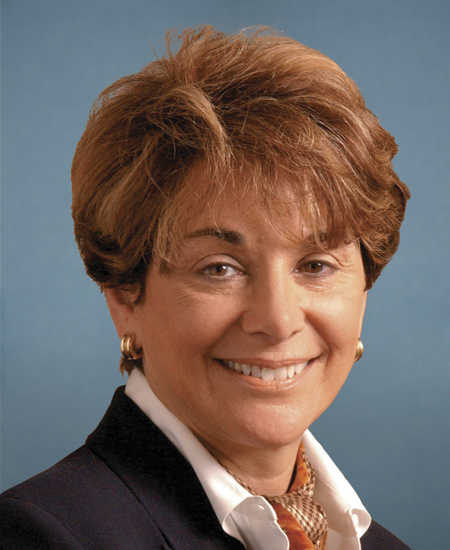
Rep. Anna G. Eshoo
Sponsored bills
Maddy summaryThe AI Development Practices Act of 2024 requires the National Institute of Standards and Technology (NIST) to develop voluntary guidance for AI developers on best practices for creating, releasing, and assessing artificial intelligence systems. This guidance will cover defining risk tolerances (including security, economic, and social risks), documenting system characteristics like fairness and safety, and public reporting of capabilities and limitations. NIST must update the guidance periodically, base it on international standards and industry practices, and report to Congress within 18 months on new materials and policy recommendations. The bill does not mandate specific actions but aims to foster industry-wide communication and coordination on AI development practices.
Maddy summaryThe Expanding AI Voices Act directs the National Science Foundation to provide competitive grants to institutions not among the top 100 in federal research spending, Historically Black Colleges and Universities, minority-serving institutions, Tribal Colleges, or consortia of these entities. These grants fund concrete AI capacity-building activities like developing research programs, recruiting AI faculty, creating student bridge programs, and providing access to computing resources and partnerships. The program specifically aims to broaden participation in AI from underserved communities and avoid duplicating existing federal initiatives. It requires outreach to underrepresented groups and mandates that funded activities integrate ethical AI practices and workforce development.
Maddy summaryHR 9402, the NSF AI Education Act of 2024, creates new funding programs to expand artificial intelligence education across U.S. schools and colleges. It establishes scholarships and fellowships for undergraduate and graduate students in AI-related fields, with priority for programs focused on K-12 AI education, AI in manufacturing/agriculture, and outreach to rural institutions and Tribal Colleges. The bill also creates "Centers of AI Excellence" at community colleges and career technical schools to integrate AI into curricula and workforce development, and provides research funding specifically for AI teaching methods in K-12 schools serving low-income, rural, and Tribal communities. Additionally, it incorporates AI skills development into the National STEM Teachers Corps to prepare educators to teach AI concepts in classrooms.
Maddy summaryThe LIFT AI Act (HR 9211) provides federal funding to develop AI literacy education for K-12 students and teachers. It directs the National Science Foundation to award grants to colleges, nonprofits, or consortia for creating classroom curriculum, teacher training, and evaluation tools focused on AI skills like ethical use, critical interpretation, and problem-solving. The bill specifically targets schools (K-12) and aims to integrate AI literacy into existing lessons through project-based learning and professional development. Key provisions include developing learner-centered materials, training educators on AI proficiency, and creating tools to assess student progress in AI literacy.
Maddy summaryHR 9215, the Workforce for AI Trust Act, creates new fellowship programs at the National Science Foundation (NSF) to support graduate and postdoctoral researchers studying ethical AI development and governance. It requires institutions to recruit diverse candidates committed to "trustworthy AI" and funds tuition, stipends, and research expenses for up to three years. The bill also directs NSF to expand AI skills training for STEM students through workshops and professional development, while NIST is directed to develop technical standards for AI risk management careers like testing and evaluation. These provisions directly affect researchers, universities, and future AI professionals by building workforce capacity in ethics and governance.
Maddy summaryThe CREATE AI Act of 2023 establishes a National Artificial Intelligence Research Resource (NAIRR) to improve access to AI research tools, computational resources, data, and educational materials for researchers and students across the United States. The NAIRR will provide computational resources, curated datasets, educational tools, and access to AI testbeds, with special emphasis on supporting groups historically underrepresented in STEM fields. Governed by a Steering Subcommittee chaired by the Director of the Office of Science and Technology Policy and managed by a Program Management Office within the National Science Foundation, the NAIRR includes specific requirements for ethical AI development, privacy protections, and security measures. The resource will be accessible to researchers at U.S. institutions of higher education, nonprofits, government agencies, and certain businesses, with priority given to projects addressing privacy, ethics, civil rights, and AI safety.
Maddy summaryThe BIOSECURE Act prohibits U.S. federal agencies from contracting for or using biotechnology equipment and services from designated "biotechnology companies of concern," such as BGI, MGI, Complete Genomics, WuXi AppTec, and WuXi Biologics, and bans federal funds for these purposes. It requires the Office of Management and Budget to create and update a list of these companies based on national security risks, with implementation phased in over 60-180 days after regulations are issued. Exceptions include intelligence activities, overseas health care for U.S. personnel, and publicly available multiomic data, while limited waivers for national security or overseas health care are permitted with congressional notification. The law does not require new funding and mandates annual reviews of the designated companies.
Maddy summarySami's Law (HR 9423) requires transportation network companies (like Uber and Lyft) to implement systems that allow passengers to verify their driver's identity before a trip begins, with specific accessibility requirements for visually impaired passengers. The law mandates that these verification systems must be both visually accessible and nonvisually accessible (meeting Web Content Accessibility Guidelines 2.0 Level AA standards) to ensure equal access for all passengers. It establishes a Safety Actions for Matching and Identifying Ride-Share Customers Advisory Council to recommend performance standards for successor technology-based verification systems. The bill includes enforcement mechanisms with civil penalties up to $20,000 per day for knowing and willful violations of its requirements.
Maddy summaryThis bill establishes an Office of Maritime Consumer Protection within the Department of Transportation to oversee consumer protections for cruise passengers. It requires cruise lines to provide clear, pre-booking summaries of key terms in passage contracts (including undisclosed costs, fees, and limitations), invalidates pre-dispute arbitration and class action waiver clauses in cruise contracts, and creates a toll-free hotline and website for passenger complaints. The bill also mandates that cruise lines provide victims of crimes on board with information about their rights and support services, and requires improved security and medical standards for vessels carrying 250+ passengers. It directly affects US-based cruise lines operating vessels that meet the specified passenger capacity and embark/disembark in the United States.