

Maddy summaryHR 926 would require the Supreme Court to establish a code of conduct for justices within 180 days of enactment, along with procedures for handling ethics complaints against them. The bill mandates minimum disclosure standards for gifts, income, and reimbursements received by justices and their law clerks, and requires justices to recuse themselves when they or their family received gifts from parties in a case. It would also require parties and amici curiae to disclose gifts given to justices and lobbying contacts related to justices' nominations, and establish a judicial investigation panel to review complaints against justices. The legislation aims to increase transparency in Supreme Court ethics processes and provide clearer recusal standards for justices.
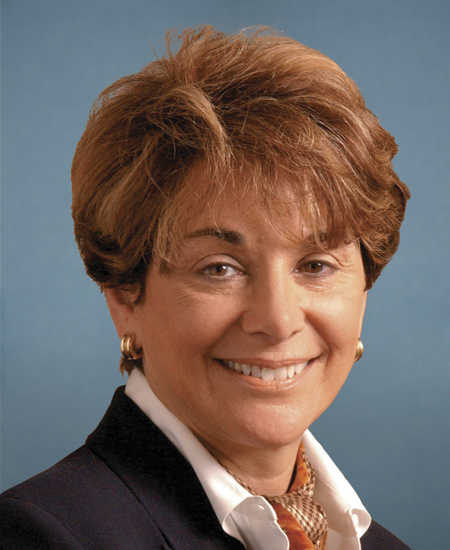
Rep. Anna G. Eshoo
Sponsored bills
Maddy summaryThis bill makes significant changes to US corporate tax rules to prevent tax avoidance through foreign operations. It requires corporations to calculate foreign income tax liabilities country-by-country, limits interest deductions for large international financial reporting groups, and modifies rules for "inverted corporations" (where US companies move tax residence abroad). The bill also creates new rules treating foreign corporations managed primarily in the US as domestic corporations for tax purposes. These changes aim to close tax loopholes related to outsourcing and foreign tax planning.
Maddy summaryHR 932 repeals two key congressional authorizations for military force in Iraq: the 1991 resolution (Public Law 102-1) and the 2002 resolution (Public Law 107-243). This bill removes the legal foundation that has permitted U.S. military operations in Iraq for over two decades. It directly affects the executive branch’s authority to conduct military actions under these specific resolutions, requiring future operations to seek new congressional approval. The repeal is a procedural change that would end the statutory basis for ongoing military engagement in Iraq without altering other laws or policies.
Presidential Tax Transparency Act This bill requires the President, the Vice President, and certain candidates for President and Vice President to disclose federal income tax returns for the ten most recent taxable years. The returns must be disclosed to the Federal Election Commission (FEC), which must make the returns publicly available after redacting information that is necessary for protecting against identity theft, such as Social Security numbers. If the tax returns are not disclosed to the FEC as required by this bill, the Internal Revenue Service must provide the returns to the FEC upon receiving a written request from the FEC.
This resolution condemns Azerbaijan's blockade of the Lachin Corridor to Nagorno-Karabakh (also known as Artsakh). The resolution calls on the U.S. government to work with international partners to deploy observers to explore opportunities for security and peaceful development. The resolution also calls on the President to (1) suspend military and security assistance from the United States to Azerbaijan, and (2) fully enforce a U.S. law prohibiting certain bilateral assistance to Azerbaijan until Azerbaijan takes demonstrable steps to cease all offensive uses of force against Armenia and Nagorno-Karabakh.
Maddy summaryHR 866, the Equal COLA Act, changes how cost-of-living adjustments (COLAs) are calculated for federal retirees under the Federal Employees Retirement System (FERS). It requires that each year's COLA be based on the exact percent change in the price index from the previous year's base quarter, rounded to the nearest 0.1%, effective December 1. This applies to all FERS annuities starting before, on, or after the bill's enactment date, ensuring a standardized calculation method for retirees' annual adjustments.
Secure Access for Essential Reproductive Health Act of 2023 or the SAFER Health Act of 2023 This bill prohibits health care providers and insurance plans from disclosing in a legal proceeding an individual's personal health information related to an abortion or pregnancy without the individual's valid authorization. The prohibition applies to federal, state, local, and tribal proceedings, including civil, criminal, administrative, and legislative proceedings. The bill provides limited exceptions such as if the information is necessary to investigate physical harm to the individual. Further, the Department of Health and Human Services must conduct an outreach campaign to inform covered entities and the public about the prohibition.
This resolution states that the House of Representatives condemns the February 1, 2021, military coup in Burma (Myanmar) and denounces the Burmese military for human rights violations. The resolution calls on the Burmese military to end violence against prodemocracy activists and release political prisoners.
Maddy summaryHR 715, the Bipartisan Background Checks Act of 2023, requires background checks for all firearm transfers between private individuals, not just those through licensed dealers. It mandates that unlicensed sellers must involve a licensed dealer to conduct a background check before transferring a firearm, with exceptions for family transfers (like spouses or parents/children), law enforcement, temporary safety transfers, and certain hunting or range activities. The bill also requires licensed dealers to provide a notice and certification form in both English and Spanish to buyers. It explicitly states it won't create a national gun registry or override state laws on the same topic. The law would take effect 180 days after enactment.
Maddy summaryHR 694, the Job Protection Act, expands access to family and medical leave under the FMLA by reducing eligibility requirements. It lowers the required employment period from 12 months to 90 days for most workers and removes the 50-employee threshold, requiring all employers (including small businesses with one or more employees) to provide leave. Federal, presidential, and congressional employees also see their eligibility thresholds reduced to 90 days. The bill directly affects millions of private-sector workers and small businesses nationwide by making existing leave protections more widely available. It makes no changes to leave duration or pay, only to who qualifies and which employers must comply.