

Maddy summaryThe Community Broadband Act of 2023 removes state-level legal barriers that prevent local governments, cooperatives, or public-private partnerships from building or operating broadband networks. It prohibits states from banning or effectively blocking these entities from providing advanced internet services to residents or businesses. The bill requires public entities to treat all broadband providers fairly under local rules, without favoring their own services or affiliated companies. It specifically defines "public providers" (like cities or counties) and "cooperatively organized providers" (like member-owned co-ops) to clarify who this law protects. The law does not fund new networks but ensures existing state laws cannot block community-led broadband projects.
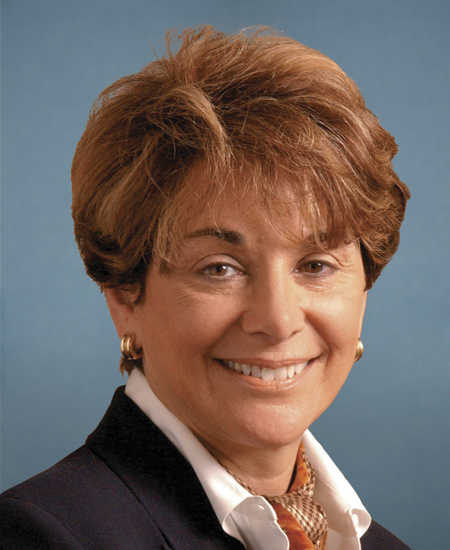
Rep. Anna G. Eshoo
Sponsored bills
This resolution condemns the deliberate gas attacks on schoolgirls in Iran (up to 7,000 schoolgirls were poisoned in at least 290 attacks, according to human rights groups) and Iran's suppression of individuals participating in demonstrations. The resolution also urges the United States to initiate a formal process for an independent investigation and to work with the United Nations in investigating the gas attacks on schoolgirls in Iran.
This resolution urges (1) the President to issue a proclamation recognizing Earth Day; and (2) governments and people to continue building upon the Paris Agreement and other efforts to ensure that future generations inherit a livable, sustainable, and ecologically rich planet.
Maddy summaryHRES 269 is a non-binding resolution passed by the U.S. House of Representatives on March 30, 2023. It recognizes the federal government's duty to develop and implement a Transgender Bill of Rights to protect transgender and nonbinary people. The resolution outlines key provisions, including ensuring access to gender-affirming medical care, ending discrimination in employment and housing, and improving legal recognition of gender identity on government documents. It also calls for addressing systemic barriers in education, safety, and economic security faced by transgender and nonbinary individuals.
Maddy summaryThe Online Privacy Act of 2023 establishes comprehensive privacy rights for U.S. individuals, granting them the right to access, correct, delete, and port their personal information. It creates a new Digital Privacy Agency to enforce these rules, requiring companies that collect personal information (covered entities) to follow strict data minimization practices, obtain express consent for certain uses, and provide clear privacy policies. The bill prohibits selling personal information without consent, restricts behavioral personalization without express consent, and bans "dark patterns" in privacy notices, while requiring companies to implement security measures and notify individuals of data breaches.
Maddy summaryHR 2725, the "Do No Harm Act," amends the Religious Freedom Restoration Act (RFRA) to clarify that RFRA does not apply when federal laws protect against discrimination or promote equal opportunity. It specifically exempts protections under the Civil Rights Act, Americans with Disabilities Act, workplace benefits like leave, child labor safeguards, and healthcare access from RFRA challenges. The bill also clarifies that RFRA does not block private lawsuits between individuals, applying only to cases involving government entities. This amendment ensures that existing federal civil rights and workplace protections remain enforceable under RFRA.
Maddy summaryThis bill amends federal health law to include Middle Eastern and North African (MENA) populations - such as Lebanese, Iranian, Egyptian, and Palestinian communities - as a recognized racial and ethnic minority group for the first time. It updates definitions in the Public Health Service Act to ensure MENA individuals can access health programs designed for marginalized communities, which they were previously excluded from due to being grouped with non-Hispanic White populations in federal data. The bill also requires the Department of Health and Human Services to conduct a comprehensive health study of MENA communities, disaggregating data by subgroups to analyze specific health conditions, access barriers, and outcomes. Results will be published in a public online portal and reported to Congress within two years. This change directly affects MENA individuals by enabling targeted health initiatives and data collection previously unavailable to them.
Maddy summaryThe Puppy Protection Act of 2023 sets new standards for businesses that sell dogs (dealers), directly affecting pet stores and breeders operating under the Animal Welfare Act. It requires specific housing with space allowances based on dog size (e.g., 12-30 square feet per dog), temperature control (45-85°F), clean food twice daily, and daily exercise or socialization with humans/dogs for at least 30 minutes. The bill also mandates annual veterinary exams including dental care, strict breeding limits (e.g., age restrictions, maximum 2 litters in 18 months), and efforts to place retired breeding dogs in homes instead of selling them to other breeders. Regulations must be finalized within 18 months of enactment.
Maddy summaryHR 2630, the Safe Step Act, requires group health plans and health insurance issuers to establish a clear, transparent process for patients or their doctors to request exceptions to medication step therapy protocols. These protocols typically force patients to try cheaper drugs first before covering more expensive alternatives. The bill mandates that plans must approve exceptions when prior treatments failed, delay would cause serious harm, a treatment is unsafe, or a patient is stable on a previously approved drug, with strict 72-hour (or 24-hour in emergencies) decision timelines. It also requires plans to publish the exception process online and limit documentation requests to only necessary medical information. This law directly affects health insurers, employers offering health plans, and patients using step therapy for prescription drugs.
Air Traffic Noise and Pollution Expert Consensus Act of 2023 This bill requires the Federal Aviation Administration to enter into an arrangement with the National Academies of Sciences, Engineering, and Medicine to examine and report on the various health impacts of air traffic noise and pollution.