

Maddy summaryHRES 439 is a non-binding resolution expressing the House of Representatives' support for keeping the U.S. Postal Service (USPS) as an independent federal agency, not subject to privatization. It highlights USPS's constitutional role, self-sustaining nature (relying on service revenue, not taxpayer funds), and its importance to rural communities, e-commerce, and over 600,000 employees. The resolution urges Congress to take action to preserve USPS's independence, emphasizing that privatization could raise prices, reduce services, and harm the nation's mail infrastructure. As a procedural resolution, it does not change law but formally states the House's position.
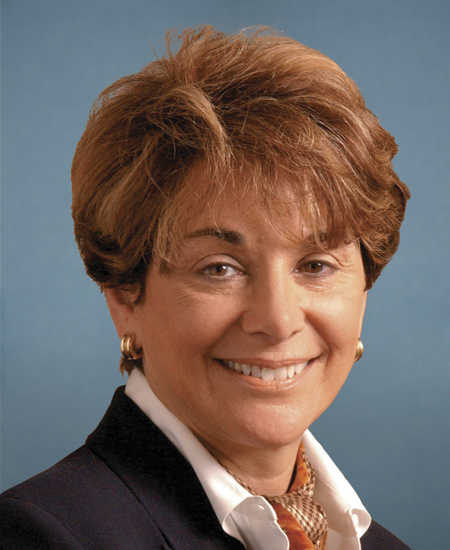
Rep. Anna G. Eshoo
Sponsored bills
Maddy summaryThe AIR PUMP Act requires airlines to provide nursing crew members (like flight attendants and pilots) with reasonable break time to express breast milk for up to one year after their child's birth, as well as a private, non-bathroom space for this purpose. It specifically excludes breaks during critical flight phases and ensures accommodations won't compromise safety, security, or require significant costs (e.g., aircraft modifications). The bill includes anti-retaliation protections for employees who request accommodations or file complaints, and enforces these requirements through the Department of Labor using existing Fair Labor Standards Act mechanisms. This directly affects airline employees who are nursing parents and their employers, aligning airline workplace policies with federal breastfeeding protections.
Maddy summaryThis bill renames a U.S. Postal Service facility at 300 Long Beach Boulevard in Long Beach, California, as the "Alan S. Lowenthal Post Office Building." It directly affects the postal facility and all federal documents, maps, or records referencing it. The key provision updates every official reference to the building to use the new name, ensuring consistency in government records. The bill does not change postal services, funding, or policy - only the building's official designation.
Maddy summaryThis bill designates the U.S. Postal Service facility at 7911 Imperial Highway in Downey, California, as the "Lucille Roybal-Allard Post Office Building." It updates all official references in federal laws, documents, and records to use this new name for the specific post office location. The change affects the facility's official identification but does not alter its operations or services.
Maddy summaryThis bill requires sponsors of NIH-funded or NIH-approved clinical trials (for drugs, devices, biological products, or behavioral interventions) to set specific, measurable goals for recruiting participants reflecting race, ethnicity, age, and sex - either based on disease prevalence or the U.S. population. Key mechanisms include mandating detailed plans for achieving these goals, annual reporting of demographic data (without personally identifiable information), and strategies to reduce participation barriers like virtual visits or flexible scheduling. It also requires training for researchers on diversity and health inequities, and establishes a remediation process if goals aren’t met. The law aims to improve representation in clinical trials to ensure medical research better serves all patient groups.
Maddy summaryHR 3420, the My Body, My Data Act of 2023, restricts how companies can handle reproductive and sexual health data - such as pregnancy details, contraceptive use, or abortion-related information - by requiring them to collect only what’s necessary for requested services and limiting employee access. It gives individuals the right to access, correct, or delete their data, see which third parties received it, and get clear privacy policies explaining data practices. The Federal Trade Commission enforces the law, with penalties for violations including $100-$1,000 per violation per day, and bans retaliation for exercising these rights. The law applies to companies (like health apps or insurers) but excludes HIPAA-covered healthcare providers and entities subject to existing federal health privacy rules.
Justice is Beneficial Limitation on Investments and Necessary Disclosure Act of 2023 or the Justice is BLIND Act of 2023 This bill requires a federal judge, as well as any spouse or dependent child of a federal judge, to place specified investments into a qualified blind trust (i.e., an arrangement in which certain financial holdings are placed in someone else's control to avoid a possible conflict of interest) until 180 days after the end of their tenure as a federal judge.
Maddy summaryHR 3537 authorizes the minting of commemorative coins to mark the 100th anniversary of the U.S. Foreign Service, established by the 1924 Rogers Act. The bill specifies three coin types ($5 gold, $1 silver, and half-dollar clad) with limited mintage (50,000 gold, 400,000 silver, 750,000 half-dollars) to be issued in 2025, featuring designs honoring diplomatic history. A surcharge on each coin sale ($35 for gold, $10 for silver, $5 for half-dollars) will fund the Association for Diplomatic Studies and Training (ADST) to support its oral history program and diplomatic preservation efforts. The coins will be legal tender, sold at cost-plus-surcharge, with all revenue directed to ADST per the bill's provisions.
Maddy summaryHRES 319 is a symbolic resolution passed by the U.S. House of Representatives on April 24, 2023, recognizing the federal government's duty to develop a Green New Deal. It states the House believes the government should create a comprehensive plan to address climate change and economic inequality through a 10-year national mobilization. The resolution outlines goals like achieving net-zero emissions by 2050, creating high-wage union jobs, upgrading infrastructure, and prioritizing frontline communities, but it does not establish binding policy or funding mechanisms. As a non-binding resolution, it serves as a statement of legislative intent rather than a law.
Maddy summaryThe FIGHT Act (HR 2742) amends the Animal Welfare Act to specifically target animal fighting events, such as cockfighting, by defining "rooster" as any male chicken over six months old and banning the live broadcasting (simulcasting) of such events. It prohibits using the postal service or interstate transport to move roosters for animal fighting purposes and adds civil enforcement tools allowing citizens to sue violators after a 60-day notice period. Fines up to $5,000 per violation may be imposed, and property used in animal fighting ventures can be seized. These changes strengthen enforcement against animal fighting by expanding legal remedies for the public and authorities.