

Maddy summaryHR 7056, the Access to Family Building Act, establishes federal rights for individuals to access assisted reproductive technology (ART) like IVF without unreasonable restrictions, directly affecting patients seeking fertility treatments and health care providers offering ART services. The bill prohibits states from imposing limitations on ART that are more burdensome than those for comparable medical procedures, fail to advance safety, or unduly restrict access, while allowing health and safety regulations that are necessary and least restrictive. It creates federal enforcement mechanisms, including lawsuits by the Attorney General or affected individuals to challenge violating state laws, and preempts conflicting state regulations. The bill explicitly preserves state authority over health/safety regulations and does not alter existing state insurance coverage laws for ART.
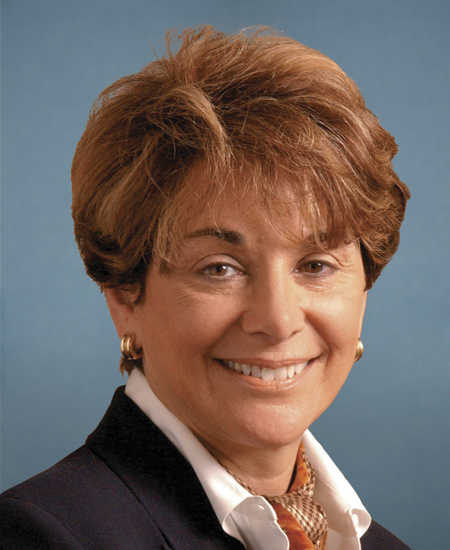
Rep. Anna G. Eshoo
Sponsored bills
Maddy summaryHR 6081 amends the short title of the Lake Tahoe Restoration Act (Public Law 106-506) to honor Senator Dianne Feinstein, renaming it the "Dianne Feinstein Lake Tahoe Restoration Act." This change applies to all federal references in laws, maps, regulations, documents, or records that previously cited the original title. The bill does not alter the Act's policies or funding but updates its official name and all related references. It directly affects federal agencies and documents that reference the legislation. This is a purely procedural renaming with no substantive policy changes.
Maddy summaryThis bill restores visa eligibility for immigrants who had diversity visas allocated for fiscal years 2017-2022 but were denied entry due to specific travel restrictions (like Executive Orders 13769/13780 or related proclamations) or pandemic-related delays. The State Department must notify affected individuals within 90 days of the bill’s enactment, giving them one year to confirm they wish to proceed with their visa applications. Unused visas from those years can be reallocated without counting against current annual limits, and applicants who fail to respond or are denied for standard reasons (like education requirements) lose eligibility. The policy directly affects individuals impacted by these specific past barriers to immigration.
Maddy summaryHRES 962 is a ceremonial resolution honoring Reverend Dr. Martin Luther King, Jr.'s legacy, specifically celebrating his 95th birthday on January 15, 2024. It symbolically affirms his teachings by condemning hate, discrimination, and prejudice against Black Americans, Indigenous people, Jewish, Asian-American/Pacific Islander, Muslim, Hispanic/Latino communities, and LGBTQ+ individuals. The resolution does not create new laws or affect any policies - it solely expresses the House's support for Dr. King's values of diversity, tolerance, and equality through non-binding statements. As a symbolic gesture, it has no legal effect or direct impact on any group or individual.
Maddy summaryHRES 963 is a symbolic resolution honoring Korean American Day, which commemorates the January 13, 1903 arrival of the first large wave of Korean immigrants to the U.S. It recognizes Korean Americans' contributions to U.S. society, including their economic, cultural, and military impacts, and marks the 121st anniversary of this historic migration. The resolution urges all Americans to observe Korean American Day to appreciate these contributions. As a commemorative measure, it does not create new policies or affect specific groups beyond this ceremonial recognition.
Maddy summaryHR 6963, the Pediatric Cancer Drug Supply Act of 2024, creates a federal pilot program to prevent shortages of essential pediatric cancer drugs. The Secretary of Health and Human Services will enter agreements with manufacturers to maintain a 6-month reserve supply of each covered drug - defined as drugs on a list developed by the Secretary that treat pediatric cancer and meet specific criteria - held in the U.S. by manufacturers. Manufacturers must store extra inventory beyond normal levels, ensure drugs have over a year of shelf life, and allow the government to audit compliance. During shortages, the Secretary can order these reserves distributed to patients, with recipients paying the government's purchase price to replenish the supply. The program is funded with $500 million for fiscal year 2024.
Maddy summaryThe INSURE Act creates a federal reinsurance program to replace the National Flood Insurance Program, requiring property insurers to offer "all-perils" policies covering specific catastrophe risks like flood, wind, hurricane, wildfire, and eventually earthquake. Insurers participating in the program must implement loss prevention partnerships that encourage investments to reduce catastrophe losses, and will pay quarterly premiums to a Federal Catastrophe Reinsurance Fund. The program will phase in coverage for different perils over eight years, starting with flood coverage (beginning four years after enactment), followed by wind/hurricane (five years), severe storms/wildfire (six years), and earthquake (eight years or when feasibility reports are submitted). The bill also establishes grant programs for states to promote loss prevention investments and provide financial assistance to low-income homeowners struggling with insurance costs.
Maddy summaryThe Affordable Connectivity Program Extension Act of 2024 allocates $7 billion in funding for the Affordable Connectivity Program (ACP) during fiscal year 2024. The ACP provides subsidies to low-income households to help cover the cost of internet service and connected devices like laptops or tablets. This funding ensures the program can continue supporting eligible households throughout the year, with the money remaining available until fully spent. The bill extends existing program funding without changing eligibility criteria or service requirements.
Maddy summaryThis bill requires large AI model providers (those generating over 100,000 monthly outputs or serving 30,000+ users) to disclose specific transparency details about their foundation models. Covered entities must submit to the FTC and make public information about training data sources, model composition, safety evaluations for high-risk areas (like healthcare, hiring, and finance), and performance metrics. The FTC will establish regulations within 9 months, mandating standardized disclosures on websites and a central FTC portal, using machine-readable formats. Enforcement treats violations as unfair/deceptive practices under the FTC Act, with annual updates to the standards.
Maddy summaryThis bill designates the Elk River Trail in California's Headwaters Forest Reserve as the "Senator Dianne Feinstein Memorial Trail." It updates all official federal references - such as laws, maps, and documents - to reflect this new name. The bill directly affects the Elk River Trail and federal records mentioning it. No substantive policy changes or funding are involved; it solely honors Senator Feinstein through a trail naming designation.