

Maddy summaryHR 738, the Universal Right To Vote by Mail Act of 2025, would require all states to allow any voter to request and cast a mail-in ballot for federal elections without needing to provide a reason, directly affecting all voters in states holding federal elections. The bill prohibits states from adding extra conditions beyond ballot request and return deadlines, and mandates that election officials must notify voters of signature discrepancies or missing information within one business day, giving them three days to correct errors before ballots are rejected. It explicitly preserves states' ability to maintain in-person polling places and applies to federal elections starting in 2026. The bill cites findings that universal mail-in voting increases participation, reduces poll wait times, and has no proven fraud risk, while eliminating requirements for personal justification or notarization.
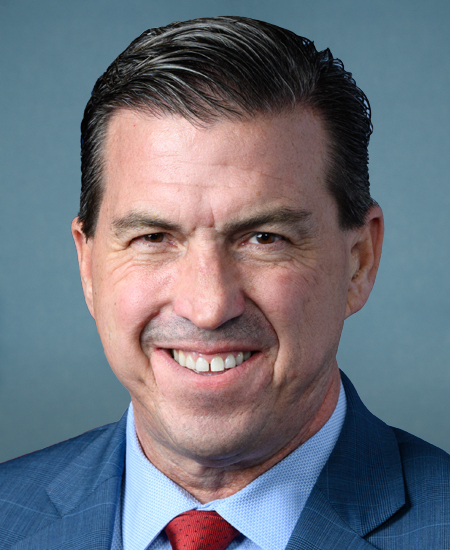
Rep. Kevin Mullin
Sponsored bills
Maddy summaryHRES 61 is a symbolic resolution designating January as "Muslim-American Heritage Month" to celebrate the contributions of Muslim Americans to U.S. society. It does not create new laws or affect specific groups legally, but formally recognizes their historical and cultural impact through non-binding support. The resolution highlights Muslim Americans' roles in fields like business, science, military service, and the arts, while acknowledging challenges like religious discrimination. It urges the public to observe the month with ceremonies celebrating their heritage.
Boundary Waters Wilderness Protection and Pollution Prevention Act This bill protects and preserves approximately 225,504 acres of federal land and waters in a specified area in the Rainy River Watershed of Superior National Forest in Minnesota from certain mining, such as sulfide-ore copper mining. (The area is upstream from the Boundary Waters Canoe Area Wilderness.) Specifically, the bill withdraws those acres from entry, appropriation, and disposal under the public land laws; location, entry, and patent under the mining laws; and operation of the mineral leasing, mineral materials, and geothermal leasing laws. However, the Forest Service is authorized to permit the removal of sand, granite, iron ore, and taconite from national forest system lands within such area if the removal is not detrimental to the water quality, air quality, and health of forest habitat within the Rainy River Watershed. Land or interest in land within such area that is acquired by the United States must be immediately withdrawn in accordance with this bill.
Maddy summaryHR 566, the Cleaner Air Spaces Act of 2025, provides federal grants to air pollution control agencies to establish local programs targeting low-income households with vulnerable residents (such as those with health conditions or elderly members) in wildfire smoke-prone areas. The bill authorizes $30 million over three years to fund programs that must establish accessible clean air centers, distribute at least 1,000 free, certified air filtration units per program (with replacements), provide educational materials, and partner with community organizations. Agencies must track unit types and costs, survey participants on program effectiveness, and report results to Congress within three years. The program directly affects covered households by improving access to clean air during smoke events through tangible, funded support.
Maddy summaryHRES 48 is a ceremonial resolution honoring Dr. Martin Luther King, Jr., by commemorating his 96th birthday on January 20, 2025. The resolution affirms his teachings on diversity, equality, and nonviolence, and specifically condemns hate, discrimination, and harassment targeting Black Americans, Indigenous peoples, Jewish communities, Asian-American/Pacific Islander groups, Muslim communities, Hispanic/Latino communities, LGBTQ+ individuals, and others. It calls on all people to uphold Dr. King’s values of justice, tolerance, and peace. As a symbolic gesture, this resolution has no legal effect but expresses the House’s commitment to these principles.
Maddy summaryHRES 52 is a symbolic resolution recognizing community organizations and individuals who create and maintain services and educational programs for LGBTQIA+ communities. It does not establish new laws, funding, or policy changes, but formally honors their work in fostering safe spaces and resilience. The resolution cites historical examples like Stonewall and ACT UP, along with statistics on declining LGBTQIA+ venues and hate violence, to underscore the importance of these efforts. It calls for Congress to acknowledge this work through non-binding statements of support.
Maddy summaryHR 477 (MACH Act) establishes a NASA program to facilitate commercial testing of hypersonic aircraft technology. It prohibits NASA from funding technology development (only enabling testing) and restricts partnerships with foreign entities or "entities of concern" per security definitions. NASA must coordinate with the Defense Department and FAA, develop a strategic plan within 60 days, and submit annual reports to Congress on testing activities. This directly affects commercial companies seeking to test hypersonic systems through NASA's framework.
This bill increases the annual limit on the tax credit for qualified railroad track maintenance expenses (also referred to as the short line railroad tax credit) and expands eligibility for claiming the credit. Under current law, the tax credit is limited each tax year to $3,500 multiplied by the sum of the number of miles of railroad track owned or leased by the taxpayer (miles owned or leased) and the number of railroad track miles assigned to the taxpayer by a Class II or III railroad (miles assigned). This bill increases the annual limit to $6,100 multiplied by the sum of miles owned or leased and miles assigned. The $6,100 amount used in the calculation of the tax credit limit is adjusted for inflation for tax years beginning after 2025. The bill also expands eligibility for the tax credit to include gross expenses for maintaining railroad tracks owned or leased as of January 1, 2024. Under current law, the tax credit is limited to gross expenses for maintaining railroad tracks owned or leased as of January 1, 2015.
Maddy summaryThe Inaugural Fund Integrity Act regulates donations to official presidential inaugural committees. It prohibits these committees from accepting money from corporations, foreign nationals, or donations made under another person's name. Individuals can donate up to $50,000 annually (adjusted for inflation), and committees must disclose all donations over $1,000 within 24 hours, plus detailed final reports showing all spending over $200. Unused funds may still be transferred to tax-exempt charities. This applies to inaugural committees organizing the 2029 and later presidential inaugurations.
Maddy summaryHR 485, the Muhammad Ali Congressional Gold Medal Act, authorizes Congress to award a gold medal in recognition of Muhammad Ali's lifetime contributions to sports, civil rights, and humanitarian causes. The bill directs the Treasury Secretary to strike the medal and present it to Ali's widow, Lonnie Ali, following his death in 2016. It also permits the sale of bronze duplicates to cover costs, with proceeds going to the U.S. Mint. This is a commemorative measure with no policy impact, solely honoring Ali's legacy through a symbolic medal.