

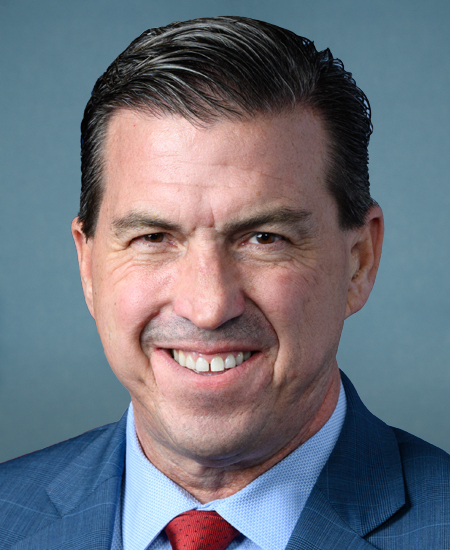
Photo of Kevin Mullin
D United States House · District 15 · California On the 2026 ballot

Rep. Kevin Mullin

Compare
Total votes
1,879
all sessions
Attendance
94%
117 missed
Lower than 87% of chamber peers
With party
98%
of cast votes
Near the chamber average
Bipartisan score
1%
crosses aisle rarely
Near the chamber average
Sponsored
1,204
bills & resolutions
Higher than 89% of chamber peers
Committees
4
assignments
1,204 bills and resolutions

Sponsored bills

Total
1,204
Primary
39
Co-sponsor
1,165
This page
1,204
matching current filters
Co-sponsor HR 2799
In committee · United States House · Co-sponsor
Closing the Bump Stock Loophole Act of 2025

Maddy summaryHR 2799, the Closing the Bump Stock Loophole Act of 2025, prohibits the sale, possession, and modification of devices that increase the firing rate of semi-automatic firearms to mimic machine guns (commonly called "bump stocks"). It specifically bans manual, power-driven, or electronic devices designed to speed up firing, as well as modified firearms that achieve this effect. Owners of pre-existing modified firearms must register them within 120 days of the law's enactment, with exemptions for government entities and firearms already lawfully modified and registered before the bill passes. The bill does not restrict standard semi-automatic firearms or require registration of unmodified guns.

In committee Apr 9, 2025 1 co-sponsor
Co-sponsor HR 2757
In committee · United States House · Co-sponsor
Medicare Audiology Access Improvement Act of 2025

Maddy summaryThis bill expands Medicare coverage to include audiology services provided by qualified audiologists without requiring a physician referral or supervision. Starting January 1, 2027, Medicare will pay 80% of the standard rate for these services, which include hearing and balance assessments and treatment. It specifically allows audiologists to legally provide these services under state law, as long as they are covered if provided by a physician. The bill does not expand the types of services covered beyond those already payable under Medicare as of December 31, 2026.

In committee Apr 9, 2025 1 co-sponsor
Co-sponsor HR 2743
In committee · United States House · Co-sponsor
Raise the Wage Act of 2025

Maddy summaryThe Raise the Wage Act of 2025 gradually increases the federal minimum wage from $9.50 to $17.00 per hour over six years, with annual adjustments based on median wage growth. It raises the base wage for tipped workers from $6.00 to $17.00 per hour, phasing out their separate minimum wage structure by 2029. The bill also eliminates special minimum wage certificates for disabled workers after 2029, requiring employers to pay the standard minimum wage. These changes apply to most covered workers, including tipped employees and those under 20, with specific transition timelines for each group.

In committee Apr 8, 2025 1 co-sponsor
Co-sponsor HR 2710
In committee · United States House · Co-sponsor
People Over Parking Act of 2025

Maddy summaryHR 2710, the People Over Parking Act of 2025, removes requirements for developers to provide a set number of parking spots for new or substantially rebuilt residential, retail, commercial, or industrial buildings located within 0.5 miles of a qualifying public transit point. It directly affects property owners and local governments by giving developers sole discretion over parking provision in these areas, overriding conflicting state or local parking mandates. The bill defines "covered public transit points" as fixed guideway access (like train stations) or bus stops with two or more frequent routes (15-minute peak interval), excluding most standard bus stops. This policy change aims to reduce parking requirements near transit, potentially lowering development costs and land use for parking.

In committee Apr 8, 2025 1 co-sponsor
Co-sponsor HR 2736
In committee · United States House · Co-sponsor
Public Service Freedom to Negotiate Act of 2025

Maddy summaryThis bill establishes federal minimum standards for collective bargaining rights for public employees and supervisors. The Federal Labor Relations Authority would determine if state laws provide these rights, and if not, would establish them for affected employees. The bill guarantees public employees the right to form unions, bargain collectively, and engage in concerted activities, while requiring public employers to recognize unions and put agreements in writing. It also prohibits strikes or lockouts that would disrupt emergency services. This would apply to public employees in states that don't meet the federal standards for collective bargaining rights.

In committee Apr 8, 2025 1 co-sponsor
Co-sponsor HR 2703
In committee · United States House · Co-sponsor
Advancing GETs Act of 2025

Maddy summaryHR 2703, the Advancing GETs Act of 2025, creates a shared savings program for developers who install grid-enhancing technologies (GETs) on existing or new transmission infrastructure. Developers can receive 10-25% of the savings from these technologies over three years, provided the savings exceed four times the installation cost. The bill also requires transmission operators to report annual congestion costs and creates a public map of grid constraints, while directing the Energy Secretary to establish an annual guide for utilities on implementing GETs. This directly affects utilities, developers, and grid operators by incentivizing infrastructure upgrades that boost grid efficiency, reliability, and capacity.

In committee Apr 8, 2025 1 co-sponsor
Co-sponsor HR 2725
In committee · United States House · Co-sponsor
Affordable Housing Credit Improvement Act of 2025

Maddy summaryThe Affordable Housing Credit Improvement Act of 2025 would reform the Low-Income Housing Credit program, which provides tax credits to developers of affordable housing. It would increase state allocations based on population with annual cost-of-living adjustments, modify tenant eligibility rules to allow higher income limits for some residents, and add protections for domestic violence victims in housing. The bill would simplify rules for rural and Native American housing projects, clarify credit eligibility requirements, and require greater transparency in program administration. These changes would directly affect developers, property owners, and low-income tenants in housing projects that receive LIHC tax credits.

In committee Apr 8, 2025 1 co-sponsor
Co-sponsor HRES 297
In committee · United States House · Co-sponsor
Expressing the sense of the House of Representatives that paraprofessionals and education support staff should have fair compensation, benefits, and working conditions.

Maddy summaryHRES 297 is a non-binding resolution expressing the House of Representatives' support for fair compensation, benefits, and working conditions for paraprofessionals (like instructional assistants) and education support staff (including bus drivers, cafeteria workers, and clerical staff) in schools. It specifically calls for livable wages, job security, access to affordable health care, paid leave, and meaningful input in school policies for these workers. As a resolution, it does not create new laws or mandate changes but serves as a symbolic statement highlighting these workers' needs. The resolution directly addresses the concerns of over 3 million school support staff facing issues like underpayment, lack of benefits, and job instability.

In committee Apr 7, 2025 1 co-sponsor
Co-sponsor HR 2687
In committee · United States House · Co-sponsor
End Kidney Deaths Act

Maddy summaryHR 2687, the End Kidney Deaths Act, creates a federal tax credit for living kidney donors who give non-directed donations (meaning they don't know the recipient's identity). It provides a $10,000 annual credit for five years ($50,000 total) to donors whose kidney is removed after December 31, 2026, with special rules if the donor dies during this period. The credit applies only to living, non-directed kidney donations and explicitly states it does not count as "valuable consideration" under laws prohibiting organ sales. This bill directly affects living kidney donors who choose to donate anonymously, aiming to incentivize such donations by offsetting related costs through tax relief. The credit expires after December 31, 2036.

In committee Apr 7, 2025 1 co-sponsor
Co-sponsor HR 2692
In committee · United States House · Co-sponsor
No Tax Breaks for Union Busting (NTBUB) Act

Maddy summaryThe No Tax Breaks for Union Busting Act would deny tax deductions for employers who spend money to influence employees' decisions about union activities, such as union elections or collective bargaining. It defines "labor organization activities" broadly to include union elections, labor disputes, and collective actions. The bill requires employers to report such spending on tax returns and prevents them from deducting these expenses from taxable income. This would apply to employers using tactics like captive audience meetings, outside consultants, or other efforts to sway workers' union decisions. The policy aims to remove tax incentives for employers to interfere with workers' rights under labor law.

In committee Apr 7, 2025 1 co-sponsor
Showing 451 to 460 of 1,204 bills
Previous 1 … 45 46 47 … 121 Next