

Maddy summaryThis bill amends federal energy conservation law to require federal agencies to consider mechanical insulation as a standard energy-saving measure during building evaluations. It defines "mechanical insulation property" as materials that reduce energy loss in mechanical systems while meeting ASHRAE 90.1 standards, including insulation placed in service with those systems. The law adds mechanical insulation to the list of measures agencies must evaluate for potential installation in federal buildings as part of their required energy and water assessments. This directly affects federal agencies managing buildings, ensuring they formally assess this specific efficiency measure during routine evaluations.
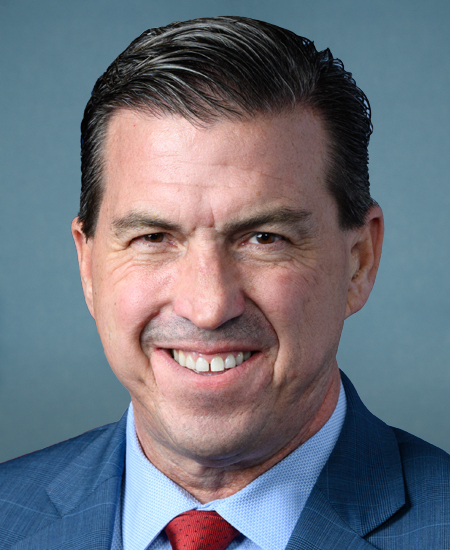
Rep. Kevin Mullin
Sponsored bills
Maddy summaryThis bill creates a tax exclusion for certain disaster mitigation payments received by property owners. It allows individuals to exclude from gross income funds paid by state programs (or approved entities) to make improvements that reduce damage from windstorms, earthquakes, or wildfires. The exclusion applies to payments made for specific property upgrades like storm shutters or fire-resistant roofing. The change takes effect for 2021+ tax years and includes a retroactive option for taxpayers to amend prior returns. It directly affects homeowners participating in qualifying state disaster resilience programs.
Weatherization Enhancement and Readiness Act of 2025 This bill reauthorizes through FY2030 and modifies the Weatherization Assistance Program. Under the program, the Department of Energy (DOE) provides grants for low-income households to improve the energy efficiency of their homes. The bill increases the cap on the average assistance provided per home from $6,500 to $12,000. The bill also directs DOE to include in its annual report to Congress a description of the impacts of enhancement and innovation readiness efforts on eligibility for assistance under the program.
Maddy summaryHR 6635, the Bus Operator Safety and Security Act, requires new fixed-route buses over 30 feet long (with a 10+ year lifespan) purchased using federal transit funds to have physical barriers at the driver's workstation. These barriers must extend from floor to ceiling, fully enclose the workstation to block entry of people or objects, and not obstruct the driver's view. Transit agencies must install these barriers within two years of the law's enactment, unless the labor union representing bus drivers agrees to waive the requirement. The rule applies only to new buses bought with federal funds (excluding those from rural transportation programs) and directly affects transit agencies and bus drivers operating large fixed-route vehicles.
Maddy summaryThe Emergency Alert Grant Fairness Act requires the Federal Emergency Management Agency (FEMA) to open applications for its Next Generation Warning System grants for at least 30 days each year. It also explicitly includes public broadcasting entities (as defined in the Communications Act of 1934) as eligible recipients for these grants. This bill directly affects FEMA's grant administration process and public broadcasting organizations that provide emergency alert services. The key change is standardizing the application window and expanding eligibility to ensure public broadcasters can access funding for emergency alert systems.
Maddy summaryHJRES 144 is a congressional disapproval resolution targeting a specific rule issued by the Department of Veterans Affairs (VA) on December 31, 2025, which addressed "Reproductive Health Services" (90 Fed. Reg. 61310). This resolution directs Congress to disapprove the VA rule under Chapter 8 of Title 5, U.S. Code, meaning the rule would have no legal effect if passed. The bill directly affects the VA's implementation of reproductive health services for veterans, as it seeks to nullify the agency's existing policy. This is a procedural measure, not a substantive policy change, aimed solely at blocking the VA's rule through congressional action.
Maddy summaryHR 7246 establishes two new bodies within the Financial Stability Oversight Council to address climate-related financial risks. It creates a Climate Financial Risk Committee to coordinate agency efforts and an Advisory Committee with 30 members (including climate scientists, financial experts, and consumer advocates, but excluding oil/gas industry representatives) to provide input. The bill requires annual reports assessing climate risks to financial stability, updates to banking supervisory guidance for institutions over $50 billion in assets, and detailed data collection on homeowners insurance underwriting by zip code. These provisions directly affect federal financial regulators (like the Fed, SEC, and FDIC), banks, insurers, and the broader financial system by mandating structured analysis of climate risks.
Maddy summaryHR 7231, the "Lobbyist Loophole Closure Act," expands who must register as lobbyists under the 1995 Lobbying Disclosure Act. It closes a loophole by requiring consultants who provide legislative, political, or strategic counseling to support lobbying contacts to register as lobbyists themselves - previously, such advisors could avoid registration. The bill also lowers the threshold for registration from 20% to 10% of an individual’s time spent on lobbying activities. These changes directly affect lobbying firms, consultants, and their clients who previously used "counseling" services to evade disclosure requirements. The law applies to lobbying contacts made on or after its enactment date.
Maddy summaryThe Language Access for All Act of 2026 requires federal agencies to ensure meaningful access to government services for people with limited English proficiency (LEP). Agencies must translate vital documents into languages commonly spoken in the U.S. (based on Census data), provide multilingual digital tools, interpretation services, and use bilingual staff as an alternative to professional interpreters. Each agency must create a language access plan within one year, detailing how it will serve LEP populations - including during emergencies - and annually certify compliance with technical standards. Noncompliance is treated as discrimination under civil rights law, with enforcement by the Department of Justice.
Maddy summaryHR 7173, the Follow the Science Act, restricts political appointees from influencing National Institutes of Health (NIH) operations and grant decisions. It prohibits most political appointees (defined broadly as those in policy-making roles) from being employed by NIH or participating in grant reviews, funding selections, or policy implementation. The bill requires the NIH Director to report on past political appointee involvement in these activities to Congress within 30 days of enactment. These changes aim to ensure NIH decisions are based on scientific merit rather than political influence, with limited exceptions for other federal agencies.