

Secure Data and Privacy for Contact Tracing Act of 2021 This bill establishes grants for state, tribal, and territorial health departments to incorporate digital contact tracing technology in COVID-19 (i.e., coronavirus disease 2019) contact tracing programs. The Centers for Disease Control and Prevention must award the grants. Any technology developed or procured with these grants must meet privacy, security, and other conditions. Grantees that acquire technology that does not meet these conditions lose eligibility for this, and future, funding for COVID-19 contact tracing technology. In addition, federal privacy standards for personal health information expressly apply to information transmitted or maintained by grant-funded programs. Current law restricts the use and disclosure of personal health information by health care providers, health plans, health clearinghouses, and their business associates. However, there is an exception to these standards for information used by, or disclosed to, a public health authority. The bill also prohibits the use of data derived from the contact tracing technology in legal proceedings or for immigration enforcement. The Government Accountability Office must evaluate this program.
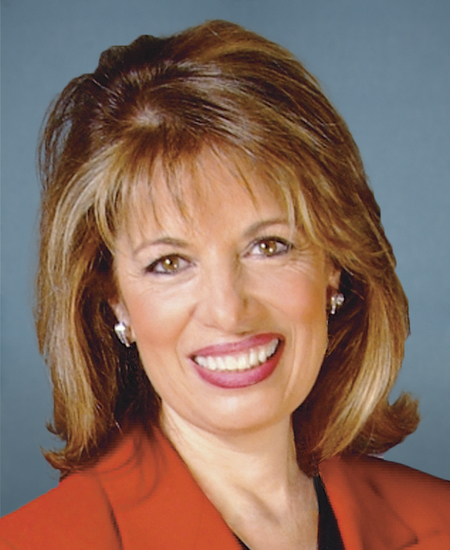
Rep. Jackie Speier
Sponsored bills
No Congressional Gun Loophole Act This bill prohibits the Capitol Police Board from allowing Members of Congress or their staff to carry firearms on the grounds of the U.S. Capitol or in its buildings. Members and their staff may store firearms in their cars in Capitol complex garages if their possession complies with the firearms laws of the District of Columbia and the firearms are locked with gun locks while on the complex. Current board regulations allow Members of Congress to keep firearms in their offices; the regulations also allow Members and their staff to transport unloaded and securely wrapped firearms within the Capitol grounds. Firearms are prohibited inside the chambers of the Senate and the House of Representatives, as well as in adjacent lobbies and cloakrooms, the galleries, the Marble Room of the Senate, and the Rayburn Room of the House, unless approved by the Sergeants at Arms for security purposes.
Unconscionable Pricing Act This bill makes it unlawful for any person to sell, rent, or lease an emergency supply at an unconscionable price during a federally-declared emergency. A price is unconscionable if (1) it exceeds 10% of the average price for the same or similar emergency supply during the 30 days before the emergency was declared, and (2) such price increase is not related to the reasonable costs incurred to sell or rent the supply. The bill provides authority for the Federal Trade Commission and state attorneys general to enforce the requirements of this bill.
USPS Fairness Act This bill repeals the requirement that the U.S. Postal Service annually prepay future retirement health benefits.
Coronavirus Unemployment Benefits Tax Relief Act This bill excludes from gross income, for income tax purposes, up to $10,200 of unemployment compensation received by an individual in a taxable year beginning in 2020.
Emergency Water is a Human Right Act This bill creates a grant program, administered by the Department of Health and Human Services, to provide funds to states and Indian tribes to assist low-income households that pay a high proportion of household income for drinking water and wastewater services. Further, any entity receiving financial assistance under this grant program must ensure that no home energy service or public water system service is or remains disconnected or interrupted during the COVID-19 (i.e., coronavirus disease 2019) public health emergency.
Medicare Economic Security Solutions Act This bill modifies provisions relating to enrollment periods for Medicare medical services. Among other things, the bill establishes a late enrollment penalty of 15% of monthly premiums and applies the penalty for a period equal to twice the number of months in each 12-month period during which the individual was not enrolled. Currently, the late enrollment penalty is 10% of monthly premiums for each 12-month period during which the individual was not enrolled, and the penalty continues to apply for as long as the individual is enrolled in Medicare medical services. The bill also expands the special enrollment periods to individuals who have health insurance coverage other than through their employer.
Women and Climate Change Act of 2021 This bill addresses climate change and its effects on women and girls. Specifically, the bill establishes the Federal Interagency Working Group on Women and Climate Change within the Department of State. The bill outlines the functions of the working group, including the coordination of agencies' policies and activities relating to combating the effects of climate change on women and improving the government's response to and strategy for climate change. In addition, the Office of Global Women's Issues of the State Department must submit a strategy to prevent and respond to the effects of climate change on women.
COVID-19 Cold Storage Expansion Act of 2021 This bill requires the Department of Health and Human Services to reimburse health care providers for costs to obtain and operate certain equipment capable of maintaining cold storage of COVID-19 (i.e., coronavirus disease 2019) vaccines. To receive this reimbursement, health care providers must sign an agreement to participate in the Center for Disease Control and Prevention's COVID-19 Vaccination Program. The agreement sets out prioritization, reporting, and other requirements for the program.
Pre-Registration Of Voters Everywhere Act or the PROVE Act This bill requires each state to implement a preregistration process under which individuals age 16 or older may apply to register to vote in federal elections. Further, states must ensure that eligible preregistered individuals are registered to vote in federal elections held on or after the date the individual turns age 18. The Election Assistance Commission must make grants to states to increase the involvement of individuals under age 18 in public election activities.