

Do No Harm Act This bill prohibits the application of the Religious Freedom Restoration Act of 1993 (RFRA) to specified federal laws or the implementation of such laws. Currently, RFRA prohibits the government from substantially burdening a person's exercise of religion even if the burden results from a rule of general applicability, except in furtherance of a compelling governmental interest when using the least restrictive means. Under the bill, RFRA is inapplicable to laws or the implementation of laws that protect against discrimination or the promotion of equal opportunity (e.g., the Civil Rights Act of 1964); require employers to provide wages, other compensation, or benefits, including leave; protect collective activity in the workplace; protect against child labor, abuse, or exploitation; or provide for access to, information about, referrals for, provision of, or coverage for, any health care item or service. The bill prevents RFRA from being used to deny (1) goods or services the government has contracted, granted, or made an agreement to provide to a beneficiary of or participant in a program or activity funded by such government contract, grant, agreement, or other award; or (2) a person's full and equal enjoyment of a government-provided good, service, benefit, facility, privilege, advantage, or accommodation. In order for a person to assert a RFRA claim or defense in a judicial proceeding, the government must be a party to the proceeding.
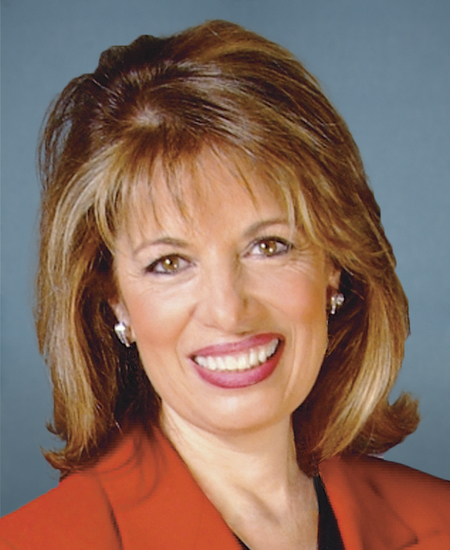
Rep. Jackie Speier
Sponsored bills
Democracy Is Strengthened by Casting Light On Spending in Elections Act of 2021 or the DISCLOSE Act of 2021 This bill addresses campaign finance, including by expanding the prohibition on campaign spending by foreign nationals, requiring additional disclosures of campaign expenditures, and requiring additional disclosures regarding certain political advertisements. First, the bill prohibits foreign nationals from participating in the decision-making process regarding an election expenditure. Additionally, the bill expands existing foreign money prohibitions to include disbursements for paid web-based or digital communications and federal judicial nomination communications. It also prohibits foreign nationals from contributing to campaigns related to ballot initiatives and referenda. The Federal Election Commission (FEC) must conduct an audit after each federal election cycle to determine the incidence of illicit foreign money. Next, the bill makes it unlawful to establish or use a corporation, company, or other entity with the intent to conceal an election contribution or donation by a foreign national. A violator is subject to criminal penalties—a fine, a prison term of up to five years, or both. Covered organizations (e.g., corporations, labor organizations, and political organizations) must, within 24 hours, file reports with the FEC to disclose campaign expenditures of more than $10,000 during an election cycle. Finally, the bill requires organizations to provide additional disclosures regarding political advertisements, including the donors who contributed the most money to that organization in the last year.
Mainstreaming Addiction Treatment Act of 2021 This bill removes the requirement that a health care practitioner apply for a separate waiver through the Drug Enforcement Administration (DEA) to dispense certain narcotic drugs (e.g., buprenorphine) for maintenance or detoxification treatment (i.e., substance use disorder treatment). Further, a community health aide or community health practitioner may dispense certain narcotic drugs for maintenance or detoxification treatment without registering with the DEA if the drug is prescribed by a health care practitioner through telemedicine. It preempts state laws related to licensure for this activity. The bill also directs the Substance Abuse and Mental Health Services Administration to conduct a national campaign to educate health care practitioners and encourage them to integrate substance use disorder treatment into their practices.
COVID-19 in Corrections Data Transparency Act This bill requires the Bureau of Prisons, the U.S. Marshal Service, and state and local correctional facilities to publish on their websites and report to the Centers for Disease Control and Prevention certain data on COVID-19 (i.e., coronavirus disease 2019) cases, vaccinations, and outcomes.
Sunshine in Product Safety Act of 2021 This bill repeals the limitation on the Consumer Product Safety Commission from disclosing information about a consumer product that may reveal the identity of the product's manufacturer without first taking reasonable steps to ensure that the information is accurate and that releasing the information to the public serves the purposes of the laws administered by the commission.
Black Maternal Health Momnibus Act of 2021 This bill directs multi-agency efforts to improve maternal health, particularly among racial and ethnic minority groups, veterans, and other vulnerable populations. It also addresses maternal health issues related to COVID-19 (i.e., coronavirus disease 2019). The Department of Health and Human Services (HHS) and other specified departments must address the social determinants of maternal health, which include child care, housing, food security, transportation, and environmental conditions. The bill also extends to 24 months postpartum eligibility for the Special Supplemental Nutrition Program for Woman, Infants, and Children. Additionally, HHS and other agencies must take actions to grow and diversify the maternal health workforce. To increase access to maternity care, HHS and other agencies must (1) award specified grants; (2) test an alternative payment model for perinatal care under Medicaid and the Children's Health Insurance Program (CHIP); and (3) support training, technology, and telehealth initiatives. The bill also increases research and data collection on maternal morbidity and mortality, particularly among tribal populations and minority groups. The Bureau of Prisons and the Department of Justice must establish programs to improve maternity care for incarcerated populations. The Medicaid and CHIP Payment and Access Commission must also report on the impact of Medicaid ineligibility for pregnant and postpartum prisoners. Additionally, as a condition for certain grants, states and territories must have laws limiting the use of restraints on pregnant individuals in prisons. The bill also directs activities to mitigate adverse maternal health outcomes associated with climate change and to improve maternal vaccination rates.
Growing Climate Solutions Act of 2021 This bill authorizes the Department of Agriculture (USDA) to establish a voluntary Greenhouse Gas Technical Assistance Provider and Third-Party Verifier Certification Program to help reduce entry barriers into voluntary environmental credit markets for farmers, ranchers, and private forest landowners. A voluntary environmental credit market is a market through which agriculture and forestry credits may be bought or sold. Entities eligible to participate in the program are (1) providers of technical assistance to farmers, ranchers, or private forest landowners in carrying out sustainable land use management practices that prevent, reduce, or mitigate greenhouse gas emissions, or sequester carbon; or (2) third-party verifiers that conduct the verification of the processes described in the protocols for voluntary environmental credit markets. Among other requirements, USDA must publish (1) a list of protocols and qualifications for eligible entities; (2) information describing how entities may self-certify under the program; (3) information describing how entities may obtain the expertise to meet the protocols and qualifications; and (4) instructions and suggestions to assist farmers, ranchers, and private forest landowners in facilitating the development of agriculture or forestry credits and accessing voluntary environmental credit markets. USDA must also establish an advisory council to make recommendations regarding the list of protocols and qualifications, best practices, and voluntary environmental credit markets. The bill also rescinds certain funds provided in the American Rescue Plan Act of 2021 and makes the funds available for the certification program.
Child Care for Working Families Act This bill provides funds and otherwise revises certain child care and early learning programs for low- to moderate-income families. Specifically, the bill provides funds for the Child Care and Development Block Grant program and reestablishes it as a child care and development assistance program. The bill also allocates program funds for states to provide services and supports to infants, toddlers, and children with disabilities. Further, the bill revises the program to require each state to create a tiered and transparent system for measuring the quality of child care providers, which must include evidence-based standards and payment rates that are based on a certain cost estimation model; ensure that copayments are based on a sliding scale and that no family receiving assistance pays more than 7% of its household income on child care; and use quality child care amounts for certain activities, such as increasing the supply of child care providers. The bill also provides funds and establishes grants for states to create preschool programs for low- to moderate-income children between the ages of three and five years. The Department of Health and Human Services (HHS) must make grants to Head Start agencies to provide children with access to full-school-year and full-school-day services, provide access to additional service hours for migrant and seasonal agencies, or enhance the quality of existing services. Finally, the bill requires, and provides funds for, HHS to assist Head Start agencies with ensuring their teachers and staff are paid a living wage.
National Origin-Based Antidiscrimination for Nonimmigrants Act or the NO BAN Act This bill imposes limitations on the President's authority to suspend or restrict aliens from entering the United States. It also prohibits religious discrimination in various immigration-related decisions, such as whether to issue an immigrant or nonimmigrant visa, unless there is a statutory basis for such discrimination. The President may temporarily restrict the entry of any aliens or class of aliens after the Department of State determines that the restriction would address specific and credible facts that threaten U.S. interests such as security or public safety. The bill also imposes limitations on such restrictions, such as requiring the President, State Department, and the Department of Homeland Security (DHS) to (1) only issue a restriction when required to address a compelling government interest, and (2) narrowly tailor the suspension to use the least restrictive means to achieve such an interest. Before imposing a restriction, the State Department and DHS shall consult with Congress. The State Department and DHS shall report to Congress about the restriction within 48 hours of the restriction's imposition. If such a report is not made, the restriction shall immediately terminate. Individuals or entities present in the United States and unlawfully harmed by such a restriction may sue in federal court. DHS may suspend the entry of aliens traveling to the United States on a commercial airline that failed to comply with regulations related to detecting fraudulent travel documents.
Washington, D.C. Admission Act This bill provides for admission into the United States of the state of Washington, Douglass Commonwealth, composed of most of the territory of the District of Columbia. The commonwealth shall be admitted to the Union on an equal footing with the other states. The Mayor of the District of Columbia shall issue a proclamation for the first elections to Congress of two Senators and one Representative of the commonwealth. The bill applies current District laws to the commonwealth and continues pending judicial proceedings. The commonwealth (1) shall consist of all District territory, with specified exclusions for federal buildings and monuments, including the principal federal monuments, the White House, the Capitol Building, the U.S. Supreme Court Building, and the federal executive, legislative, and judicial office buildings located adjacent to the Mall and the Capitol Building; and (2) may not impose taxes on federal property except as Congress permits. District territory excluded from the commonwealth shall be known as the Capital and shall be the seat of the federal government. The bill maintains the federal government's authority over military lands and specified other property. The bill provides for expedited consideration of a joint resolution repealing the Twenty-third Amendment to the Constitution, which provides for the appointment of electors of the President and Vice President. The bill continues certain federal authorities and responsibilities, including regarding employee benefits, agencies, courts, and college tuition assistance, until the commonwealth certifies that it is prepared to take over the authorities and responsibilities. The bill establishes the Statehood Transition Commission to advise the President, Congress, and District and commonwealth leaders on the transition.