

This resolution expresses that the House of Representatives stands in solidarity with the people of Afghanistan and with vulnerable groups, including women and children; religious and ethnic minorities; lesbian, gay, bisexual, transgender, queer, and intersex (LGBTQI) persons; civil society actors; journalists; and other at-risk populations in Afghanistan; calls on the Taliban to uphold the protection of universal human rights, including the commitments set forth in the Universal Declaration of Human Rights and enshrined in the International Covenant on Civil and Political Rights, to which Afghanistan is a party; calls for the international community to condemn human rights violations committed by the Taliban; and calls on the U.S. government to work closely with the international community and nongovernmental organizations, particularly such organizations based in Afghanistan, to support at-risk Afghan minority populations and other vulnerable communities.
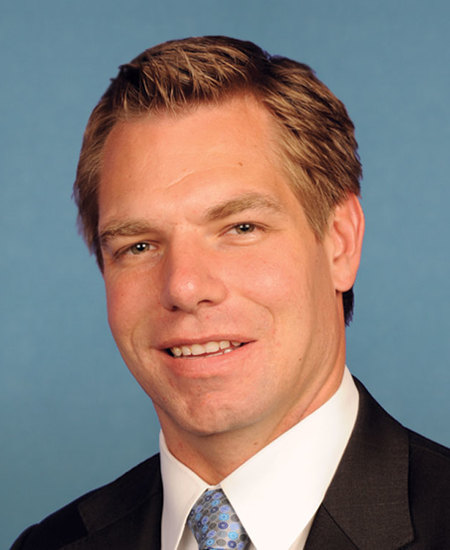
Rep. Eric Swalwell
Sponsored bills
This resolution extends collective bargaining rights prescribed in the Congressional Accountability Act of 1995 to employees of the House of Representatives.
This resolution condemns the military coup that took place in Burma (Myanmar) on February 1, 2021. The resolution denounces the Tatmadaw (the military of Burma) for perpetrating gross violations of human rights as part of its brutal campaign to suppress the democratic aspirations of the people of Burma and calls on the Tatmadaw to cease all violence against prodemocracy activists and reach a cease-fire with ethnic armed organizations, release all political prisoners, and engage in constructive dialogue with all parties to negotiate a pathway toward a government that reflects the will of the Burmese people. The resolution also calls on the President to enact new targeted sanctions on individuals and entities affiliated with the Tatmadaw, including an international arms embargo and a prohibition on the sale of aviation fuel.
Global Respect Act This bill imposes visa-blocking sanctions on foreign persons responsible for or complicit in violating the human rights of individuals due to actual or perceived sexual orientation, gender identity, or sex characteristics. The President must report and periodically update a list of foreign persons responsible for such human rights violations and apply sanctions accordingly. The Department of State must designate at least one senior officer who shall be responsible for tracking violence and discrimination against individuals based on actual or perceived sexual orientation, gender identity, or sex characteristics in foreign countries.
Designates the facility of the United States Postal Service located at 120 4th Street in Petaluma, California, as the "Lynn C. Woolsey Post Office Building."
Keeping School Meals Flexible Act This bill extends authority through June 30, 2023, for the Department of Agriculture (USDA) to waive certain requirements for the school meal programs to address COVID-19. The bill extends the authority for USDA to issue a single waiver of child nutrition program requirements to all states under the National School Lunch Program for purposes of providing meals and snacks with appropriate safety measures with respect to COVID-19; grant waivers of requirements to allow non-congregate feeding in the Child and Adult Care Food Program for purposes of providing meals and snacks with appropriate safety measures with respect to COVID-19; and grant waivers related to the nutritional content of meals served in child nutrition programs if it determines the waiver is necessary to provide meals and snacks, and there is a food supply chain disruption due to COVID-19.
Refuge From Cruel Trapping Act of 2021 This bill prohibits, with specified exceptions, the use or possession of body-gripping traps in the National Wildlife Refuge System. The bill imposes on persons who possess or use such traps in the system (1) for a first offense, a civil fine of up to $500 for each body-gripping trap possessed or used; and (2) for subsequent offenses, a civil fine of up to $1,000 for each body-gripping trap possessed or used, imprisonment for up to 180 days, or both such a civil fine and imprisonment. The bill makes any body-gripping traps that are possessed or used in violation of this bill, and any wildlife captured by the use of such traps, including the pelts and raw fur, subject to civil forfeiture. Persons found to be in violation of such prohibition shall pay all associated court costs.
Coastal Habitat Conservation Act of 2021 This bill provides statutory authority for the Coastal Program of the U.S. Fish and Wildlife Service. Among other things, the program identifies the most important natural resource problems and solutions in priority coastal ecosystems in partnership with federal, state, local, and tribal governments, nongovernmental institutions, nonprofit organizations, private individuals, and corporations; and assists in the development and implementation of monitoring protocols to ensure the success of coastal ecosystem restoration and enhancement measures.
Puerto Rico Recovery Accuracy in Disclosures Act of 2021 or PRRADA This bill requires professionals employed in debt adjustment cases involving Puerto Rico to file verified statements disclosing their connections with interested parties before seeking compensation for their services. The Financial Oversight and Management Board for Puerto Rico must establish a list of such interested parties, which shall include the debtor, creditors, any attorney or accountant of the debtor or creditors, persons employed by the U.S. Trustee Program, persons employed by the board, and any other interested party. Compensation may be denied to such a professional if these disclosures are not filed, are inadequate, or if the professional is found to have certain conflicts of interest.
Climate Risk and Emergency Support In Livable Inclusive and Equitable Neighborhoods and Communities Everywhere Act or the Climate RESILIENCE Act This bill makes changes to the Robert T. Stafford Disaster Relief and Emergency Assistance Act to take into account climate change. The bill includes extreme temperature events, such as heat waves or freezes, within the scope of the act and defines resilience for purposes of disaster assistance and mitigation efforts. Federal and state preparedness and mitigation assistance may be used for reducing the impacts of extreme temperatures and improving air quality and mitigating against wildfire smoke.. The bill authorizes implementing predisaster hazard mitigation measures that will be cost-effective and equitable long-term and provide enhanced protection to the community. The Federal Emergency Management Agency (FEMA) must (1) provide technical assistance to underserved and disadvantaged communities for such measures; and (2) provide guidance to implement the latest published editions of relevant consensus-based codes, specifications, and standards that incorporate the latest hazard-resistant designs. The bill includes within the hazard mitigation program requirements the abatement of lead, mold, mildew, radon, asthma, and allergen triggers, or other pollutants and hazardous materials directly caused by a major disaster or emergency. FEMA must report to Congress regarding challenges posed by FEMA requirements for determining the cost-effectiveness of mitigation activities and how such requirements may disproportionately burden underserved or disadvantaged communities.