

Maddy summaryHR 537 authorizes a Congressional Gold Medal to honor 60 diplomats who saved Jewish lives during the Holocaust by issuing visas and passports against their governments' orders, risking expulsion and personal danger. The medal will be presented to the next of kin of these diplomats, alongside representatives from their home countries, and permanently displayed at the United States Holocaust Memorial Museum. The bill also permits the sale of bronze duplicates to cover production costs, with proceeds going to the U.S. Mint. This legislation recognizes the diplomats' humanitarian actions without creating new government programs or altering existing laws.
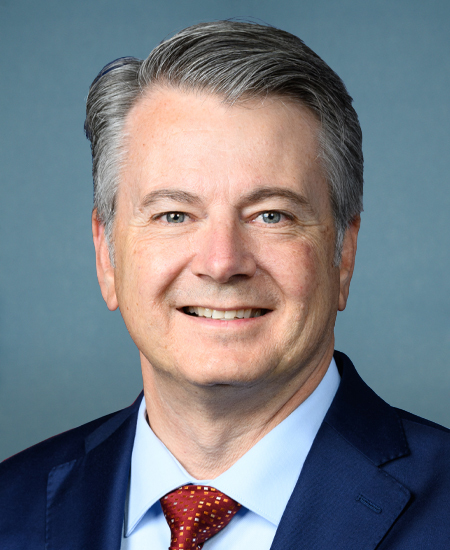
Rep. John S. Duarte
Sponsored bills
Maddy summaryHR 8693, the "No American Land for Communist China Act," prohibits U.S. citizens or entities from purchasing real estate adjacent to specific federal lands if owned by the Chinese government or businesses with 25%+ Chinese government ownership. It directly affects Chinese government entities and Chinese-owned businesses operating in the U.S., restricting their ability to buy land near protected federal areas. The bill requires the President to take necessary actions to block such purchases, covering lands managed by Interior, Defense, Agriculture (Forest Service), or designated Indian country. This is a policy restriction, not a funding measure, targeting land transactions near sensitive federal properties.
Maddy summaryHR 1687 names the United States Postal Service facility at 6444 San Fernando Road in Glendale, California, as the "Paul Ignatius Post Office." All official U.S. government references to this location - such as in laws, maps, or documents - will now use the new name. This is a procedural bill with no policy changes beyond the naming designation.
Maddy summaryHR 5403, the CBDC Anti-Surveillance State Act, prohibits the Federal Reserve from issuing or facilitating central bank digital currency (CBDC) directly or indirectly to individuals through financial institutions. It specifically bans Federal Reserve banks from offering digital products to individuals, maintaining individual accounts, or using CBDC for monetary policy implementation. The bill also clarifies that its restrictions do not apply to existing physical cash or private, permissionless digital payment systems. This bill directly affects the Federal Reserve's ability to develop or deploy a government-run digital dollar. The law aims to prevent the Federal Reserve from creating a digital currency that could enable transaction tracking or government oversight of personal financial activity.
Maddy summaryThis bill reauthorizes the National Alzheimer's Project Act through 2035 (extending the previous deadline of 2025) and adds new requirements to promote healthy aging and reduce Alzheimer’s risk factors. It mandates the program to provide information on healthy behaviors that may lower cognitive decline risk and expands the advisory group to include representatives from agencies like the Department of Justice, FEMA, and Social Security Administration, plus experts with diverse clinical trial experience. The bill directly affects Alzheimer’s research, care programs, and the federal advisory group overseeing national efforts. Key changes include requiring annual evaluations instead of initial ones and adding a focus on reducing health disparities in Alzheimer’s initiatives.
Maddy summaryH.J.Res. 155 is a congressional resolution seeking to block a rule issued by the National Marine Fisheries Service (NMFS) on April 5, 2024 (published at 89 Fed. Reg. 24268). The resolution targets NMFS's specific rule titled "Endangered and Threatened Wildlife and Plants; Regulations for Interagency Cooperation," which outlines procedures for federal agencies working on species conservation. If passed, this resolution would nullify the NMFS rule, preventing it from taking effect under the Congressional Review Act process. The bill directly affects how federal agencies coordinate on endangered species protections, without altering existing conservation laws.
Maddy summaryHJRES 156 is a procedural resolution requesting Congress disapprove a rule issued by the U.S. Fish and Wildlife Service. The rule, published in the Federal Register on April 5, 2024, relates to "Endangered and Threatened Wildlife and Plants; Regulations for Interagency Cooperation" (89 Fed. Reg. 24268). If passed, this resolution would block the rule from taking effect, preventing it from governing how federal agencies collaborate on endangered species protections. The measure directly affects the implementation of the Fish and Wildlife Service's interagency cooperation regulations.
Maddy summaryThe EV Fair Trade Act of 2024 requires electric vehicle (EV) companies receiving federal assistance (like grants or loans) to certify they do not use forced labor or child labor in their supply chains - from mineral extraction to final assembly. Companies must submit certifications to the Labor Department’s Bureau of International Labor Affairs, which will maintain a public database tracking valid certifications. Failure to certify or providing false certification results in denial of federal aid and potential $250,000 fines for false allegations; additionally, non-compliant companies lose tax credits for manufacturing during the period of non-compliance. The law expires after 7 years, with annual audits of 10% of certifications and public reporting on compliance.
Maddy summaryHR 5754 renames the U.S. courthouse at 350 W. 1st Street, Los Angeles, California, as the "Felicitas and Gonzalo Mendez United States Courthouse." The bill updates all federal references - such as legal documents, maps, and records - to use the new name. This is a ceremonial designation with no policy changes or direct impact on citizens or laws. The bill solely affects the courthouse's official name and related federal paperwork.
Maddy summaryThis bill requires the U.S. Department of Defense and State Department to immediately deliver all previously approved military equipment and services to Israel within 15 days, reversing any pauses on arms transfers. It prohibits using federal funds to withhold, halt, or cancel defense article deliveries to Israel and mandates that unobligated security assistance funds for Israel must be spent by the end of 30 days. The bill also requires monthly reports to Congress detailing all security assistance provided to Israel since October 7, 2023, including specific items delivered and funding sources. The law directly affects U.S. agencies responsible for military aid and Israel as the recipient of the security assistance.