

Maddy summaryHRES 1554 is a symbolic House resolution expressing U.S. support for recognizing and commemorating the 1984 Sikh genocide in India. It calls for official remembrance of the violence that killed over 30,000 Sikhs, destroyed communities, and involved state complicity. The resolution specifically urges the U.S. government to commemorate the genocide, demand accountability for perpetrators, and reject any denial of the event. This resolution does not create new laws or affect specific groups directly; it is a formal statement of the House's position on historical recognition.
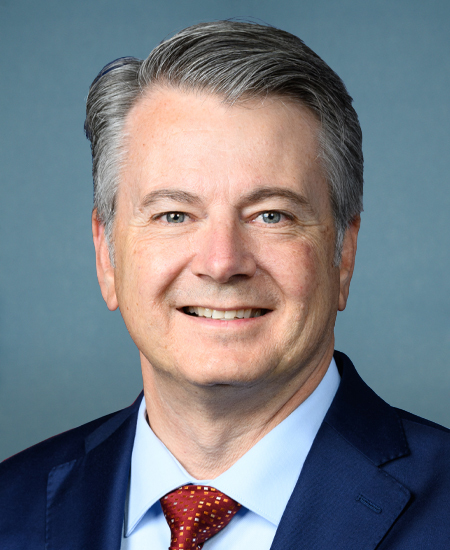
Rep. John S. Duarte
Sponsored bills
Maddy summaryThis bill establishes a federal coordinator within the Department of Health and Human Services to advance valley fever (coccidioidomycosis) vaccine development, licensing, and manufacturing by 2034. It requires a national strategy detailing scientific progress, funding needs, and regulatory pathways, with grants of $500,000-$2.5 million for vaccine development and $500,000-$5 million for manufacturing. The bill also creates a National Valley Fever Registry to collect non-identifiable case data and improve diagnosis, funded through $26 million in authorized appropriations. It directly affects researchers, vaccine manufacturers, patients in endemic regions (like the Southwest U.S.), and public health agencies coordinating vaccine efforts.
Maddy summaryThis non-binding resolution (HRES 1533) expresses the U.S. House of Representatives' continued support for Israel one year after the October 7, 2023, attacks. It condemns Hamas' attacks against Israel and calls on Hamas to immediately cease violence, release all living hostages, and return the bodies of deceased hostages. The resolution does not create new laws or policies but formally reaffirms congressional sentiment toward U.S.-Israel relations and the response to the Hamas attacks. It was introduced by 13 House members on October 4, 2024, and referred to the Foreign Affairs Committee.
Maddy summaryHR 9889 provides $14 billion in emergency funding to assist farmers and ranchers recovering from 2023 natural disasters like droughts, wildfires, floods, and hurricanes. It directly affects agricultural producers who suffered crop, livestock, or dairy losses, including $1.5 billion specifically for livestock-related expenses. The bill establishes payment limits (up to 90% of losses for insured producers, 70% for uninsured) and requires beneficiaries to purchase crop insurance or NAP coverage for the next two crop years. Payments cover revenue losses for crops, trees, vines, and livestock relocation costs, with administrative costs capped at 1% of the total appropriation.
Maddy summaryThis bill reauthorizes existing programs to protect endangered and threatened fish species in the Upper Colorado and San Juan River Basins through 2031. It extends annual funding for capital projects ($50 million per year, adjusted for inflation) and annual base operations ($80 million total over 8 years, split as $52.9 million for the Upper Colorado and $27.1 million for the San Juan). The bill updates legal definitions to include "threatened" species and clarifies how funds from federal agencies (like power revenues) and non-federal partners (states, tribes, water users) can be used. It directly affects the Bureau of Reclamation, the Upper Colorado River Basin states (Colorado, New Mexico, Utah, Wyoming), and entities participating in the recovery programs. The funding continues the existing 1987 and 1992 cooperative agreements without altering their environmental goals.
Maddy summaryHRES 1348 is a non-binding resolution urging Nigeria to immediately release Tigran Gambaryan, a U.S. citizen and former IRS agent detained since February 2024. The resolution cites his unlawful detention after legal deadlines expired, deteriorating health (including malaria), and poor conditions at Kuje Prison, where he was transferred despite a court order for hospital care. It calls for Nigeria to grant him medical access, consular support, and due process, while urging the U.S. government to use all resources to secure his release. The resolution highlights concerns that his detention appears linked to pressure on his employer, Binance, rather than legitimate legal grounds.
Maddy summaryHJRES 136 is a resolution seeking to block an Environmental Protection Agency (EPA) rule that would have set new emissions standards for light and medium-duty vehicles sold in 2027 and later model years. The EPA rule, published in April 2024, aimed to require vehicle manufacturers to meet stricter pollution limits for these vehicles. If passed, this resolution would cancel the rule, preventing the EPA from enforcing the new standards. It uses a congressional process that allows Congress to reject agency rules with a simple majority vote.
Maddy summaryHR 9745, the Lifesaving Gear for Police Act of 2024, removes barriers for state and local law enforcement agencies to access existing federal equipment. It prohibits federal agencies from enforcing any regulations (since May 15, 2015) that limit the transfer of Department of Defense or other federal equipment to police departments, unless Congress passes those rules into law. The bill also requires agencies to return or replace equipment recalled since 2015 under those regulations, provided the agency requests it, meets existing eligibility rules, and the equipment is available. This directly affects police departments that previously had equipment seized or denied under the blocked regulations. The law focuses on restoring access to current equipment-sharing programs, not creating new funding or gear.
Maddy summaryThis bill requires the Department of Veterans Affairs (VA) to commission an independent review of its notices sent to veterans applying for benefits. The review, to be completed within 30 days of the bill's enactment, must assess whether notices can be made clearer for claimants while reducing paper use and government costs. The VA must then implement the recommended changes within 90 days and report the findings to Congress. This directly affects veterans receiving VA claims communications by aiming to make those notices more understandable and efficient.
Maddy summaryHJRES 168 is a congressional resolution seeking to block a specific environmental regulation by the Council on Environmental Quality (CEQ). It targets the CEQ's "National Environmental Policy Act Implementing Regulations Revisions Phase 2" rule, published in the Federal Register on May 1, 2024 (89 Fed. Reg. 35442). If passed, this resolution would use a statutory process under Title 5, U.S. Code, to nullify the rule, preventing it from taking effect. The bill directly affects the CEQ's regulatory authority over federal environmental reviews under the National Environmental Policy Act (NEPA).