

Maddy summaryHR 497, the Freedom for Health Care Workers Act, eliminates a federal requirement for healthcare workers in Medicare and Medicaid programs to be vaccinated against COVID-19. The bill directly affects healthcare providers who treat patients under these federally funded programs by preventing the enforcement of the November 2021 HHS rule mandating staff vaccinations. Its key provision prohibits the Department of Health and Human Services from implementing, enforcing, or creating a similar rule regarding vaccination for these workers. This bill changes the policy by removing a specific vaccine mandate for providers in Medicare and Medicaid programs.
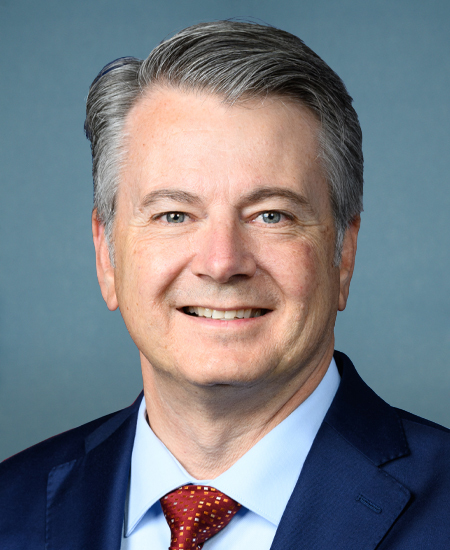
Rep. John S. Duarte
Sponsored bills
Maddy summaryThe ESA Amendments Act of 2024 makes significant changes to the Endangered Species Act of 1973, primarily focusing on improving conservation efficiency and increasing incentives for private landowners. It establishes a national listing work plan with five priority classifications (Priority 1-5) for species to streamline conservation efforts and sets deadlines for acting on listing petitions. The bill creates "Candidate Conservation Agreements with Assurances" that provide private landowners with legal assurances they won't face additional restrictions if species they're conserving gets listed under the Act. It also requires the government to publish the basis for listing decisions online, mandates transparency in using state and local information, and allows states to develop recovery strategies that could be adopted as regulations. These changes aim to improve conservation outcomes while reducing regulatory burdens on private landowners and increasing government transparency.
Maddy summaryHR 1586, the Forest Protection and Wildland Firefighter Safety Act of 2023, exempts certain fire suppression activities from requiring permits under the Clean Water Act. It directly affects federal agencies like the Forest Service, National Park Service, and Bureau of Land Management, as well as state, local, and tribal governments conducting wildfire response. The bill's key provision removes the need for a Section 402 permit under the Clean Water Act when these covered entities discharge fire retardants, chemicals, or water for fire control or prevention. This change streamlines firefighting operations by eliminating a specific permitting step during active wildfire events.
Maddy summaryHR 7438 directs the U.S. Treasury to mint commemorative coins for the 2026 FIFA World Cup, including 100,000 $5 gold coins, 500,000 $1 silver coins, and 750,000 half-dollar coins. The coins will be sold to the public at face value plus surcharges ($35, $10, and $5 per coin, respectively), with all surcharge revenue paid to FWC2026 US, Inc. for U.S. soccer programs. These funds must support soccer initiatives, particularly in underserved communities and youth development, as specified in the bill. The coins are legal tender but will only be issued during 2026, with no net cost to the U.S. government.
Maddy summaryThis bill extends funding for the existing Public Health Service Act program focused on raising public awareness about Alzheimer's disease and related dementias. It authorizes $33 million annually for fiscal years 2025 through 2029 to support public health education and outreach initiatives. The program directly affects public health organizations and community groups that develop and distribute educational materials about Alzheimer's prevention, diagnosis, and care. The key provision is the multi-year funding extension, ensuring continued support for nationwide awareness efforts without altering the program's core structure.
Maddy summaryHR 2892, the WARN Act, directs the Comptroller General to study how local alert systems deliver weather emergency information during events like storms or power outages. The study will evaluate different alert methods - including social media - and develop best practices for clearer, faster public notifications. It requires a report to Congress within one year, but the bill itself creates no new laws or directly affects any group. This is a procedural study bill focused on improving future emergency communication systems.
Maddy summaryThis bill reauthorizes the Office of National Drug Control Policy through 2031 with updated definitions and expanded focus on harm reduction. Key provisions include requiring the Director to submit a report on opioid overdose reversal medications like naloxone, increasing funding for fentanyl interdiction activities ($5 million minimum annually), and expanding data collection requirements on drug use patterns and treatment effectiveness. The bill updates definitions to better address emerging drug threats and precursor chemicals, and mandates a Caribbean Border Counternarcotics Strategy to address drug trafficking through the Caribbean region. It affects federal agencies involved in drug control, law enforcement, and public health, requiring coordinated efforts to reduce drug use and improve access to life-saving treatments.
Maddy summaryThis bill allows the U.S. section of the International Boundary and Water Commission (IBWC) to accept funding from federal or non-federal sources - including grants - to support wastewater treatment and flood control projects along the U.S.-Mexico border. It specifies that funds received must be deposited into a designated Treasury account and used solely for studying, building, operating, and maintaining these specific infrastructure works. The bill directly affects the IBWC’s ability to secure external funding for border water management, benefiting communities and ecosystems in border regions reliant on these systems. It does not change existing policies but streamlines the Commission’s process for managing such projects.
Maddy summaryHR 3365, the Supply Chain Improvement Act, requires the U.S. Department of Transportation to prioritize projects that enhance supply chain resiliency when awarding specific transportation grants. This affects state and local governments, contractors, and infrastructure developers seeking federal funding under titles 23 and 49 of the U.S. Code, including highway and multimodal projects. The bill mandates that the Transportation Secretary give priority consideration to these resiliency-focused projects alongside existing grant selection criteria. It does not create new funding but changes how existing transportation grant dollars are allocated to strengthen supply chain infrastructure.
Maddy summaryThis bill names the U.S. Postal Service building at 333 West Broadway in Anaheim, California, as the "Dr. William I. 'Bill' Kott Post Office Building." It requires all federal documents, maps, and references to update the building's official name to honor Dr. Kott, a former Anaheim physician and community leader. The change applies immediately to all government records and communications involving the facility.