

Increasing Behavioral Health Treatment Act This bill repeals restrictions that generally prohibit federal payment under Medicaid for services provided in institutions for mental diseases (IMDs) for individuals under the age of 65. (Currently, states may receive payment for such services through certain mechanisms, such as through a Medicaid demonstration waiver.) The bill also requires state Medicaid programs that cover IMD services to improve patient access to outpatient and community-based behavioral health care, expand crisis stabilization services, facilitate care coordination between providers and first responders, and report specified information relating to IMD utilization and costs.
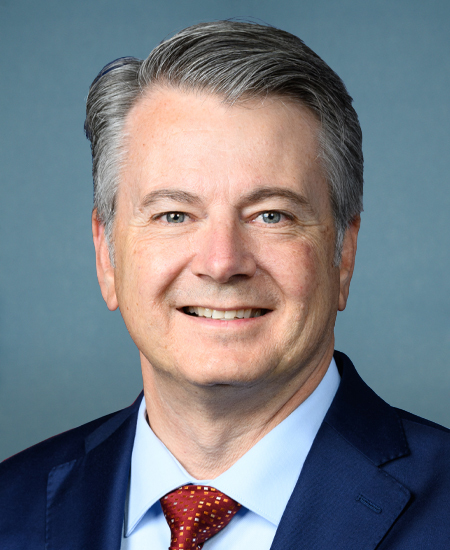
Rep. John S. Duarte
Sponsored bills
Maddy summaryHR 1194, the "Fighting Presidential Budget Waste Act," requires the President and the Office of Management and Budget (OMB) to consider findings from the most recent GAO report on reducing government waste when preparing the annual federal budget. The bill specifically directs them to review the GAO report titled "Additional Opportunities to Reduce Fragmentation, Overlap, and Duplication and Achieve Billions of Dollars in Financial Benefits" (or a successor report). This mandate applies to all budget submissions under Section 1105 of Title 5, U.S. Code. The law does not create new spending or programs but changes the budget preparation process by requiring federal officials to factor in GAO recommendations for cost savings.
Maddy summaryHR 1088, the Shirley Chisholm Congressional Gold Medal Act, authorizes a posthumous Congressional Gold Medal to honor Congresswoman Shirley Chisholm, the first African-American woman elected to Congress (1968) and the first Black candidate for a major party's presidential nomination (1972). The bill directs the Treasury Secretary to design and strike a gold medal featuring Chisholm's image, which will be presented by Congress and then permanently displayed at the Smithsonian Institution. Duplicate bronze medals may be sold to the public to cover production costs, with proceeds deposited into the U.S. Mint fund. This bill commemorates Chisholm's legacy and achievements without creating new laws or affecting any current policies.
Maddy summaryHR 976, the TCJA Permanency Act, makes permanent many tax provisions from the 2017 Tax Cuts and Jobs Act (TCJA) that were scheduled to expire after 2025. The bill affects individual taxpayers by keeping lower tax rates, higher standard deductions, increased child tax credits, and other key changes permanently. Key provisions include permanent modifications to income tax brackets, repeal of personal exemptions, limits on state and local tax deductions, and increased estate and gift tax exemptions. These changes would prevent the tax code from reverting to pre-TCJA rates and rules for millions of taxpayers.
This resolution condemns Azerbaijan's blockade of the Lachin Corridor to Nagorno-Karabakh (also known as Artsakh). The resolution calls on the U.S. government to work with international partners to deploy observers to explore opportunities for security and peaceful development. The resolution also calls on the President to (1) suspend military and security assistance from the United States to Azerbaijan, and (2) fully enforce a U.S. law prohibiting certain bilateral assistance to Azerbaijan until Azerbaijan takes demonstrable steps to cease all offensive uses of force against Armenia and Nagorno-Karabakh.
This resolution condemns Iranian state-sponsored terrorist attacks against U.S. citizens and officials and Iranian dissidents. The resolution also expresses support for the people of Iran who are legitimately defending their rights for freedom against repression and condemns the killing of Iranian protesters by the Iranian regime.
Freight Rail Assistance and Investment to Launch Coronavirus-Era Activity and Recovery Act of 2023 or the Freight RAILCAR Act of 2023 This bill provides a new tax credit through 2025 for 10% of freight railcar fleet modernization expenses (i.e., railcar replacement and modernization expenses for meeting fuel efficiency and performance standards). The bill provides that no more than 2,000 freight railcars per taxpayer may be taken into account for purposes of determining the credit in a taxable year. The Department of the Treasury must report to Congress on the credit to provide information on the number of times the credit was claimed and the number of railcars scrapped or built as a result of the credit.
Maddy summaryHR 382, the "Pandemic is Over Act," terminates the federal public health emergency declaration for the COVID-19 pandemic. The bill ends the emergency status declared on January 31, 2020, effective upon the bill's enactment. This action directly ends the federal authority tied to the emergency, including related public health measures and funding mechanisms under the Public Health Service Act.
Maddy summaryHR 648, the Agriculture Export Promotion Act of 2023, increases federal funding for key USDA export promotion programs to boost U.S. agricultural sales abroad. It raises annual funding for the Market Access Program from $200 million to $400 million and for the Foreign Market Development Cooperator Program from $34.5 million to $69 million, effective 2024-2029. These changes directly benefit U.S. farmers and agricultural businesses exporting commodities like soybeans, beef, and dairy by expanding their access to international markets. The bill aims to counter competitive disadvantages as foreign competitors grow their export programs faster than U.S. funding has kept pace. This represents a significant funding adjustment to address years of stagnant investment in these programs.
Maddy summaryThis bill renames a U.S. Postal Service facility at 620 East Pecan Boulevard in McAllen, Texas, as the "Agent Raul H. Gonzalez Jr. Memorial Post Office." It updates all federal references to the location to reflect this new name. The bill has no policy impact - it is purely a ceremonial designation honoring an individual. No other provisions or affected groups are involved.