

Maddy summaryHR 2872 extends funding for numerous health and human services programs through March 8, 2024, instead of their previous January 2024 expiration dates. The bill modifies funding amounts for Community Health Centers ($536 million), National Health Service Corps ($41 million), and Special Diabetes Programs ($20 million), while extending deadlines for Medicaid and Medicare programs. It also authorizes specific appropriations for the Department of Energy's National Nuclear Security Administration ($760 million) and the Federal Aviation Administration to maintain operations. This continuing resolution ensures ongoing support for healthcare providers, patients, and government agencies that rely on these federal programs without changing program eligibility or creating new services.
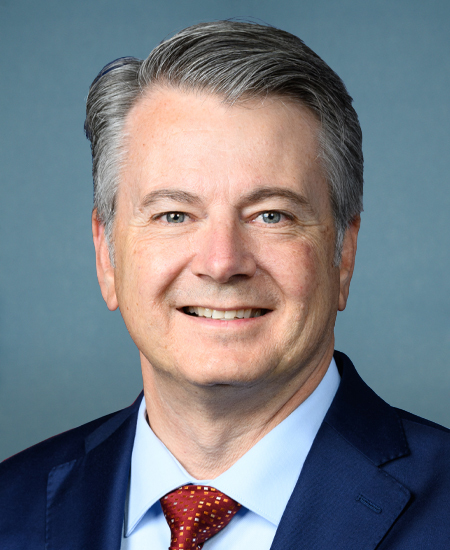
Rep. John S. Duarte
Sponsored bills
Maddy summaryThis resolution expresses the U.S. House of Representatives' support for designating October 1-7, 2023, as "National 4-H Week." It recognizes 4-H as the nation's largest youth development organization, serving nearly 6 million young people through programs in health, science, agriculture, and civic engagement, delivered by land-grant universities and over 600,000 volunteers. The resolution does not create new laws or funding but formally acknowledges 4-H's role in empowering youth leadership and encourages public recognition of its impact. It directly affects 4-H members, volunteers, and the broader network of land-grant institutions and the USDA's Cooperative Extension System.
Maddy summaryThe Death Tax Repeal Act would eliminate the federal estate tax and generation-skipping transfer tax for estates of people who die on or after the bill's enactment date, and for generation-skipping transfers made after that date. It would also establish a new $10 million lifetime gift tax exemption (adjusted annually for inflation) and replace the existing gift tax rate schedule with a revised structure. These changes would primarily affect high-net-worth individuals and their heirs, as the estate tax and gift tax typically apply to large estates or gifts exceeding the new exemption threshold. The bill's provisions would take effect on the date of enactment, with transitional rules for the year the bill is signed into law.
This bill establishes the Commission on National Agricultural Statistics Service (NASS) Modernization to study and provide recommendations on modernizing and streamlining data collection at NASS. (NASS conducts the Census of Agriculture and provides official statistics on agricultural production and other farm sector indicators.) The 11-member commission must include 4 specified members from the Department of Agriculture, 1 member from the Bureau of Labor Statistics, and 6 members appointed by the House and Senate Agriculture Committees. At the request of the commission chair, federal agencies must provide the commission information related to the study. The commission must submit a report to the President and Congress on the results of the study within three years of the bill's enactment. The report must include (1) an inventory of surveys conducted by NASS and their frequency; and (2) recommendations for administrative, regulatory, and legislative changes.
Maddy summaryHR 3372 establishes a 10-year pilot program allowing specific heavy trucks (6-axle vehicles weighing up to 91,000 pounds) to operate on interstate highways under state permits. States must apply to join the program, issue permits with route restrictions, and require operators to report accidents, vehicle weight, and annual mileage. Participating states may reduce permit fees by 67% for trucks equipped with automatic emergency braking systems. The program mandates annual safety reports to the federal government and ensures no reduction in highway funding for states participating in the pilot.
Maddy summaryHR 1147, the Whole Milk for Healthy Kids Act of 2023, allows schools participating in the National School Lunch Program to offer whole milk as an option during lunch. It amends the school lunch law to explicitly permit schools to serve flavored and unflavored whole milk alongside reduced-fat, low-fat, and fat-free milk choices for students. The bill also requires the Secretary of Agriculture to adjust meal regulations to account for saturated fat from whole milk, ensuring it doesn't count against meal fat limits. This change directly affects participating schools and the students who receive school lunches, expanding their milk beverage options.
Maddy summaryThe Innovative FEED Act of 2023 defines and regulates "zootechnical animal food substances" - substances added to animal feed to affect digestion, reduce foodborne pathogens, or alter gut microbiome without providing nutrition. It requires these substances to be approved as food additives by the FDA under existing rules, with specific data on intended effects and mandatory labeling stating "Not for use in the diagnosis, cure, mitigation, treatment, or prevention of disease in animals." The bill excludes drugs, hormones, ionophores, and other substances from this category. This directly affects animal feed manufacturers, the FDA’s regulatory process, and the labeling requirements for these products.
Maddy summaryThis bill authorizes the posthumous presentation of a Congressional Gold Medal to honor Marshall "Major" Taylor, a pioneering Black cyclist who broke racial barriers in the late 19th and early 20th centuries. It recognizes his athletic achievements, including world records and international championship wins, as well as his advocacy for equality in sports. The medal, designed by the Treasury Secretary, will be presented to Taylor's great-granddaughter, Karen Donovan, following the congressional authorization. As a commemorative act with no policy changes, it serves solely to honor Taylor's legacy as a trailblazer and role model.
Maddy summaryHR 6548, the Professional Growth and Retention Act, amends the Workforce Innovation and Opportunity Act (WIOA) to adjust funding allocations for local workforce development areas. It increases the minimum percentage of funds reserved for certain areas from 20% to 40% and creates an exception: areas with unemployment below 3% for six+ months in the prior year would receive 50% instead of 40%. This directly affects local workforce development boards and states administering WIOA funds. The bill changes only the percentage thresholds for fund distribution, with no new programs or eligibility requirements. The policy change is purely administrative, focusing on how existing funds are allocated based on local unemployment data.
Maddy summaryThe Flex Fuel Fairness Act of 2023 requires the Environmental Protection Agency (EPA) to adjust emissions calculations for flexible fuel vehicles (FFVs) that run on E85 (a fuel blend containing 85% ethanol). It mandates that the EPA use a 31% lower CO2 emissions value for FFVs compared to standard gasoline vehicles, based on a study showing E85 reduces emissions by 31% per mile. This change directly helps vehicle manufacturers meet federal fleet emissions standards by making it easier to count FFVs as lower-emission vehicles. The EPA may further adjust this percentage higher if future studies support a larger reduction.