

This resolution supports the goals of a feminist foreign policy (i.e., a foreign policy that requires analysis of and challenges to power structures and inequalities that are based on systems of discrimination). The resolution also supports the adoption of policies that promote gender equity and the participation of women and girls in public life.
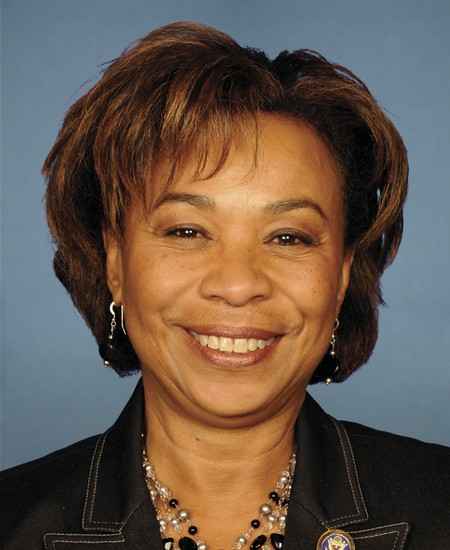
Rep. Barbara Lee
Sponsored bills
Maddy summaryThe WRCR Act of 2023 would expand the Earned Income Tax Credit (EITC) to include more low-income workers and students, lowering the minimum age requirement from 25 to 18 and allowing students receiving Federal Pell Grants or meeting specific income requirements to qualify. It would create a new program for monthly advance payments of the credit instead of a single annual payment, with taxpayers needing to report changes in circumstances to avoid overpayment. The bill also modifies income thresholds and credit percentages to increase access for more workers, with these changes taking effect for tax years beginning after December 31, 2022.
Maddy summaryHRES 200 is a non-binding House resolution condemning two mass shootings in California: 11 victims in Monterey Park (January 21, 2023) at a Lunar New Year celebration and 7 victims in Half Moon Bay (January 23, 2023) at a farm. It honors all victims - primarily Asian-American seniors and immigrant farmworkers - expresses condolences to their families, and reaffirms the House’s commitment to supporting Asian-American and Pacific Islander communities. The resolution specifically addresses the rise in anti-Asian hate crimes during the pandemic and recognizes the vulnerability of immigrant communities. As a symbolic gesture, it does not create new laws or allocate funding but formally condemns the violence and affirms solidarity.
Maddy summaryThis resolution (HRES 203) is a symbolic gesture supporting the designation of the week beginning March 5, 2023, as "School Social Work Week." It does not create new laws or policies, but rather expresses the House's recognition of school social workers' roles in addressing student mental health, barriers to learning, and community partnerships. The resolution encourages the public to observe the week through activities that highlight these professionals' contributions to student success. As a ceremonial resolution, it has no direct effect on legislation, funding, or individuals.
Maddy summaryHRES 198 is a non-binding House resolution recognizing the Girl Scouts of the United States of America on its 111th anniversary. It celebrates the organization’s role in providing girls with safe, inclusive spaces for leadership development, skill-building, and community engagement through programs like STEM education, outdoor activities, and civic initiatives. The resolution specifically acknowledges Girl Scouts’ 111-year legacy, congratulates Gold Award recipients, and encourages continued support for their mission. As a ceremonial resolution, it does not create new policies, allocate funds, or directly affect any individuals or organizations.
This resolution expresses the sense that the federal government should adopt a global health solidarity strategy to end medically avertable deaths and respond to the full burden of disease in poor countries; the federal government should use laws and diplomatic influence to stop ongoing economic harms to the global South; and it is the duty of the federal government to issue reparations, including for slavery and colonialism.
Equal Citizenship for Children Act of 2023 This bill expands the application of automatic acquisition of citizenship for certain children born outside of the United States. Specifically, the bill provides citizenship retroactively to such a child who, while under the age of 18, (1) resided in the United States as a lawful permanent resident (or had a pending application for such status), and (2) was in the legal custody of the child's citizen parent. It also eliminates the physical custody requirement for the automatic acquisition of citizenship. The bill applies to a child meeting these requirements who was born after noon on January 9, 1941, but who turned 18 prior to February 27, 2001 (the effective date of the Child Citizenship Act of 2000).
Maddy summaryHR 1404, the Facial Recognition and Biometric Technology Moratorium Act of 2023, bans U.S. federal agencies and officials from using facial recognition, voice recognition, or other remote biometric surveillance systems (like gait analysis) for law enforcement or surveillance in the United States. It directly affects federal law enforcement agencies and state/local governments receiving Byrne grant funding, which they would lose if they don’t adopt similar bans. Key provisions prohibit federal acquisition or use of these systems (except for narrowly defined congressional authorizations), ban federal funding for such systems, and make illegally obtained biometric data inadmissible in court. The bill also allows individuals to sue the federal government for violations and requires states receiving federal funds to implement comparable restrictions.
Maddy summaryHR 1415 creates federal grants to help high-need schools hire or retain school social workers, aiming to achieve a ratio of one social worker for every 250 students (and one for every 50 students in high-need cases). The bill authorizes $100 million annually (2024-2028) for grants to local school districts, requiring funds to supplement - never replace - existing budgets. School social workers funded through these grants must provide mental health support, crisis intervention, trauma-informed services, and help address barriers like homelessness or food insecurity. The law also establishes a national center to share best practices on school social work staffing and outcomes.
Maddy summaryHR 1387, the Civics Learning Act of 2023, amends the Elementary and Secondary Education Act to strengthen civics education in public schools. It requires states to prioritize innovative civics teaching - including lessons on the Constitution, civil rights history, and community engagement - and allocates $70 million for grants to schools, with specific funding targets (30% for elementary, 30% for middle, max 40% for high school). The bill directly affects public elementary, middle, and high schools, particularly those serving high-need communities, by mandating new curriculum activities like service learning, student governance participation, and after-school programs. Grants must include reporting on how schools meet civics education goals, with the Department of Education required to submit annual progress reports to Congress.