

Maddy summaryHR 3255, the Freight Rail Workforce Health and Safety Act, requires major freight railroads (Class I carriers) to provide employees with at least 7 days of paid sick leave annually. This includes leave for personal illness, family care, preventive medical visits, and situations related to domestic violence, sexual assault, or stalking. Employees can carry over unused days to the next year, and railroads cannot require workers to find replacements before taking leave or penalize them for using it. The law prohibits retaliation, such as termination or demotion, for requesting or using sick leave, and ensures paid sick leave is separate from existing vacation or holiday time.
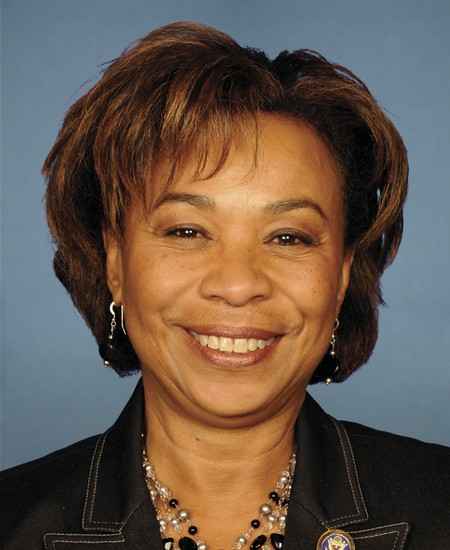
Rep. Barbara Lee
Sponsored bills
Maddy summaryThe Sickle Cell Care Expansion Act of 2023 (HR 3100) authorizes federal funding to expand access to sickle cell disease care and research. It creates scholarship and loan repayment programs ($150 million annually) for medical students and physicians specializing in sickle cell disease, requiring them to work in treatment or research for one year per scholarship year. The bill also funds community-based education grants ($50 million annually) for organizations to improve health literacy and access to services, and transition-of-care programs ($70 million annually) to support patients moving from pediatric to adult care, including mental health services and specialist training. These provisions directly affect sickle cell patients, healthcare providers, and community organizations serving affected populations.
Maddy summaryThe PAST Act of 2023 amends the Horse Protection Act to ban specific devices used to cause pain (soring) in horses at shows, particularly affecting Tennessee Walking Horses, Racking Horses, and Spotted Saddle Horses. It defines prohibited "action devices" (like boots or chains causing friction) and requires licensed, conflict-free inspectors at events to enforce rules. The bill increases penalties for violations to up to $5,000 fines or 3 years in jail, and mandates longer disqualifications for repeat offenses (180 days → 1 year → 3 years). Horse show organizers, exhibitors, and participants must comply with these new inspection and penalty requirements.
Maddy summaryHRES 390 is a resolution recognizing May as Asian American, Native Hawaiian, and Pacific Islander (AANHPI) Heritage Month. It formally honors the historical contributions of AANHPI communities to the United States, highlighting their diverse cultural impact and achievements across U.S. history. The resolution emphasizes celebrating these contributions while acknowledging ongoing challenges, such as anti-Asian hate crimes, and references key milestones like the 125th anniversary of *United States v. Wong Kim Ark*. As a symbolic recognition resolution, it does not create new policies or affect specific groups through legislation.
Maddy summaryThis bill extends workplace safety protections under the Occupational Safety and Health Act to people working in correctional facilities, including those in prison labor programs, work release, and maintenance roles. It requires states and federal prisons to annually report on safety conditions, injuries, and compliance with safety standards, beginning two years after enactment. The bill also creates $20 million annually in federal grants to help states update their safety laws and enforcement for incarcerated workers. These provisions directly affect incarcerated individuals performing labor in state or federal correctional facilities and the agencies operating them.
Maddy summaryHR 3276 establishes two pilot programs under the National School Lunch Act. First, it creates a $10 million, 3-year grant program to help schools serve 100% plant-based meals (no animal products) to students, prioritizing schools serving high proportions of low-income students and supporting culturally appropriate meal planning. Second, it creates a $2 million pilot to reimburse schools for costs of providing nondairy milk substitutes for students with dietary needs, targeting schools with high lactose intolerance rates. Both pilots require annual reporting on participation and outcomes, with the dairy substitute program ending after 3 years. The bill directly affects public school food authorities serving eligible students.
Maddy summaryHR 3239 establishes the Advancing Equity Through the Arts and Humanities Program under the National Endowment for the Arts (NEA) and National Endowment for the Humanities (NEH). It creates a competitive grant program prioritizing BIPOC-led arts and humanities organizations working to dismantle systemic racism, with requirements including majority BIPOC grant panelists and mandatory reporting on racial demographics and program impact. The bill mandates that grantees must directly combat systemic racism through arts/humanities initiatives like community programming, artist development, and arts education in underserved communities. It also requires an advisory task force to develop equitable grant guidelines and annual reports to Congress detailing funding distribution, barriers faced by BIPOC communities, and program outcomes. This program directly affects BIPOC-led arts organizations and communities experiencing racial inequity in arts access.
Maddy summaryHR 3238, the Affordable Housing Credit Improvement Act of 2023, updates the Low-Income Housing Tax Credit (LIHTC) program to increase the availability of affordable housing across the United States. The bill makes several key changes including increasing state funding formulas, modifying tenant eligibility rules to better serve vulnerable populations (such as domestic violence victims and students), and expanding credit eligibility for projects in rural and Native American communities. Specific provisions raise the credit for properties serving extremely low-income households, clarify rules around tenant income increases, and require housing providers to protect victims of domestic violence. The bill also updates terminology from "low-income" to "affordable" throughout the tax code and enhances program transparency through data sharing requirements. These changes aim to make the LIHTC program more effective at creating and preserving affordable housing units for low-income households nationwide.
Maddy summaryThe HELPER Act of 2023 creates a new FHA mortgage insurance program specifically for first responders and K-12 teachers. It allows eligible first-time homebuyers in these professions to secure mortgages with 100% financing (no down payment required) for purchasing or repairing a primary residence. To qualify, applicants must be employed as law enforcement, firefighters, paramedics, or K-12 teachers, have completed housing counseling, and meet specific employment history requirements (e.g., 4 years in the role or disability-related release). The program authorizes $660,000 for fiscal year 2024 and $160,000 annually through 2030, with authority expiring after 5 years.
Maddy summaryThis bill requires U.S. public schools to include Asian Pacific American history in all K-12 American history and civics education. It amends the Elementary and Secondary Education Act to mandate that curriculum standards, teacher training, and national assessments explicitly cover this history as part of American history. The policy directly affects students and teachers nationwide by changing how history is taught in public schools. The key mechanism is requiring specific curriculum updates to address gaps in current Eurocentric teaching, ensuring students learn about APA contributions, experiences, and challenges as integral to U.S. history.